
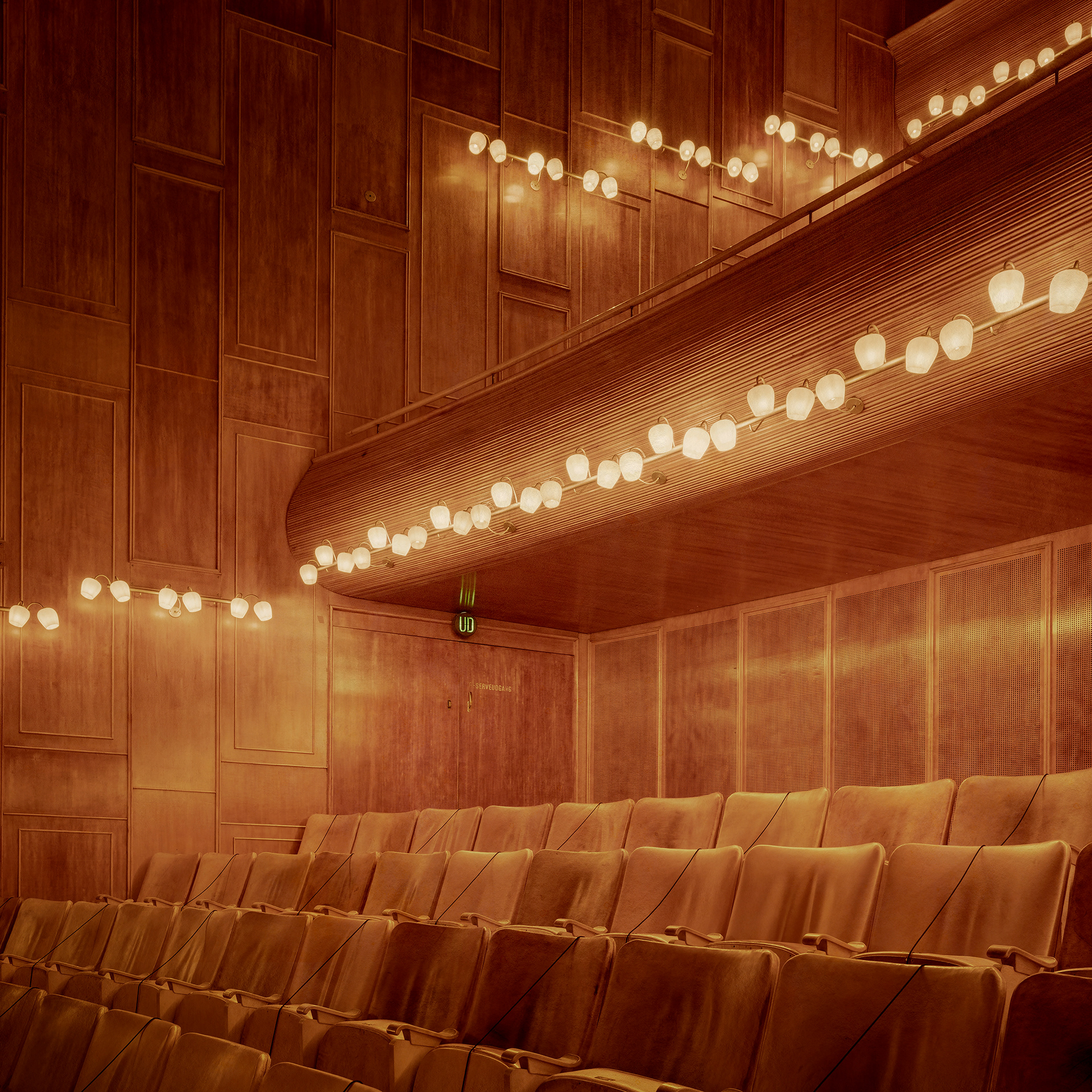
Udgang offers a reflection on the impact of the Covid-19 pandemic, focusing on a series of cultural spaces in Copenhagen that were significantly affected by the prolonged lockdowns.
In September 2020, Inês d'Orey had the opportunity to participate in an artist residency at the Portuguese Embassy in Copenhagen. The residency had already been delayed due to the pandemic. In response to the extraordinary events of that year, Inês decided to investigate the cultural sector, which had been deeply disrupted, by documenting theatres, cinemas, and music venues. Many of the spaces contacted were closed, yet a palpable sense of renewed energy was emerging in those that had just reopened after months of closure, with new performances and events scheduled.
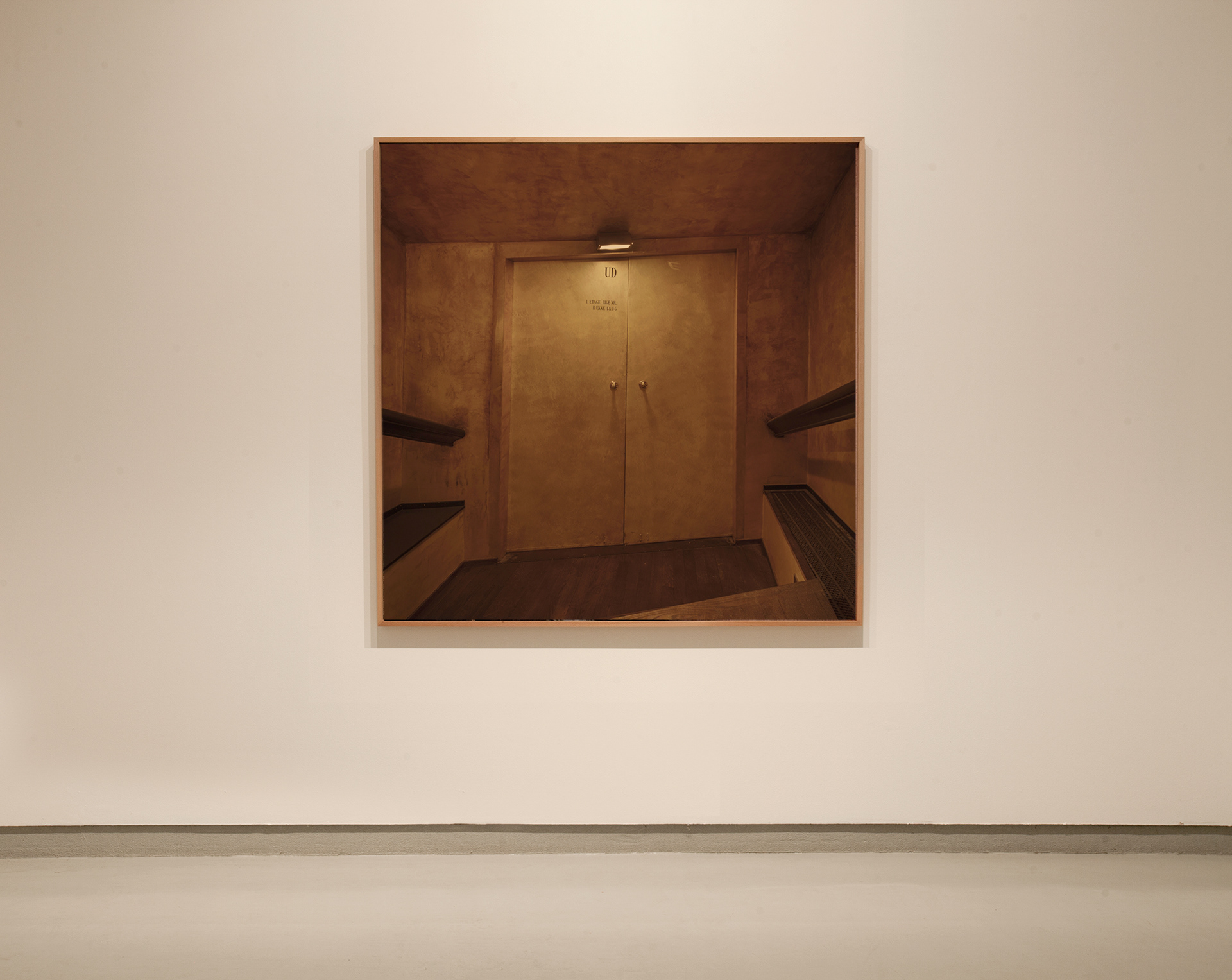
Over the course of photographing 32 venues, Inês d'Orey frequently encountered the exit sign "Udgang" (or its abbreviated form, "UD"). This symbol came to represent the collective experience of people emerging from their homes after a long period of confinement, suggesting a sense of escape or release. However, the term "Udgang" also carries a secondary meaning: parole. This dual interpretation highlighted the temporary nature of the cultural spaces' reopening—an ephemeral freedom with a clear and inevitable end.
A few days after Inês d'Orey's return home, Denmark reimposed border restrictions on Portugal, realizing how fortunate she had been to experience this brief moment of reopening.
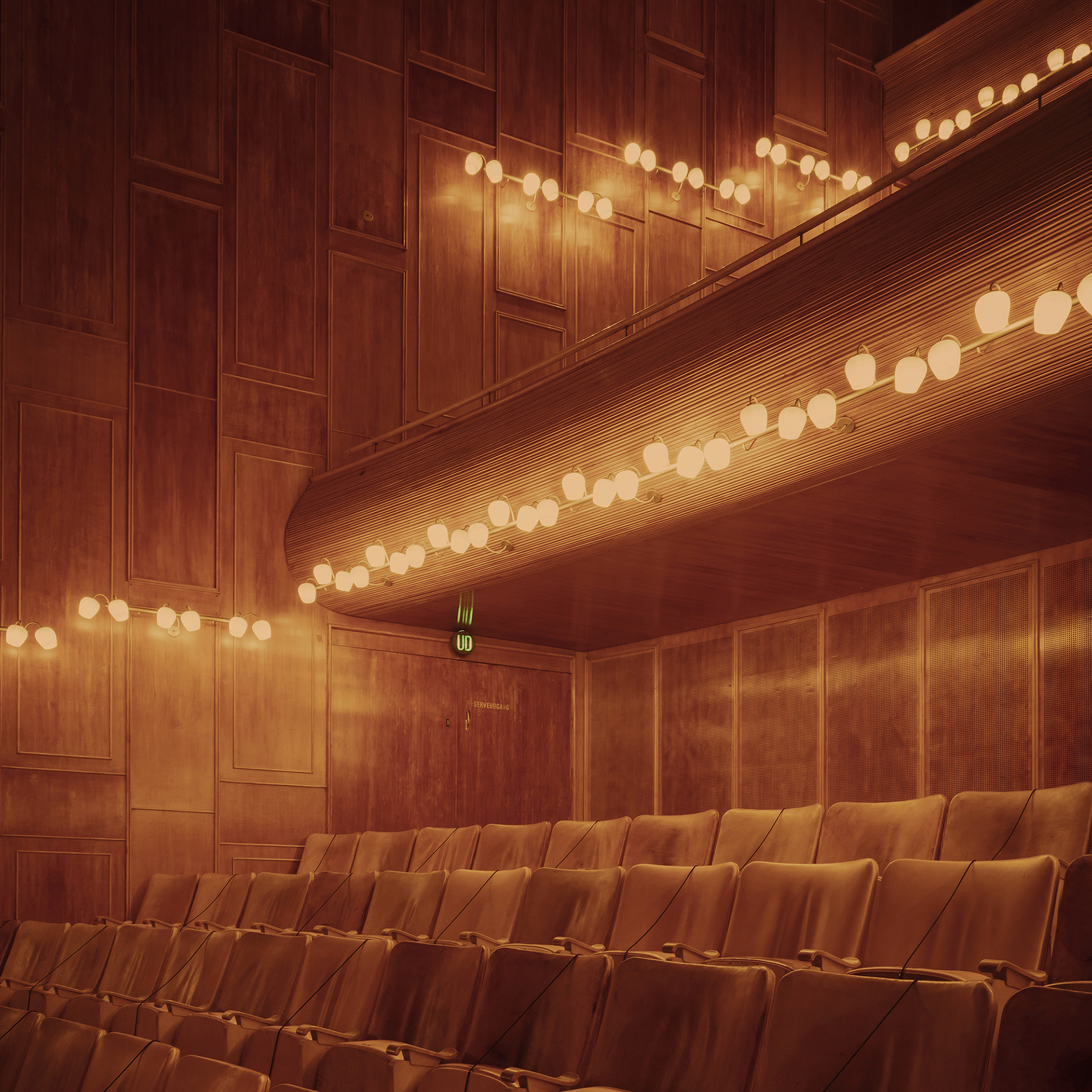
Radiohuset, the former headquarters of the Danish national broadcaster DR, was inaugurated in 1945, designed in the Functionalist style by architect Vilhelm Lauritzen. Listed in 1996, it includes a remarkable concert hall and has been home to the Royal Danish Academy of Music since 2006.
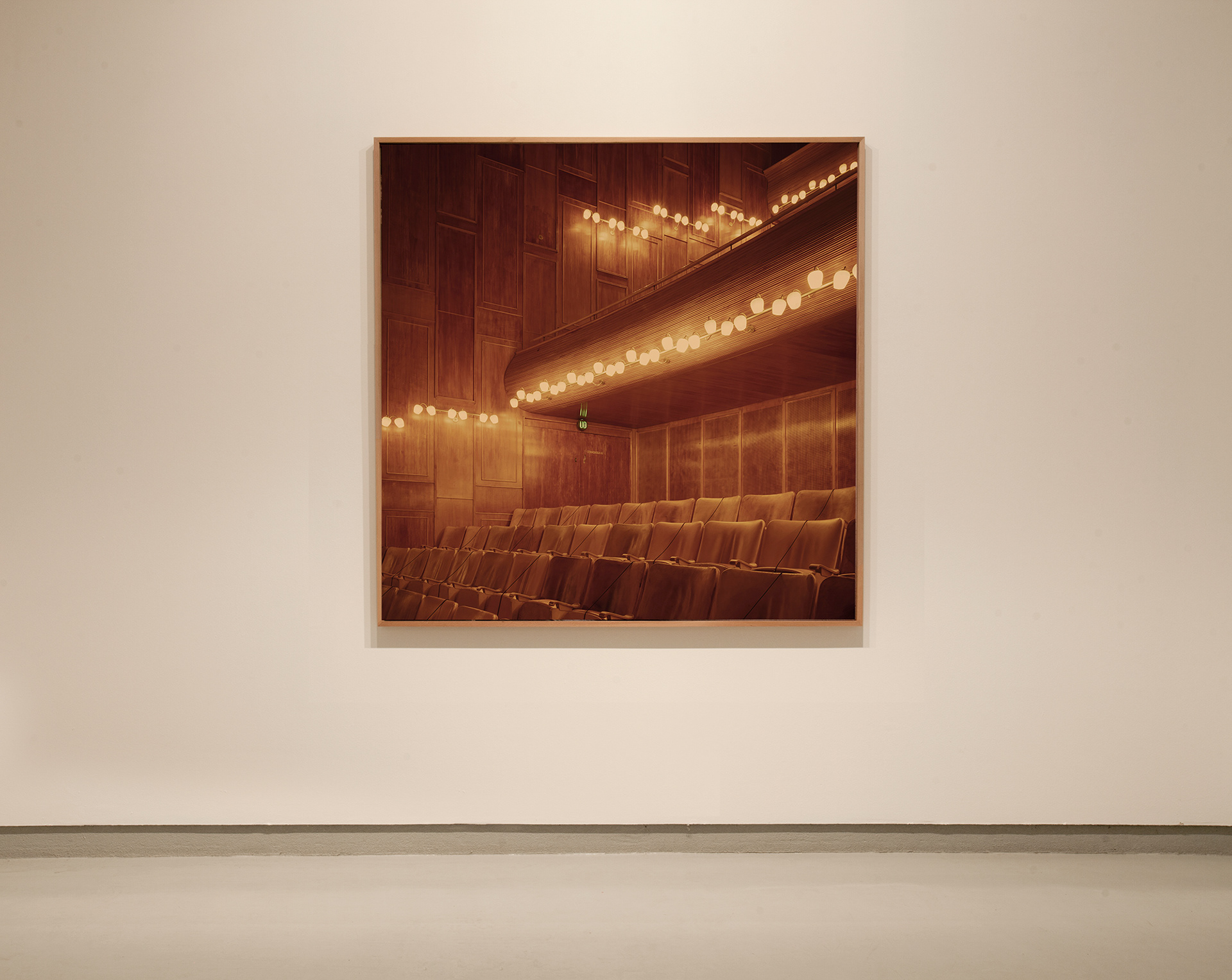
UD #1. Fine Art Photographic Print. 80x80cm. Beech frame with museum glass. Edition of 3 + AP.
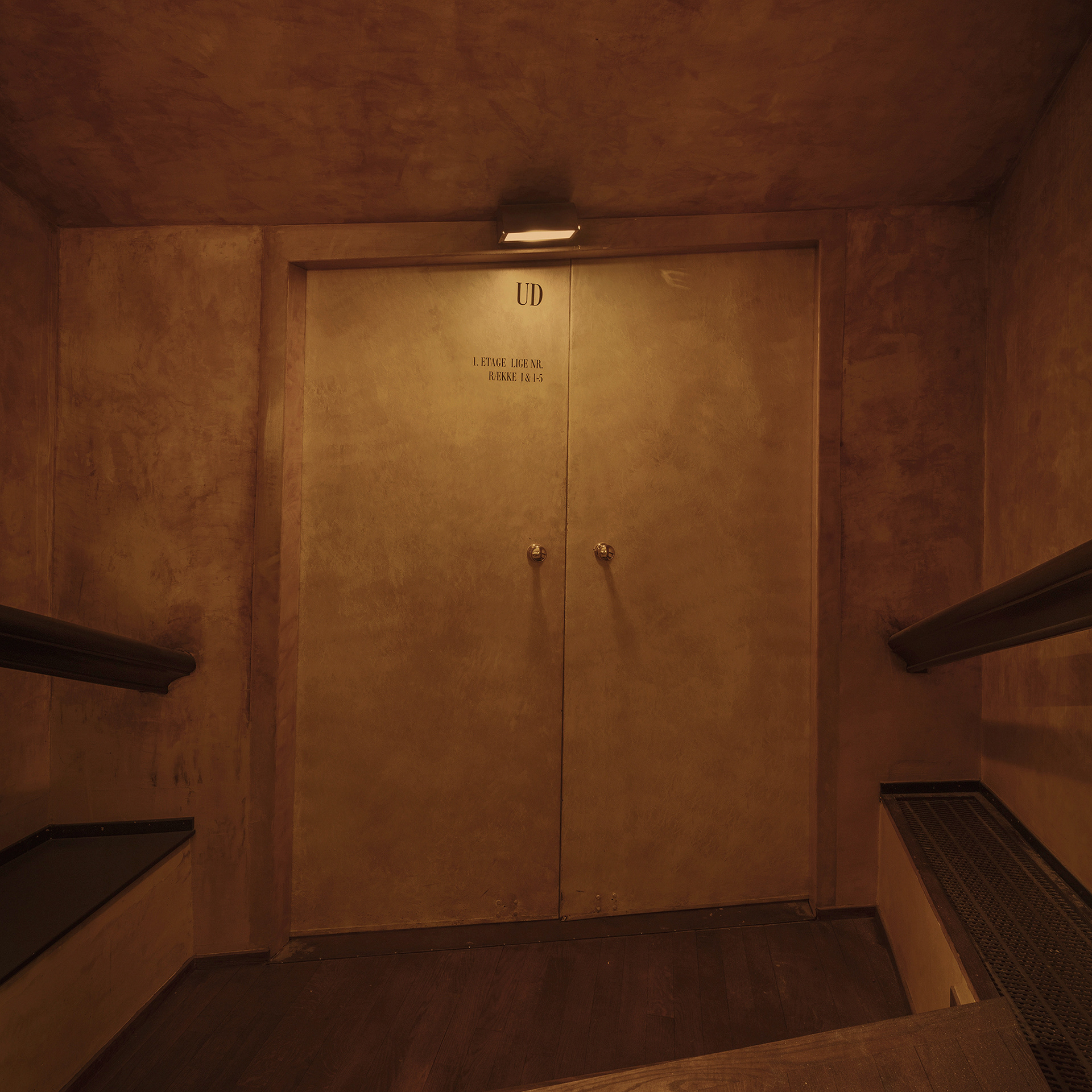
Stærekassen is a theatre attached to the Royal Danish Theatre at Kongens Nytorv in Copenhagen, inaugurated in 1931 to serve both as an additional stage for the Royal Theatre and as the first home of the Danish Broadcasting Corporation. Its name refers to the stage tower, designed as a box suspended above the street.
UD #3. Fine Art Photographic Print. 80x80cm. Beech frame with museum glass. Edition of 3 + AP.
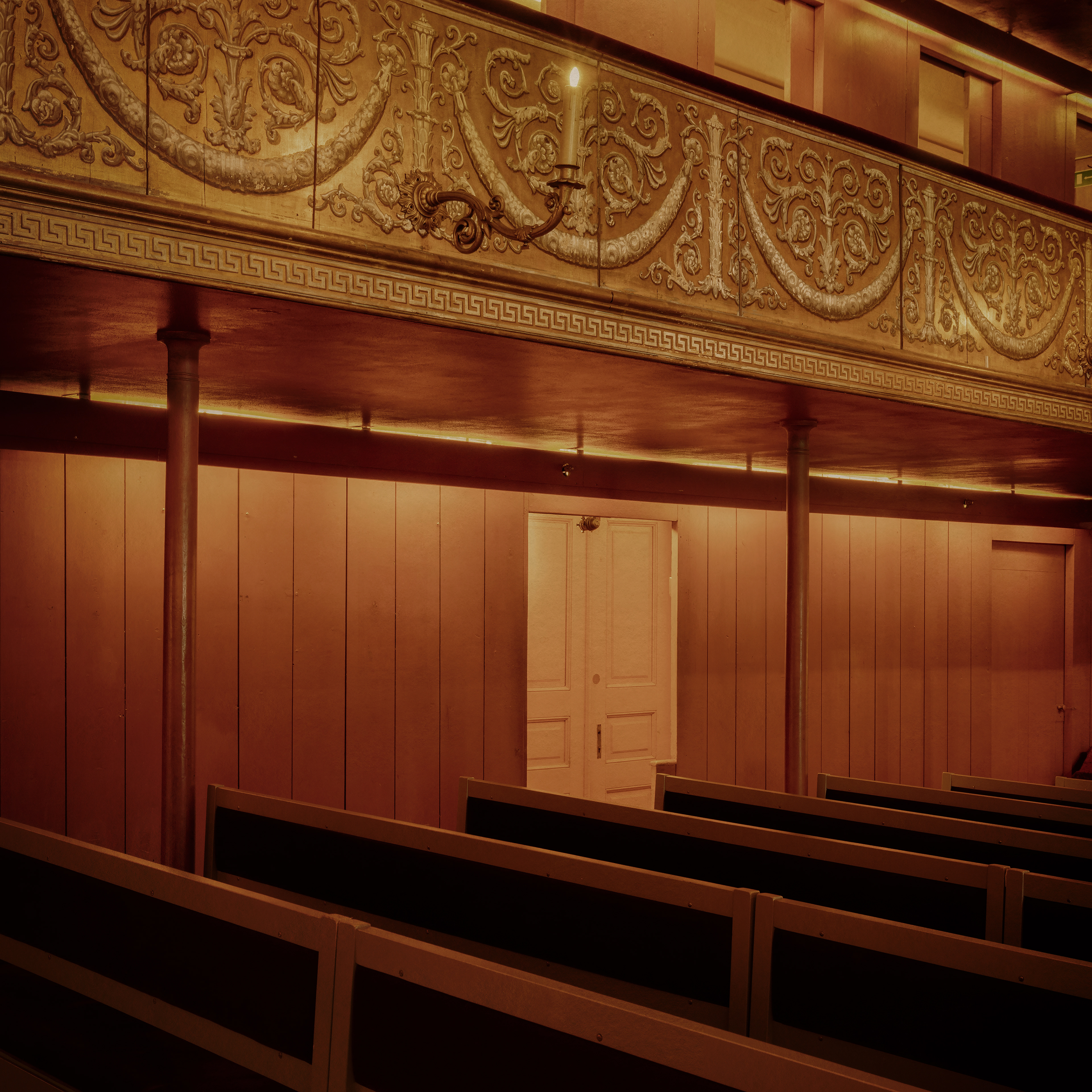
UD #2. Fine Art Photographic Print. 80x80cm. Beech frame with museum glass. Edition of 3 + AP. The Theatre Museum is housed in Christiansborg Palace on Slotsholmen and traces the history of Danish theatre from the 18th century to the present. Its auditorium is also used for readings, lectures, concerts and small performances.
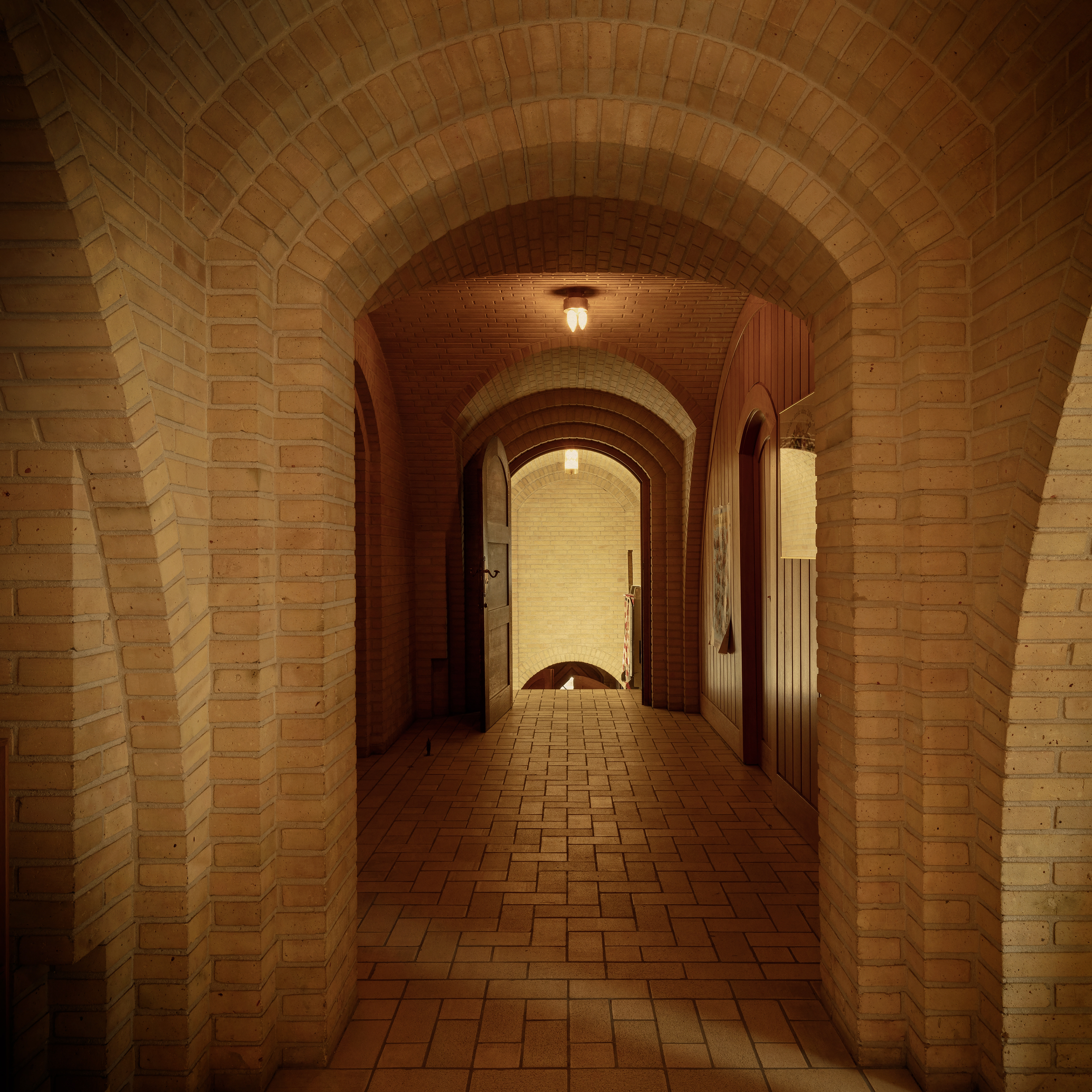
UD #4. Fine Art Photographic Print. 80x80cm. Beech frame with museum glass. Edition of 3 + AP.
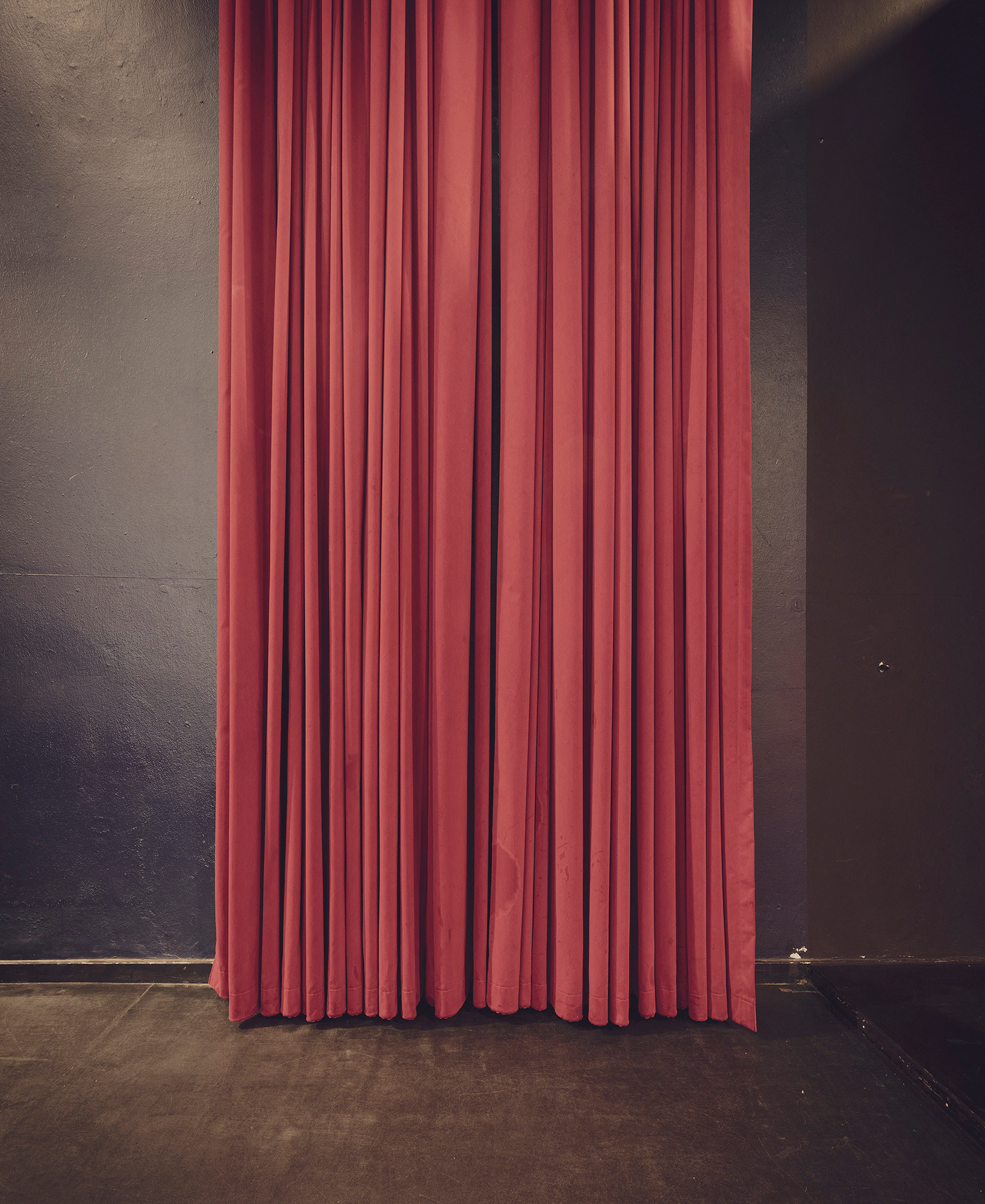
Hjørner#1. Backlit photographic print in a x-ray viewer. 36x44cm. Unique edition.
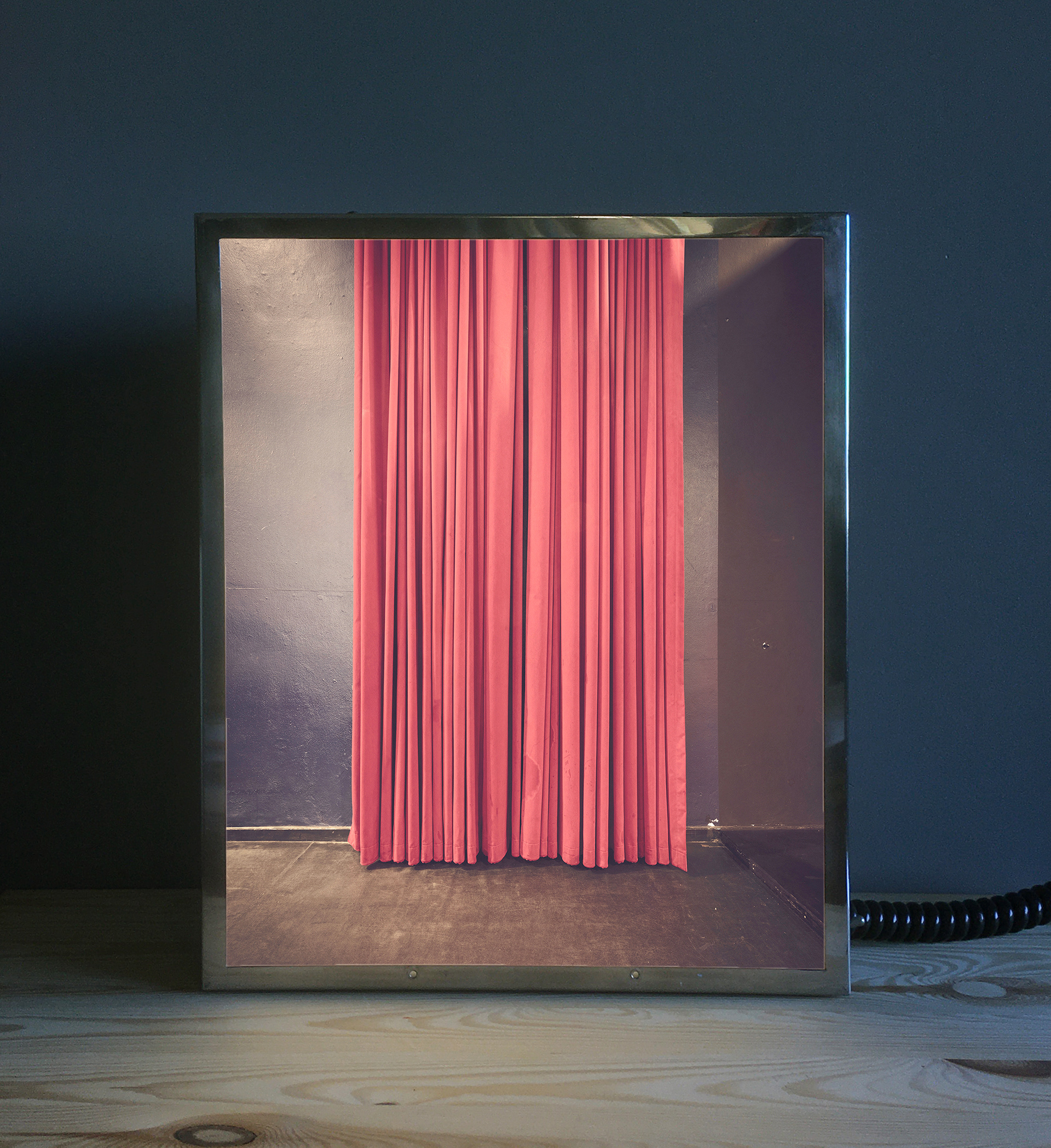
Anemonen is a theatre in central Copenhagen that produces performances for children and young people from across Denmark.
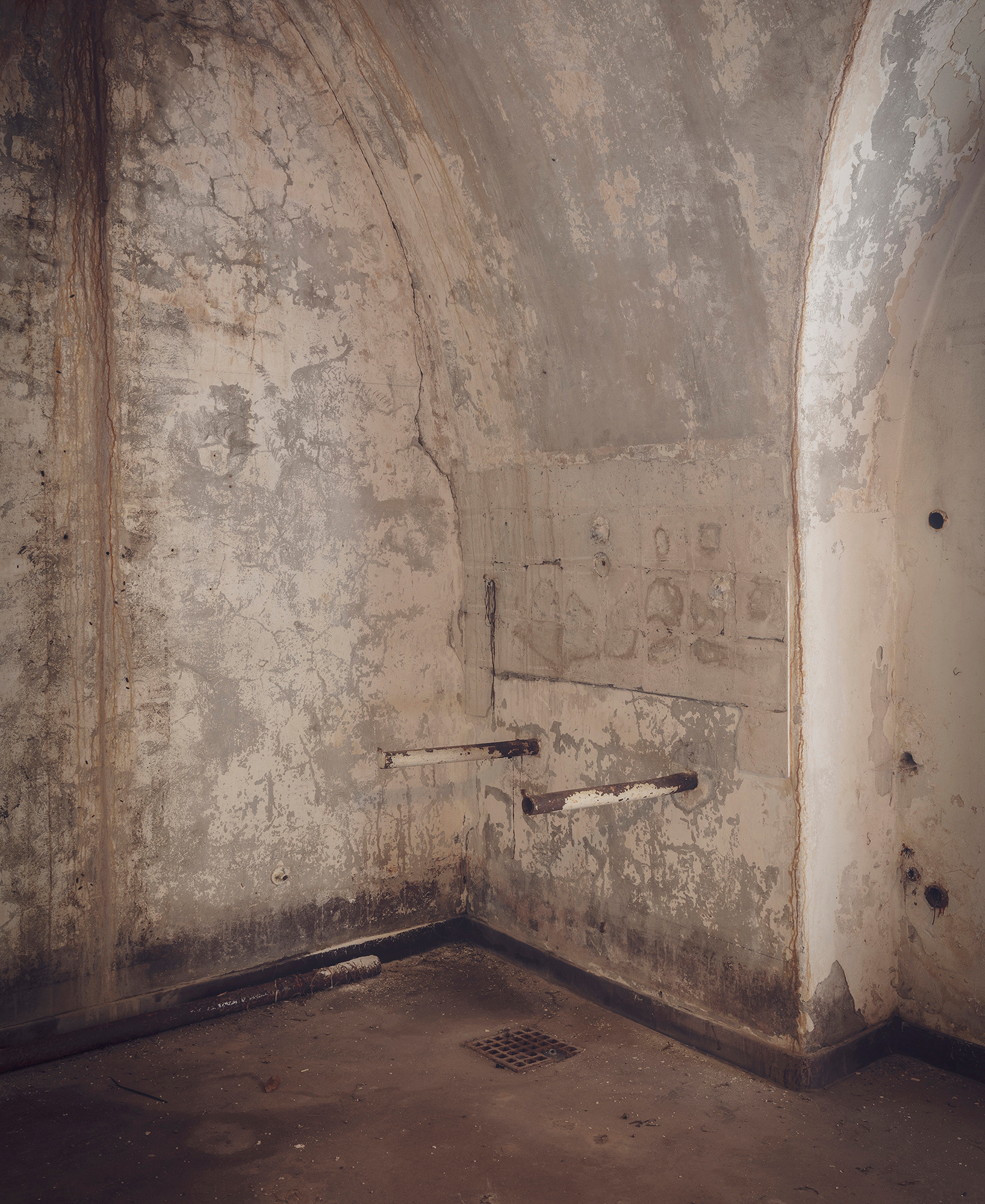
Hjørner#5. Backlit photographic print in a x-ray viewer. 36x44cm. Unique edition.
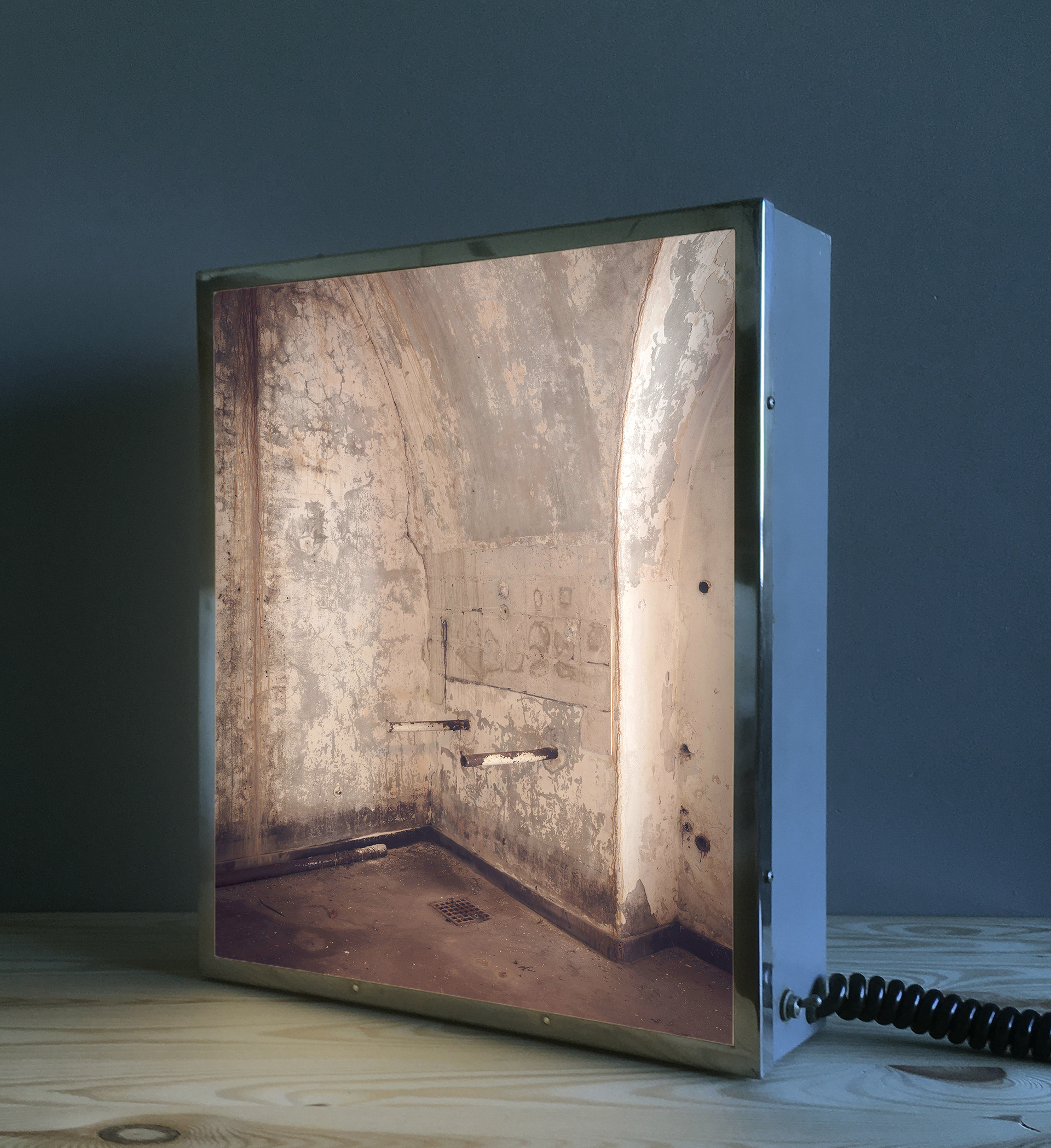
Teaterøen is a platform for Danish and international performing arts based in a former military barracks on the island of Lynetten, challenging traditional structures of the stage arts. One of its buildings, known as the Bunker, has a distinctive raw interior and has hosted readings, music-video shoots, dance performances and exhibitions.
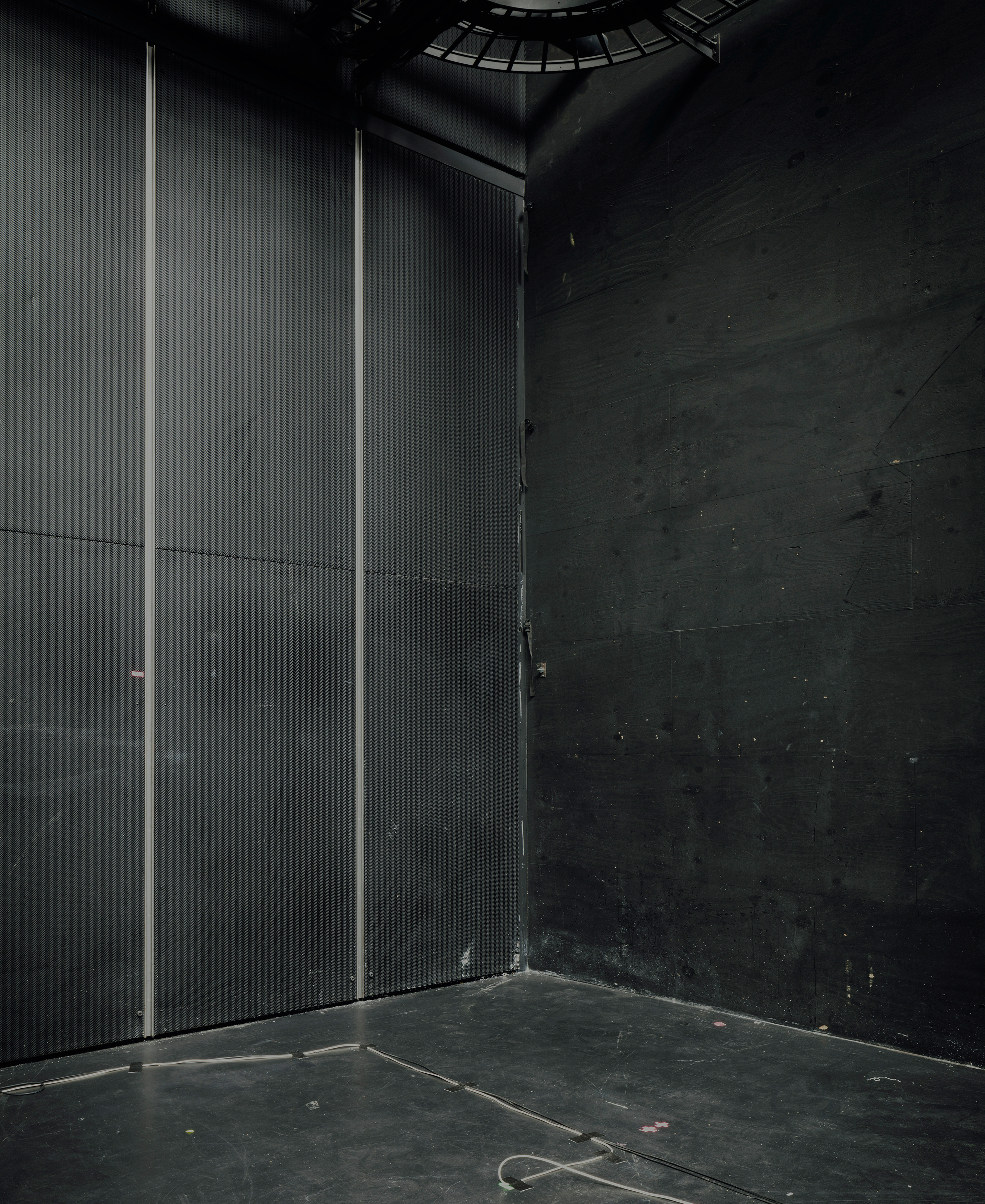
Hjørner#3. Backlit photographic print in a x-ray viewer. 36x44cm. Unique edition.
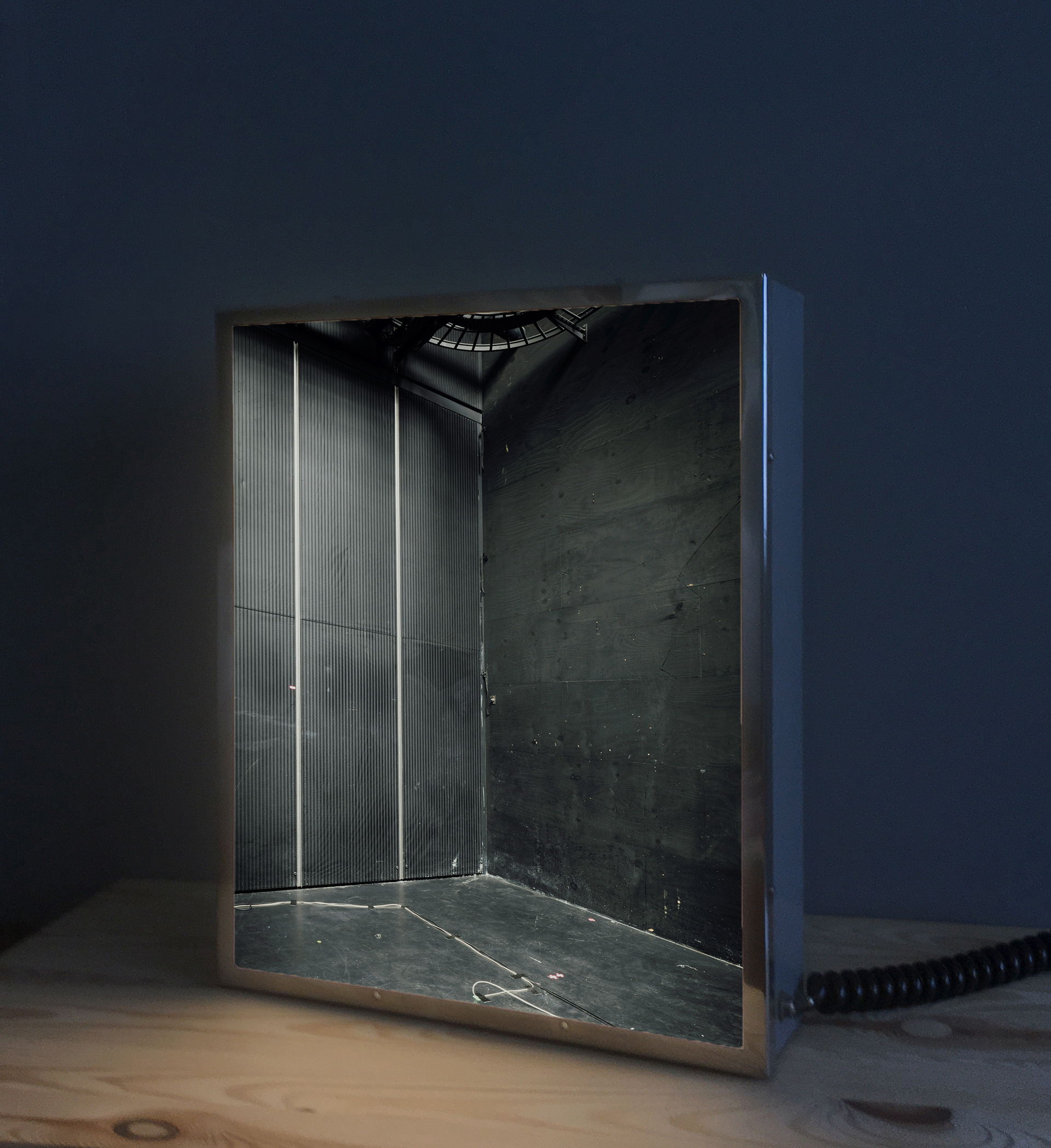
Sort/Hvid is a theatre housed in a former slaughterhouse in Copenhagen’s Meatpacking District, working through collaborations with artists, performers, researchers, festivals and arts institutions. Its programmes explore contemporary issues with the aim of expanding public awareness.
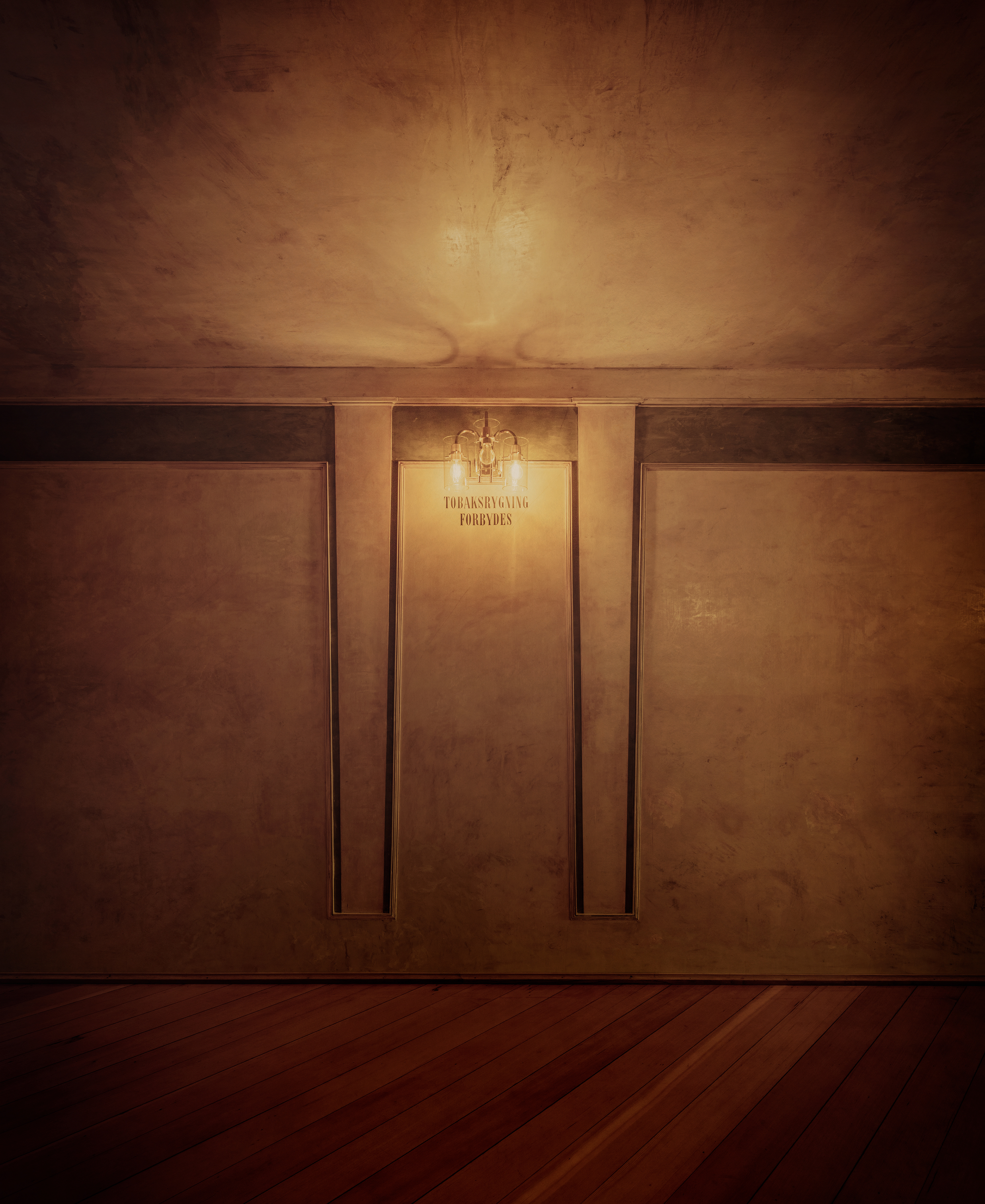
Hjørner#4. Backlit photographic print in a x-ray viewer. 36x44cm. Unique edition.
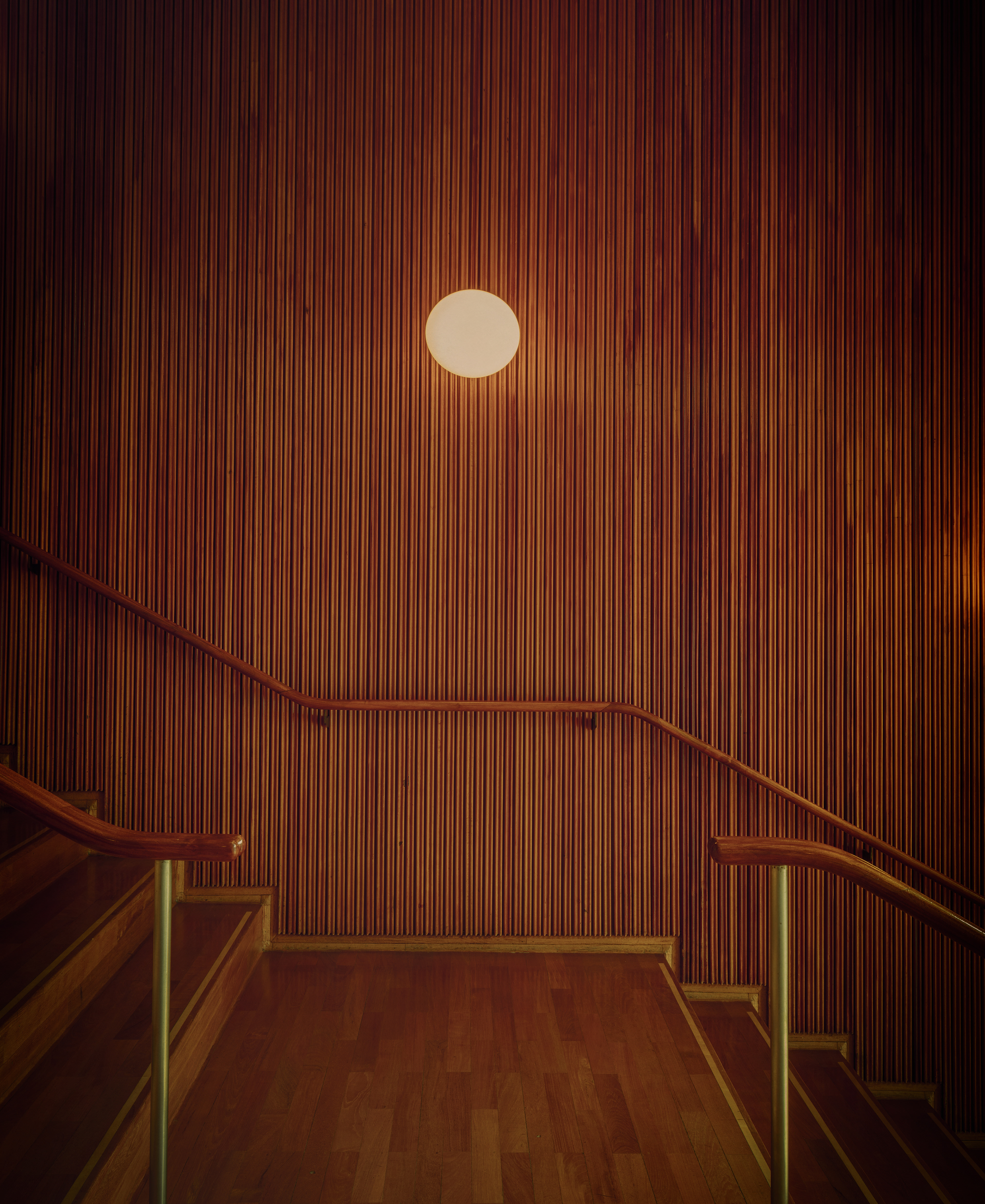
Hjørner#6. Backlit photographic print in a x-ray viewer. 36x44cm. Unique edition.
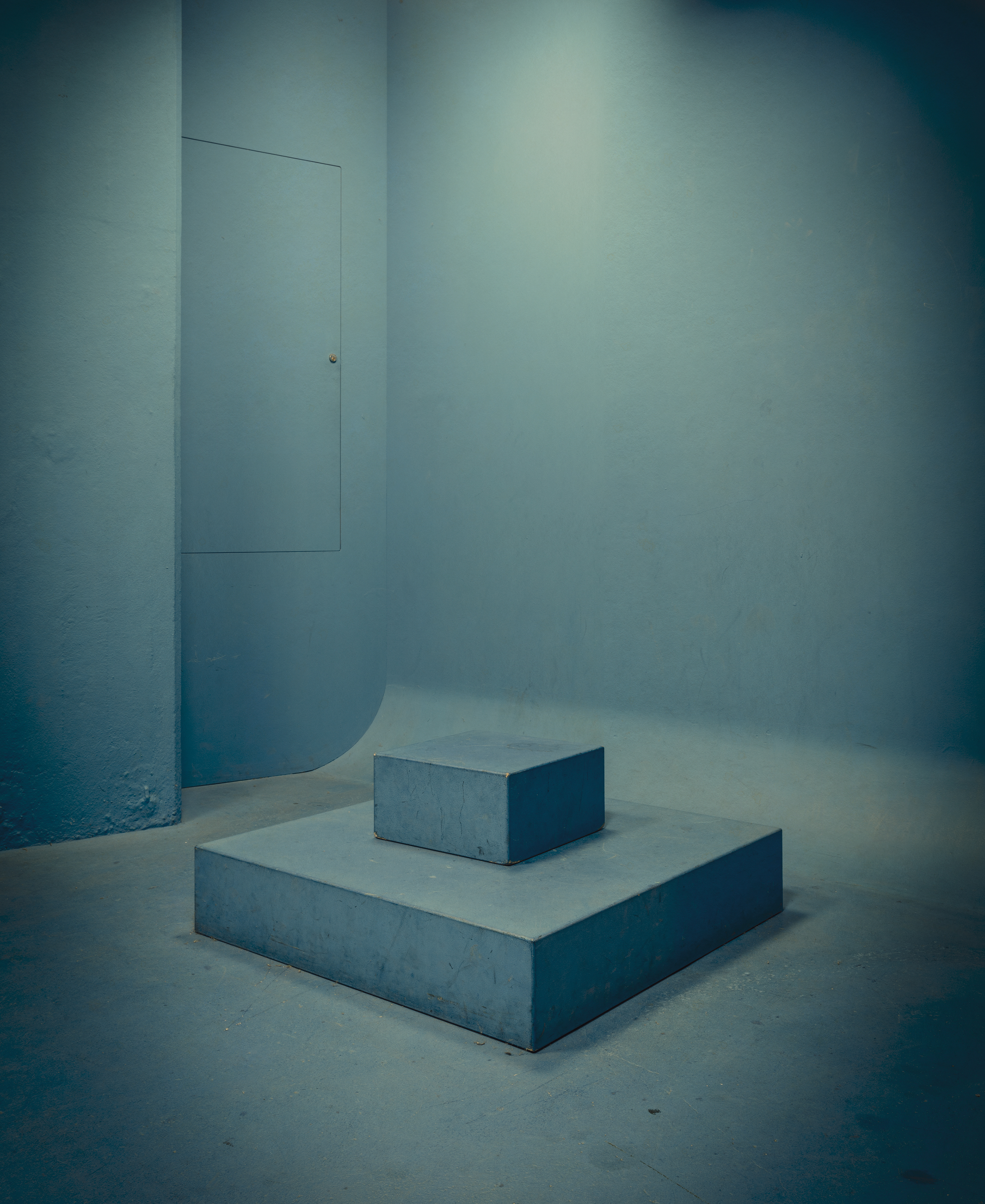
Hjørner#2. Backlit photographic print in a x-ray viewer. 36x44cm. Unique edition. Cinemateket, part of the Danish Film Institute, hosts a range of public film activities, including cinemas, a library and FILM-X, a studio where children can create and perform in their own short films. The studio uses virtual sets, green screens and rear projection to create different cinematic environments.
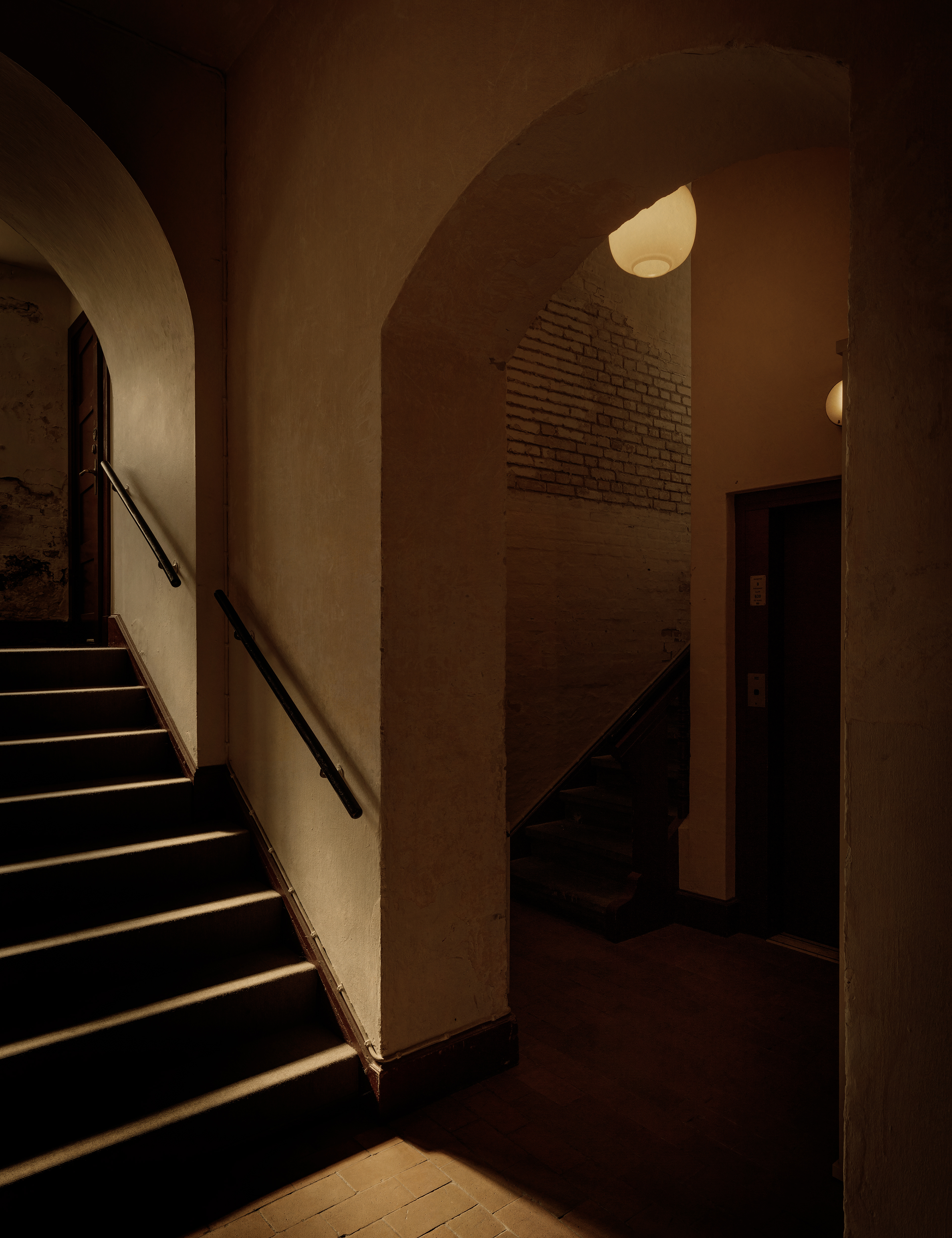
Trappe #1. Fine Art Photographic Print. 130x100cm. Beech frame with museum glass. Edition of 3 + AP. KoncertKirken opened in 2009 as Denmark’s first concert church and has since become a popular cultural destination for musicians, artists and audiences from Denmark and abroad. Between October 2009 and December 2019, it presented more than 1,600 performances across a wide range of genres.
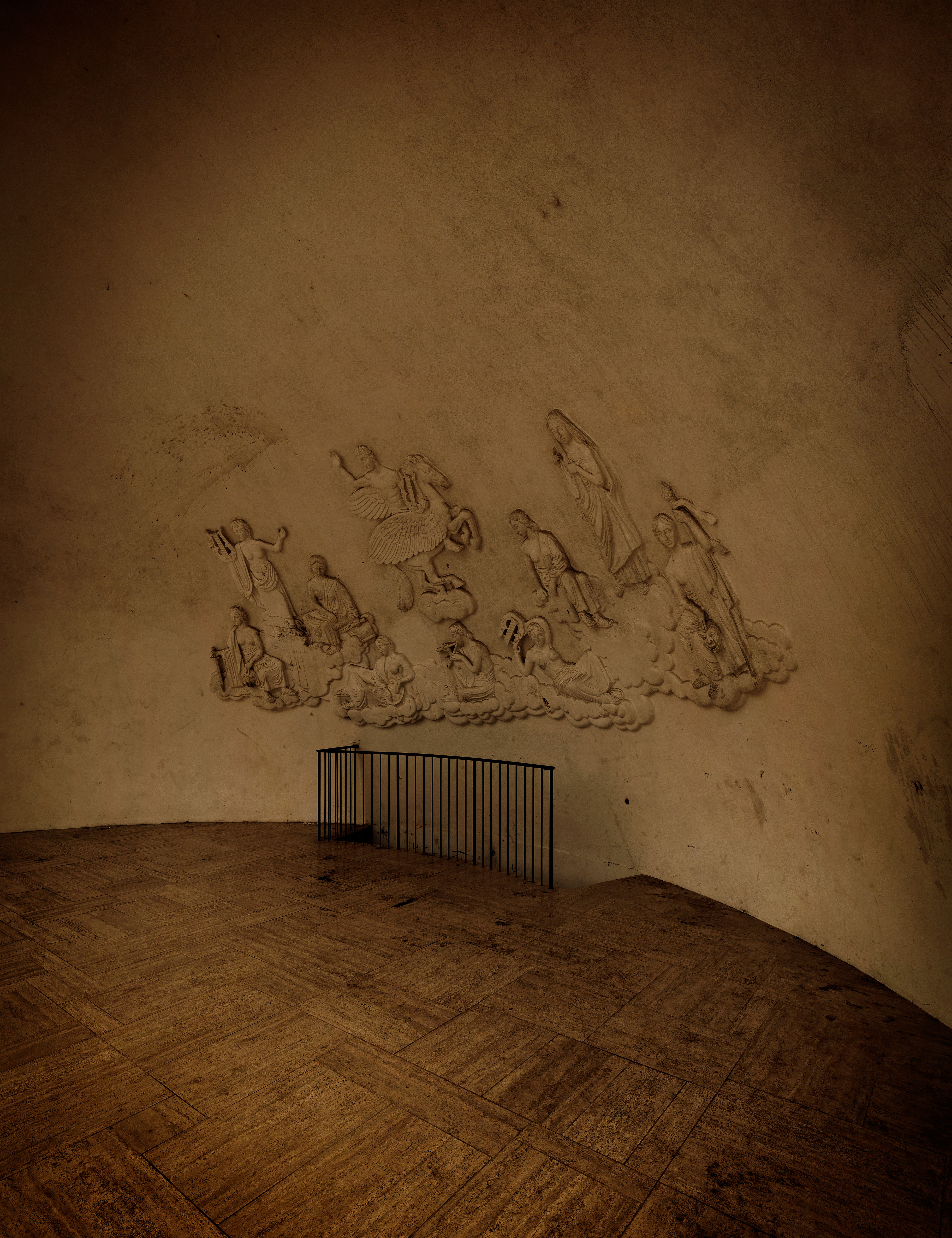
Trappe #2. Fine Art Photographic Print. 130x100cm. Beech frame with museum glass. Edition of 3 + AP. This bandstand was designed in 1927 by Arne Jacobsen while he was working for the City of Copenhagen’s architecture department under Poul Holsøe. Its simple copper-clad shell, shaped as a quarter-sphere, is designed to project sound forwards and stands on a stone pedestal forming a stage, with performers’ facilities below.
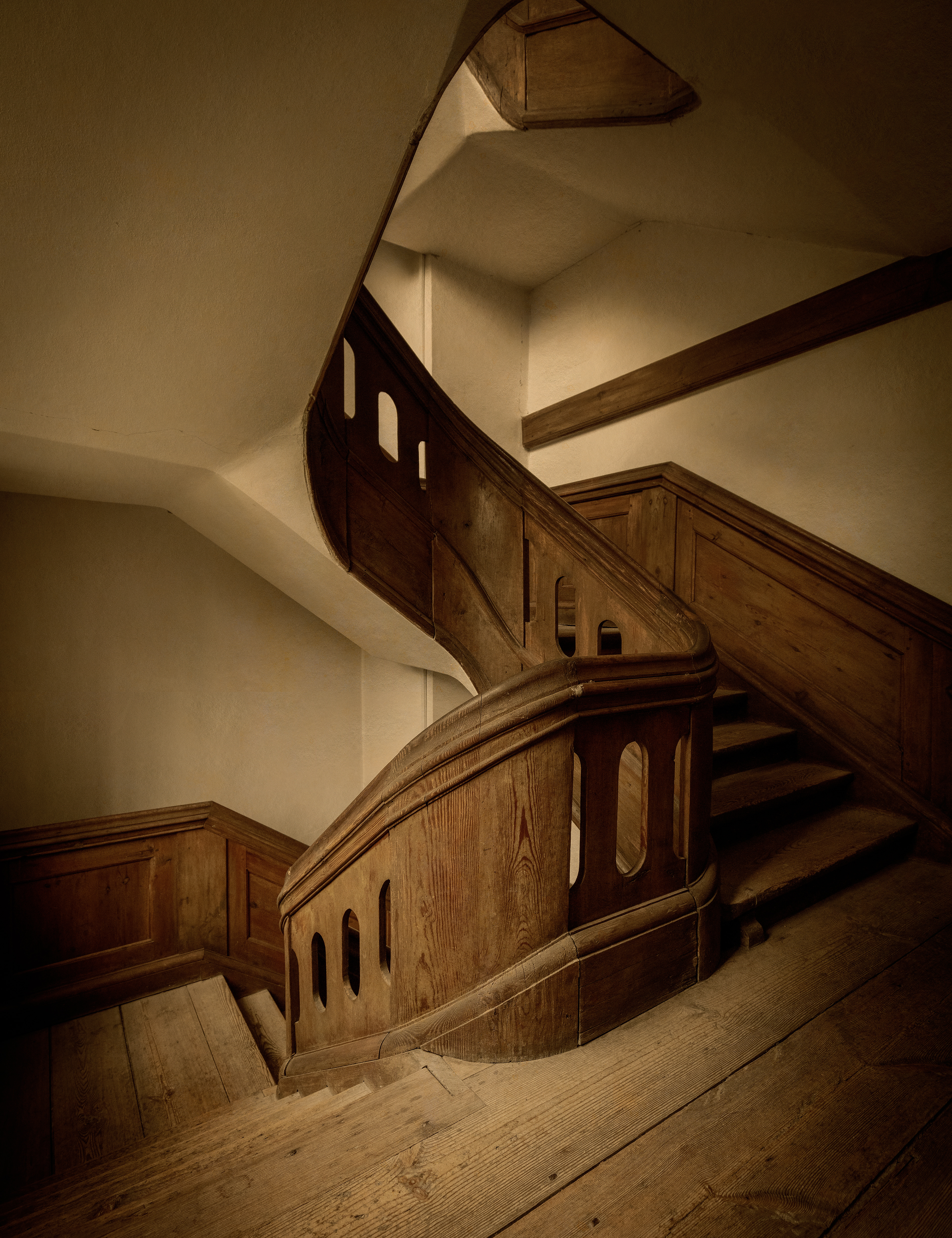
Trappe #3. Fine Art Photographic Print. 130x100cm. Beech frame with museum glass. Edition of 3 + AP. Christians Church was built between 1754 and 1759 and designed by Nicolai Eigtved, and is particularly admired for its boxes, which form a three-storey crown around the church interior. Once nicknamed the “theatre church” for its decoration, it is now primarily a venue for music, hosting concerts for up to 600 people ranging from classical masterpieces to contemporary artists.
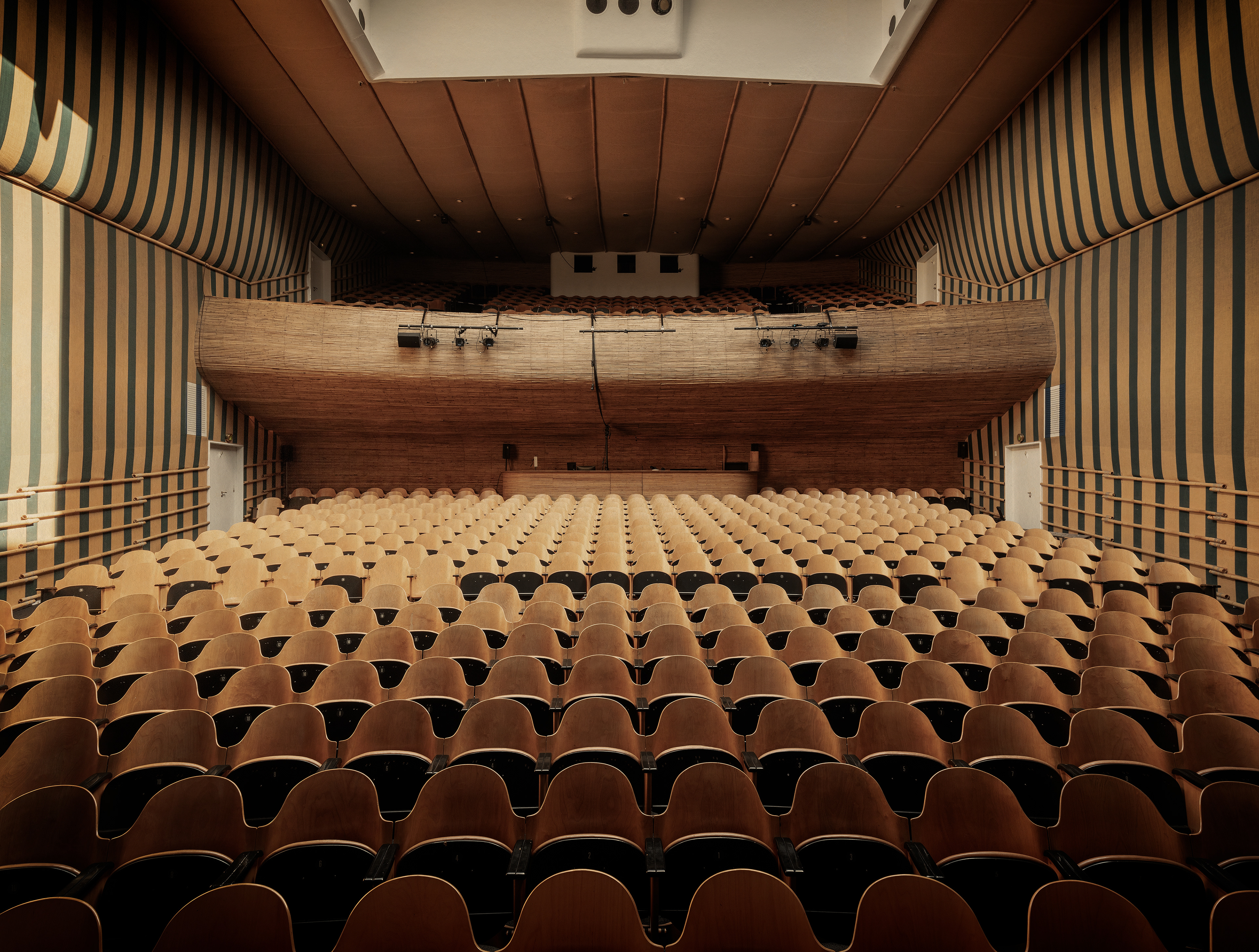
Landmark #2. Backlit photographic print in a lit graphic table. 125x95cm. Unique edition. Bellevue Theatre was inaugurated in 1936, designed by the renowned architect Arne Jacobsen, and is considered one of his most important architectural works and an outstanding example of Danish Functionalism. Originally opened as a summer theatre, it later operated as a cinema until 1980 before reopening as a theatre and film centre.
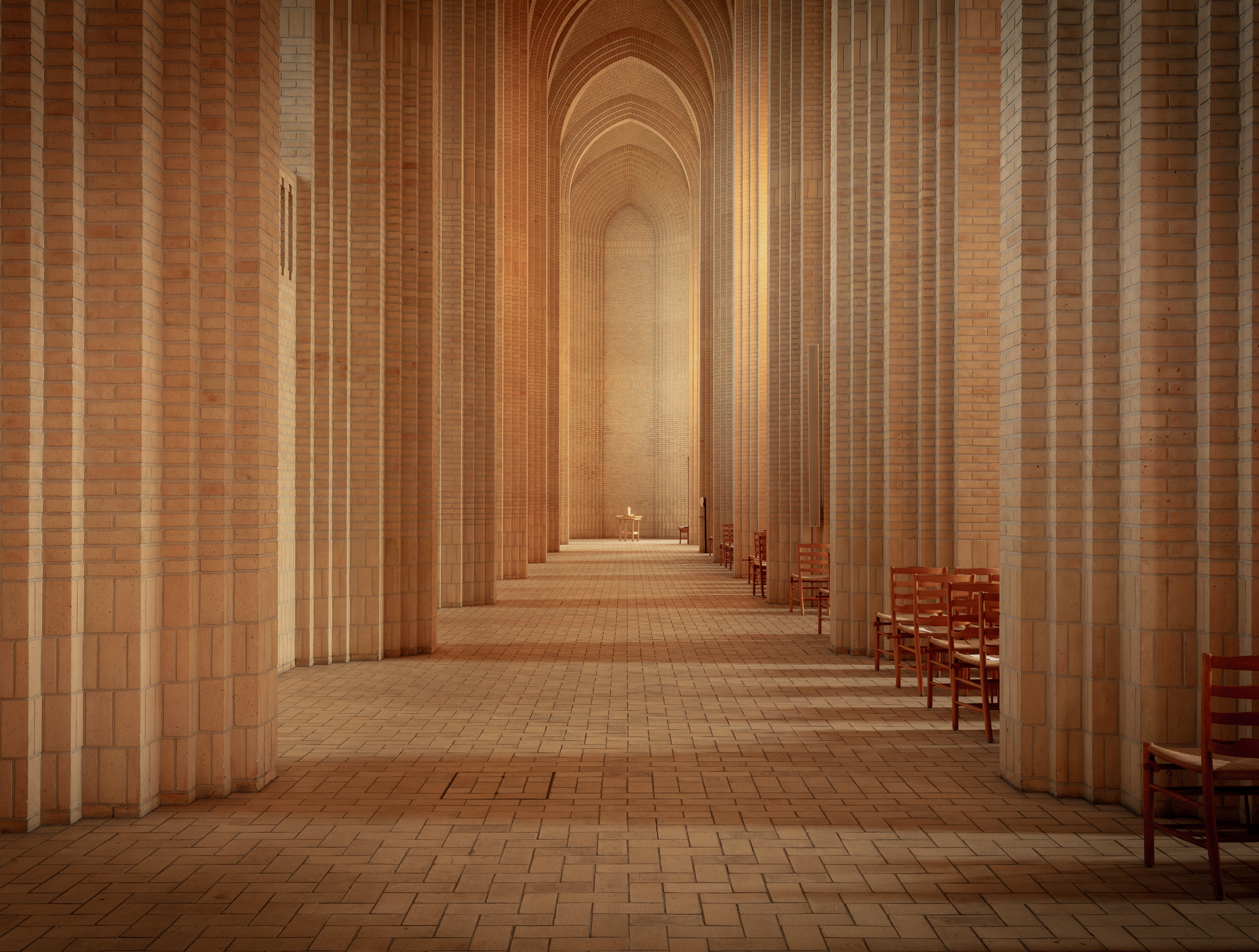
Landmark #1. Backlit photographic print in a lit graphic table. 125x95cm. Unique edition. Grundtvig’s Church is one of Copenhagen’s best-known churches and a rare example of Expressionist church architecture, designed by Peder Vilhelm Jensen-Klint and built during the 1920s and 1930s. It has an active music programme ranging from organ and choir performances to orchestral concerts.
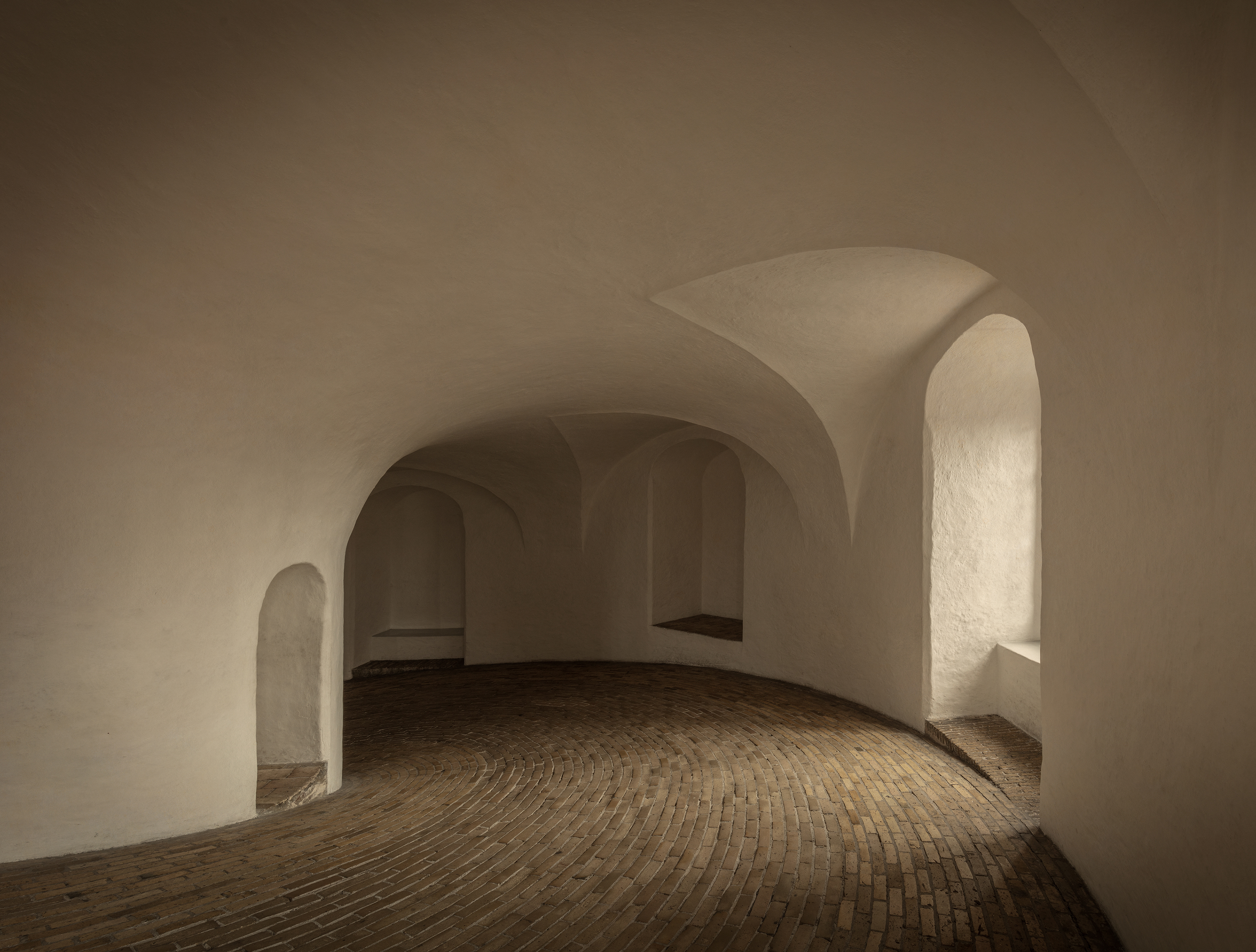
Landmark #3. Backlit photographic print in a lit graphic table. 125x95cm. Unique edition. The Round Tower, built in 1642 by King Christian IV of Denmark, is one of the country’s most iconic buildings and a landmark of Copenhagen. Originally built to house the university observatory, it now hosts a programme of exhibitions, lectures and concerts for audiences of all ages.
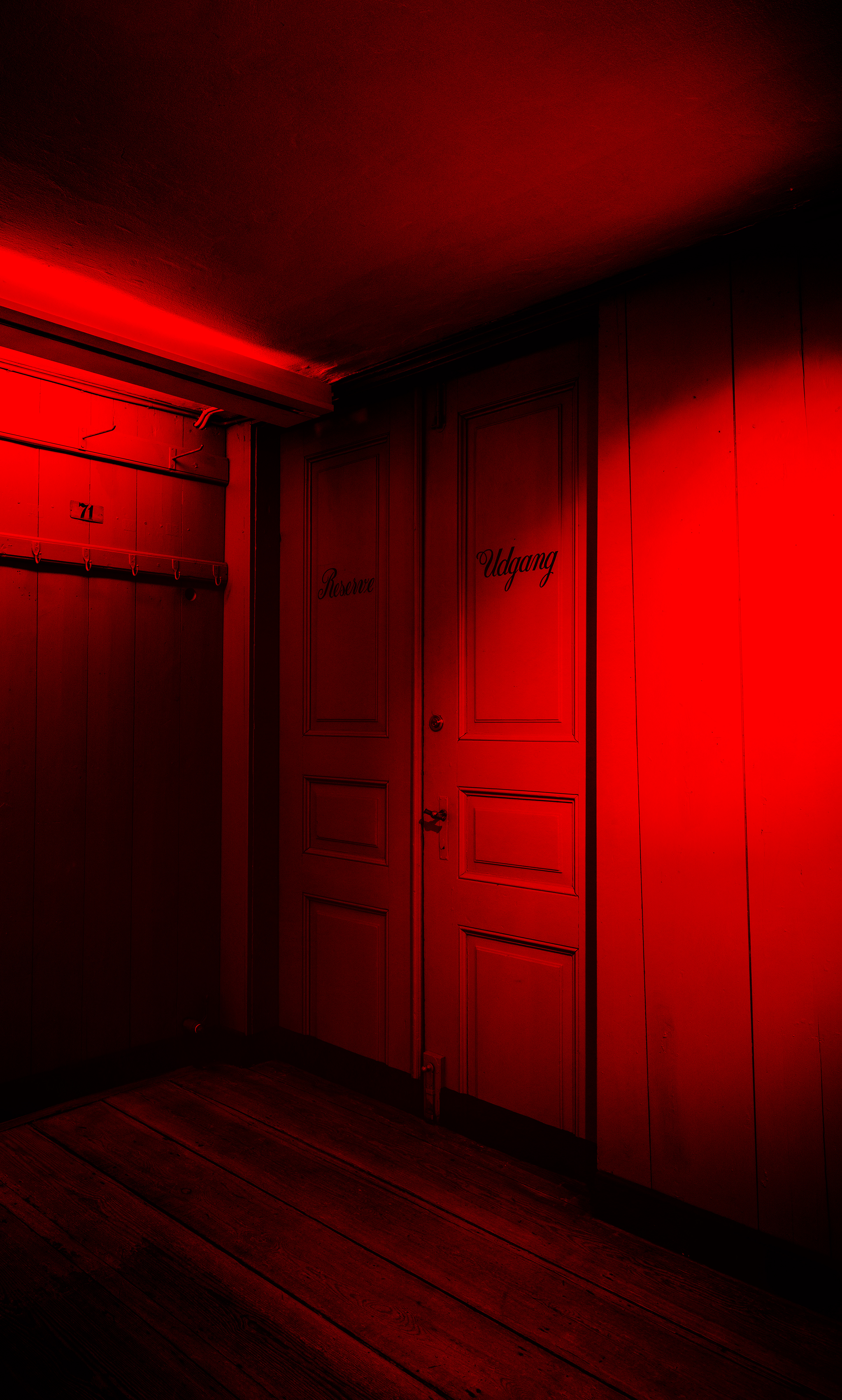
Rød#3. Backlit photographic print in an industrial metal container. 31x51cm. Unique edition.
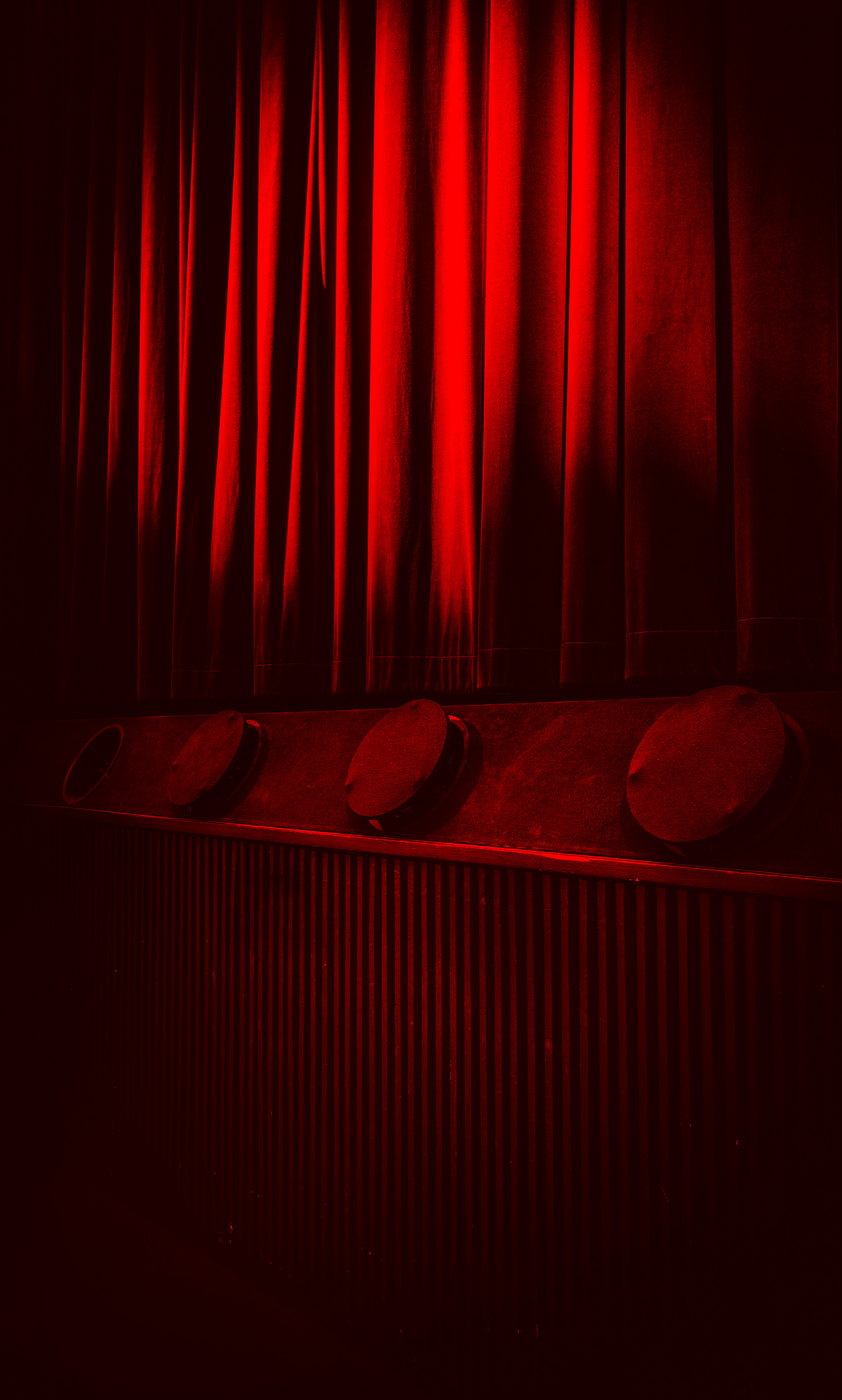
Rød#2. Backlit photographic print in an industrial metal container. 31x51cm. Unique edition. Grand Teatret is one of Copenhagen’s oldest cinemas, located within the Palace Hotel complex on City Hall Square. The building was designed by Anton Rosen in the Art Deco style in 1910.
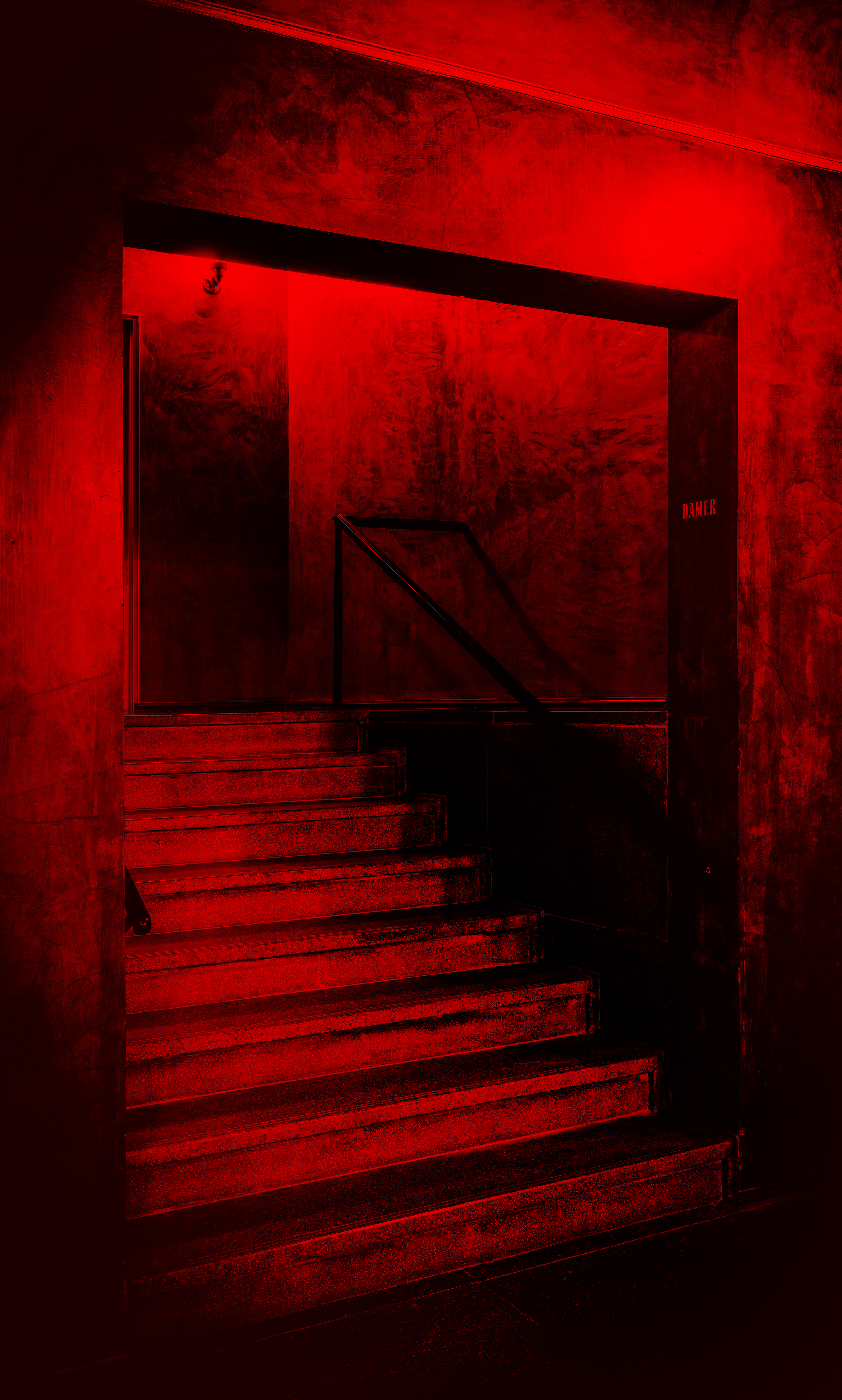
Rød#1. Backlit photographic print in an industrial metal container. 31x51cm. Unique edition.
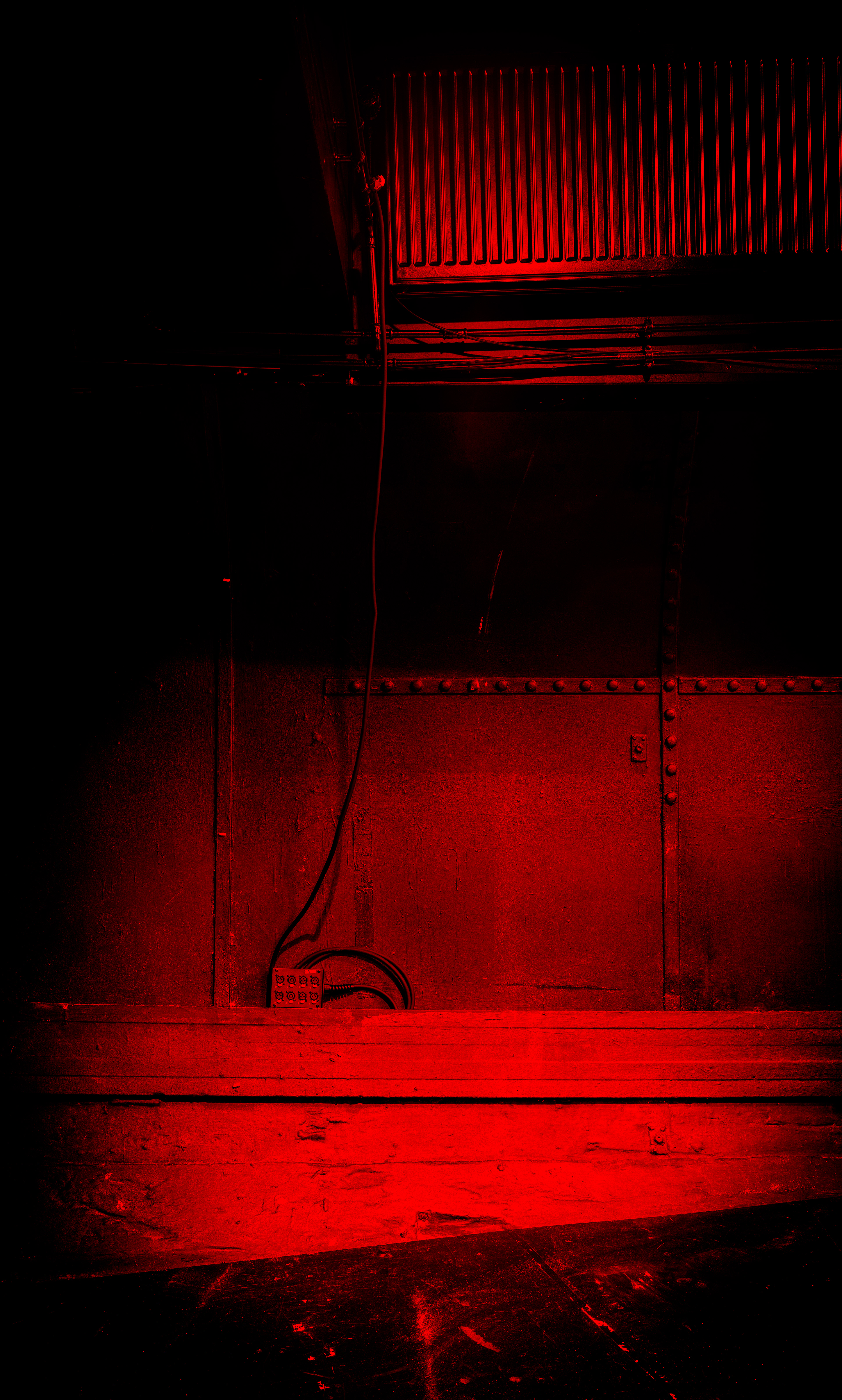
Rød#4. Backlit photographic print in an industrial metal container. 31x51cm. Unique edition. Badteater is dedicated to developing puppet and animation theatre for adults, creating a magical and playful world in contrast to conventional interpretations of classical and philosophical texts. Its unique character is also defined by its unusual setting: the theatre is located on a ship.
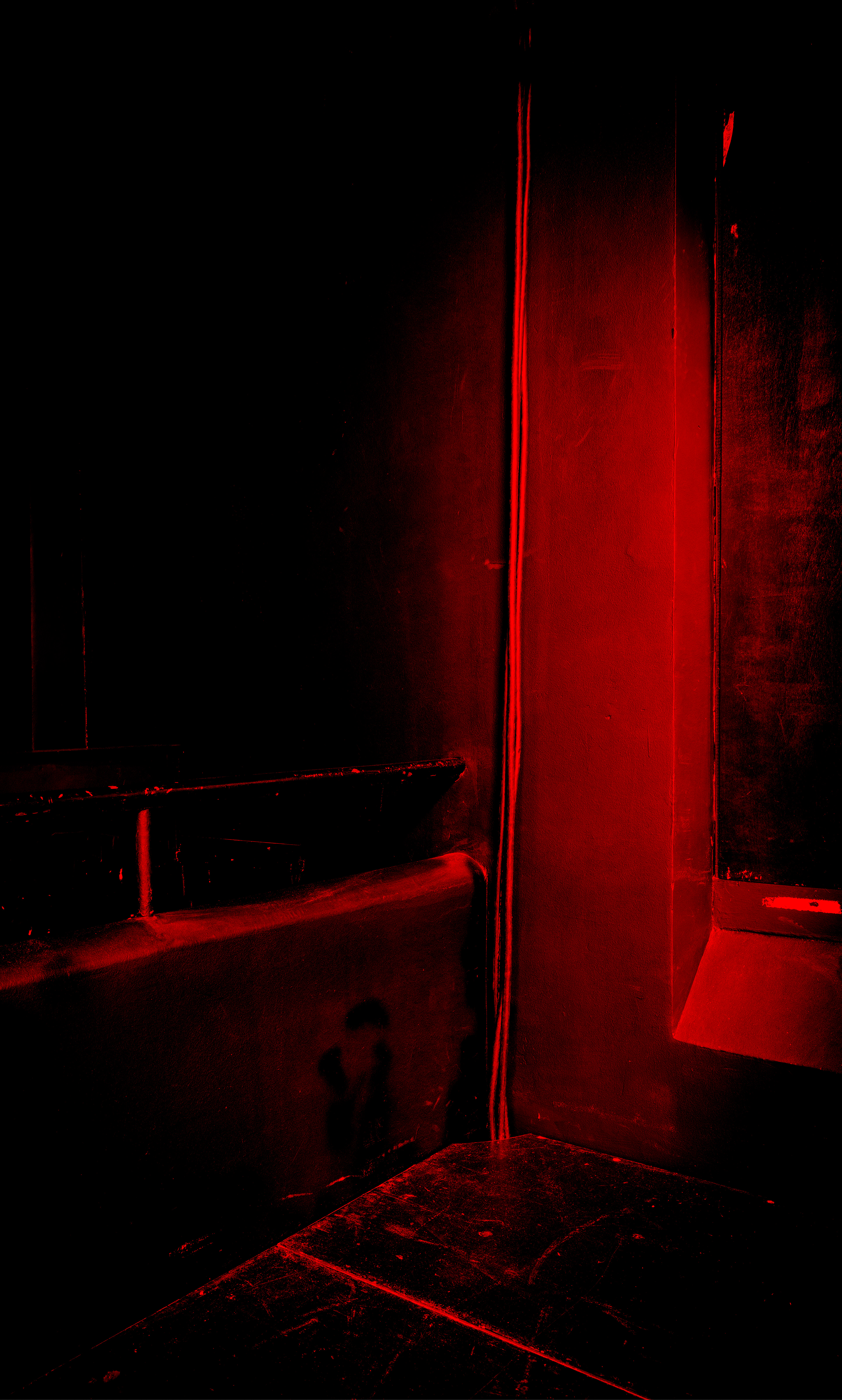
Rød#7. Backlit photographic print in an industrial metal container. 31x51cm. Unique edition.
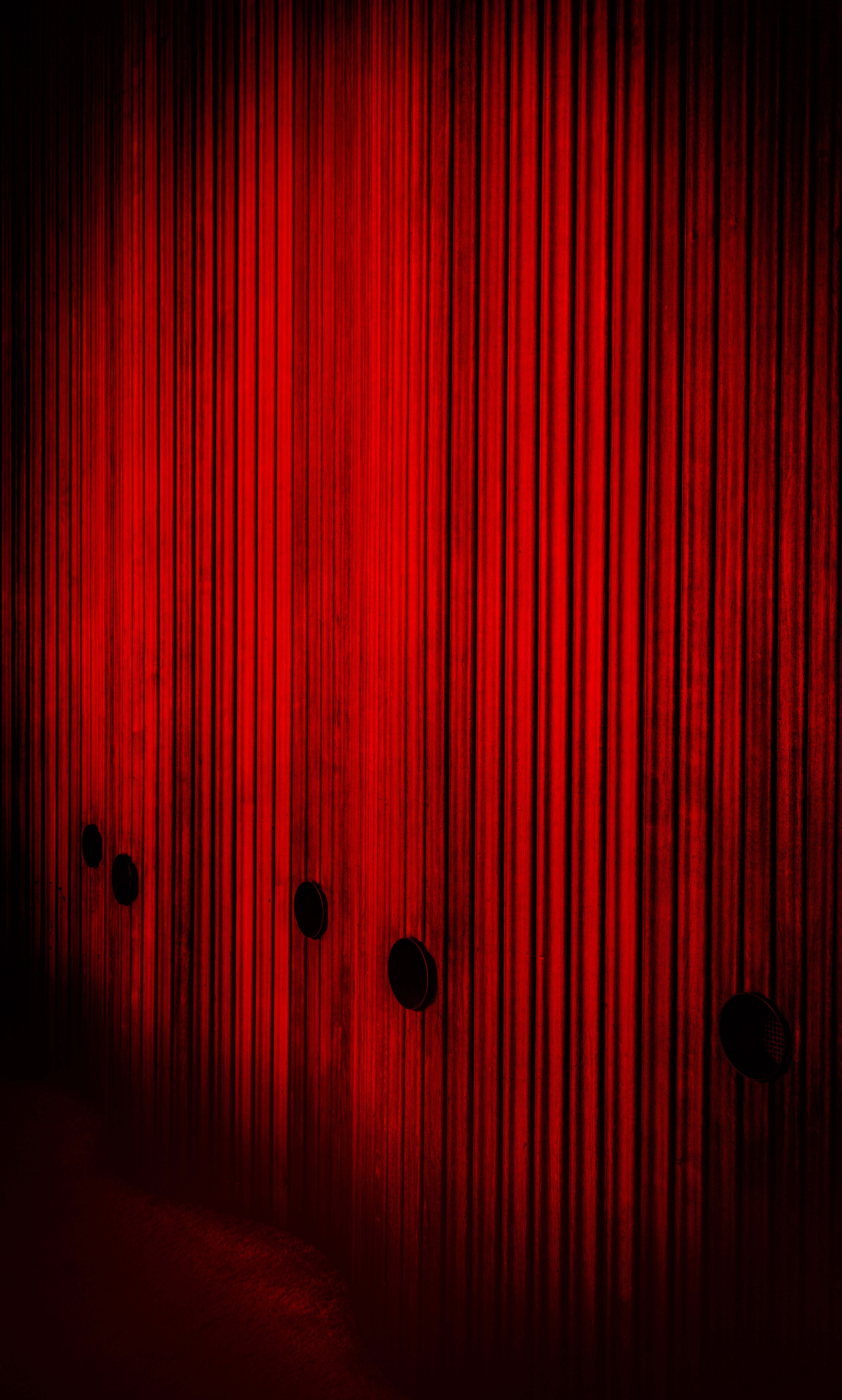
Rød#6. Backlit photographic print in an industrial metal container. 31x51cm. Unique edition.
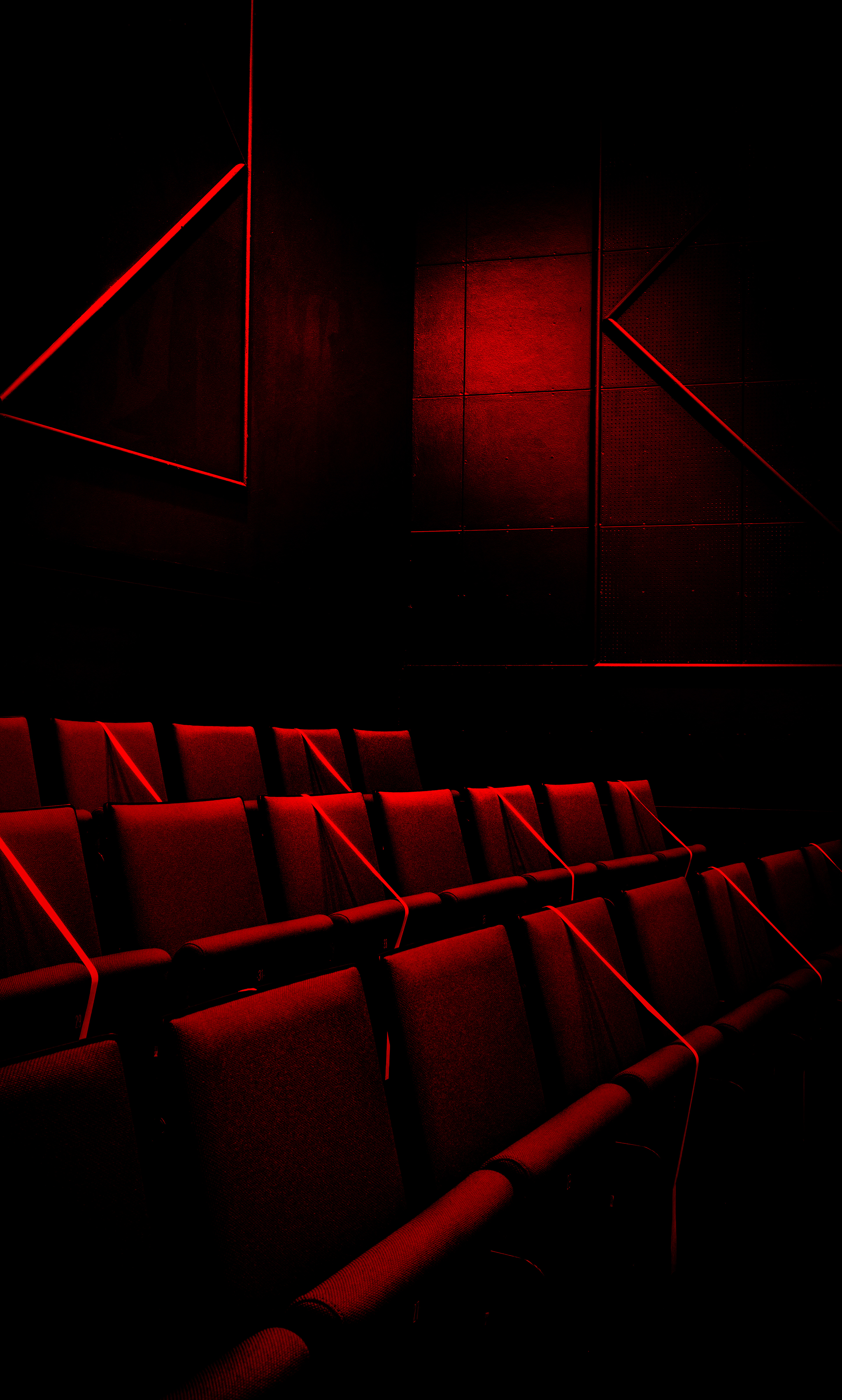
Rød#5. Backlit photographic print in an industrial metal container. 31x51cm. Unique edition. Auditoriet is an 800-seat concert hall at the Scandic Falkoner Hotel, remodelled in 2019 from the former 3 Falke Bio cinema, which opened in 1958 as Denmark’s first cinema designed for Todd-AO. Part of the modernist Falkoner Centre designed by Danish architect Ole Hagen, it has hosted performances by artists including Judy Garland and The Doors.
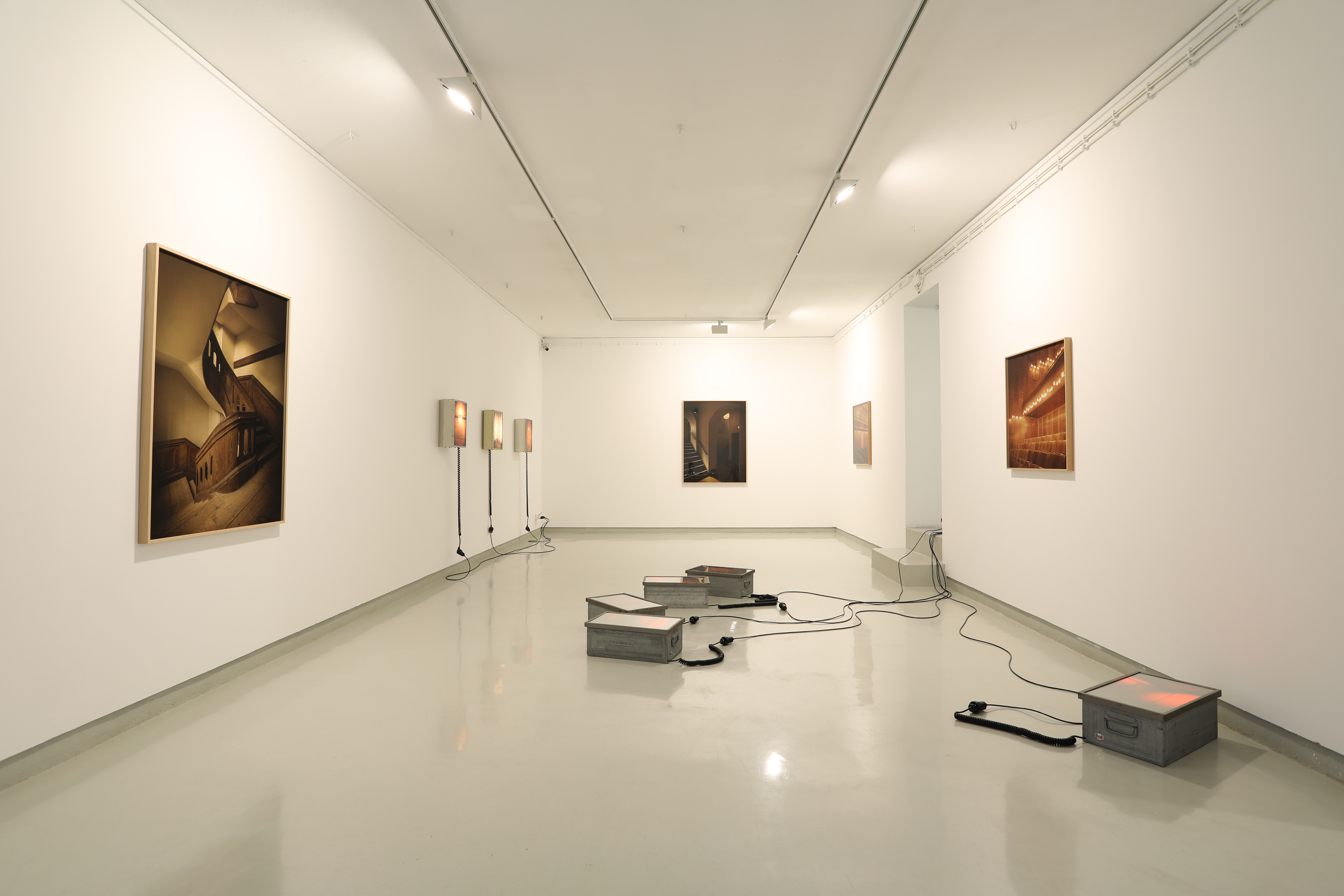
Exhibition view at Galeria Presença. 2021.
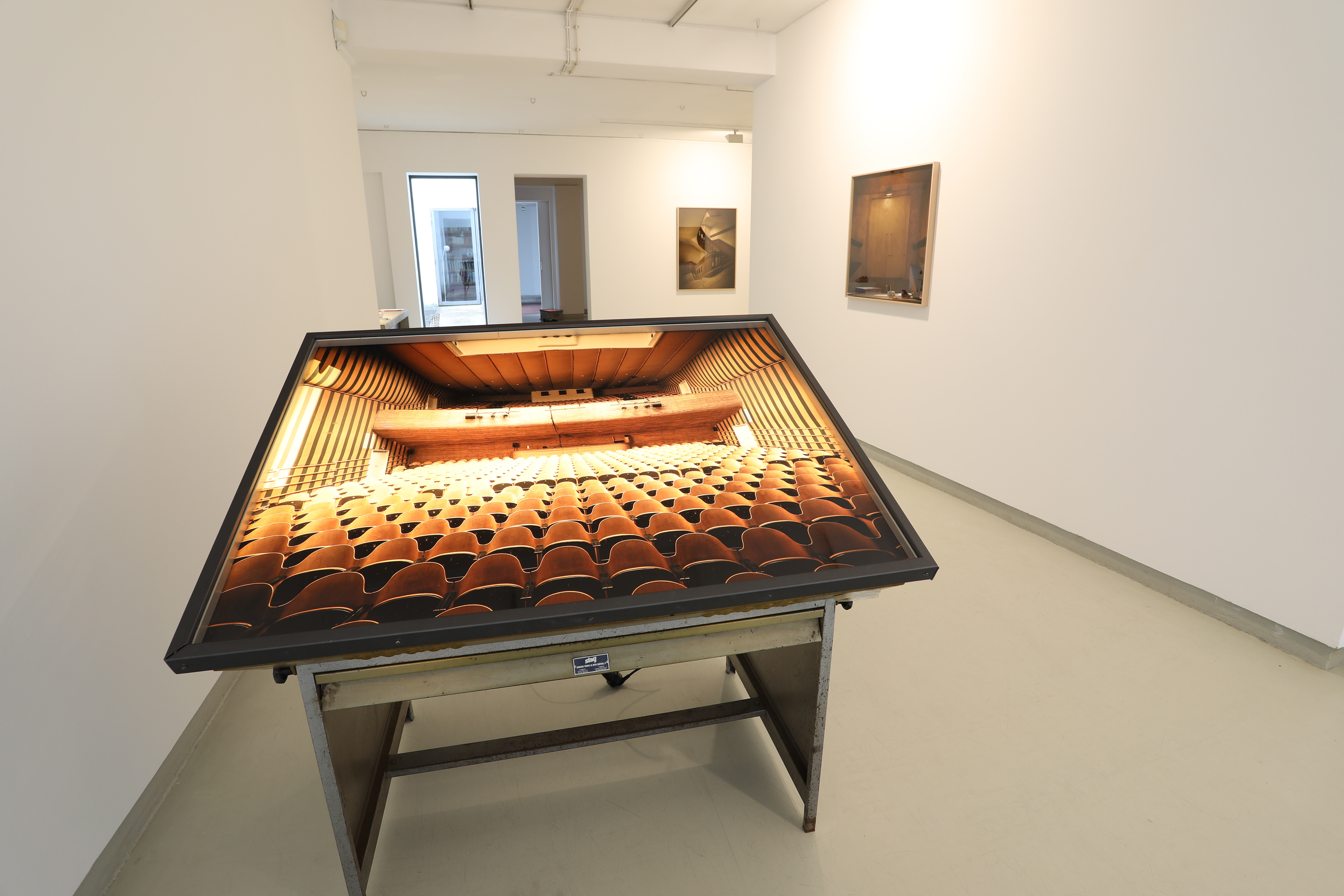
Exhibition view at Galeria Presença. 2021.
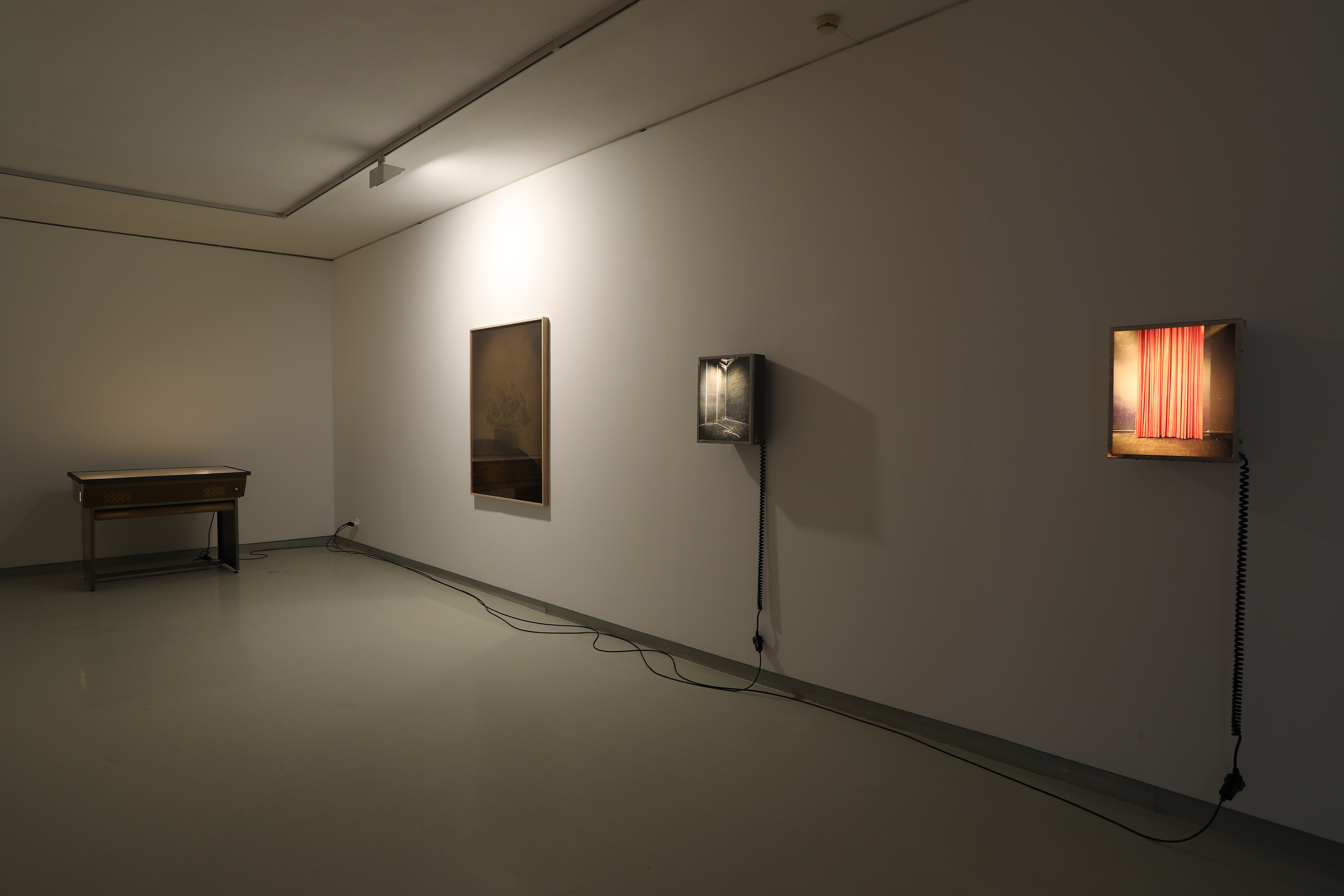
Exhibition view at Galeria Presença. 2021.
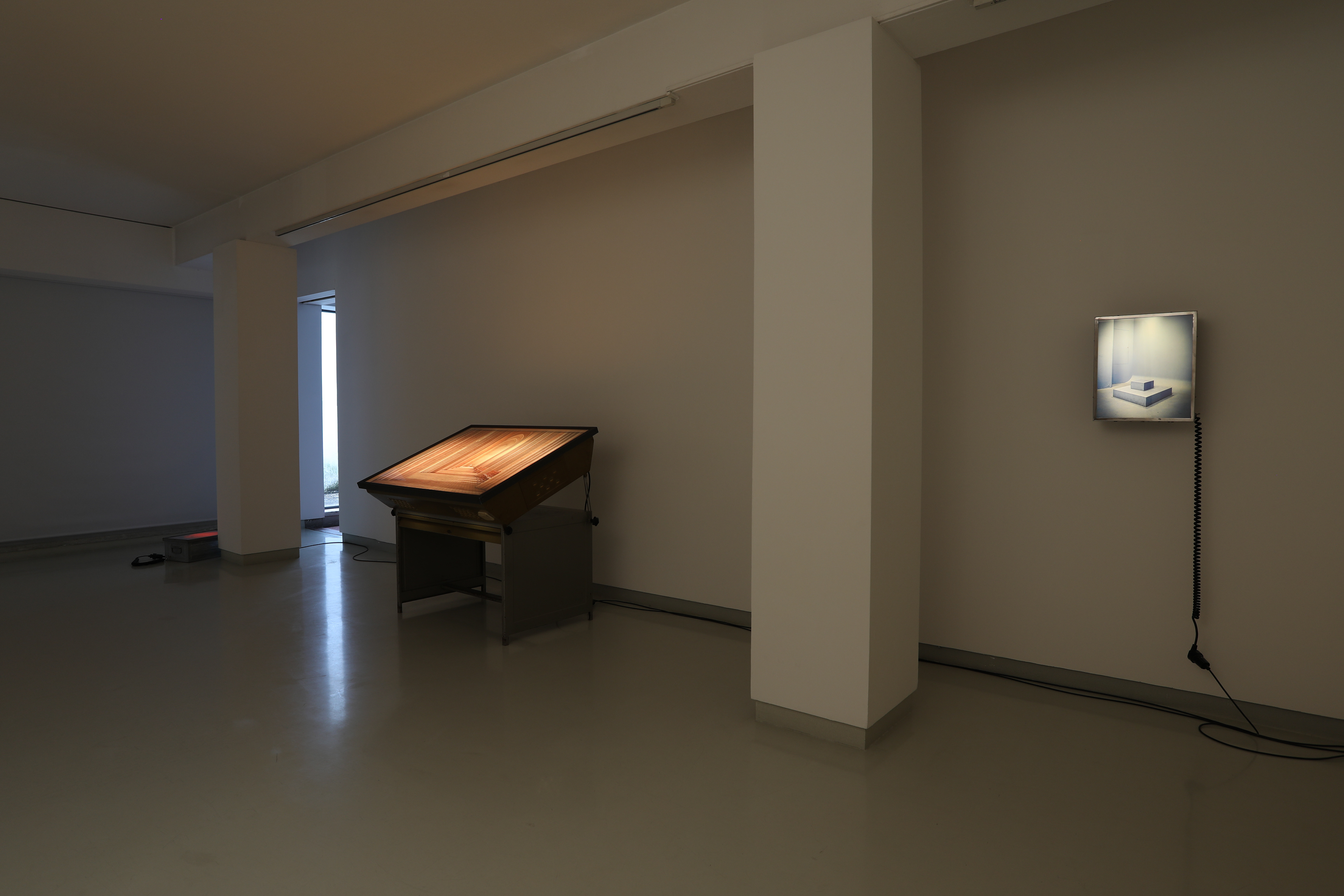
Exhibition view at Galeria Presença. 2021.
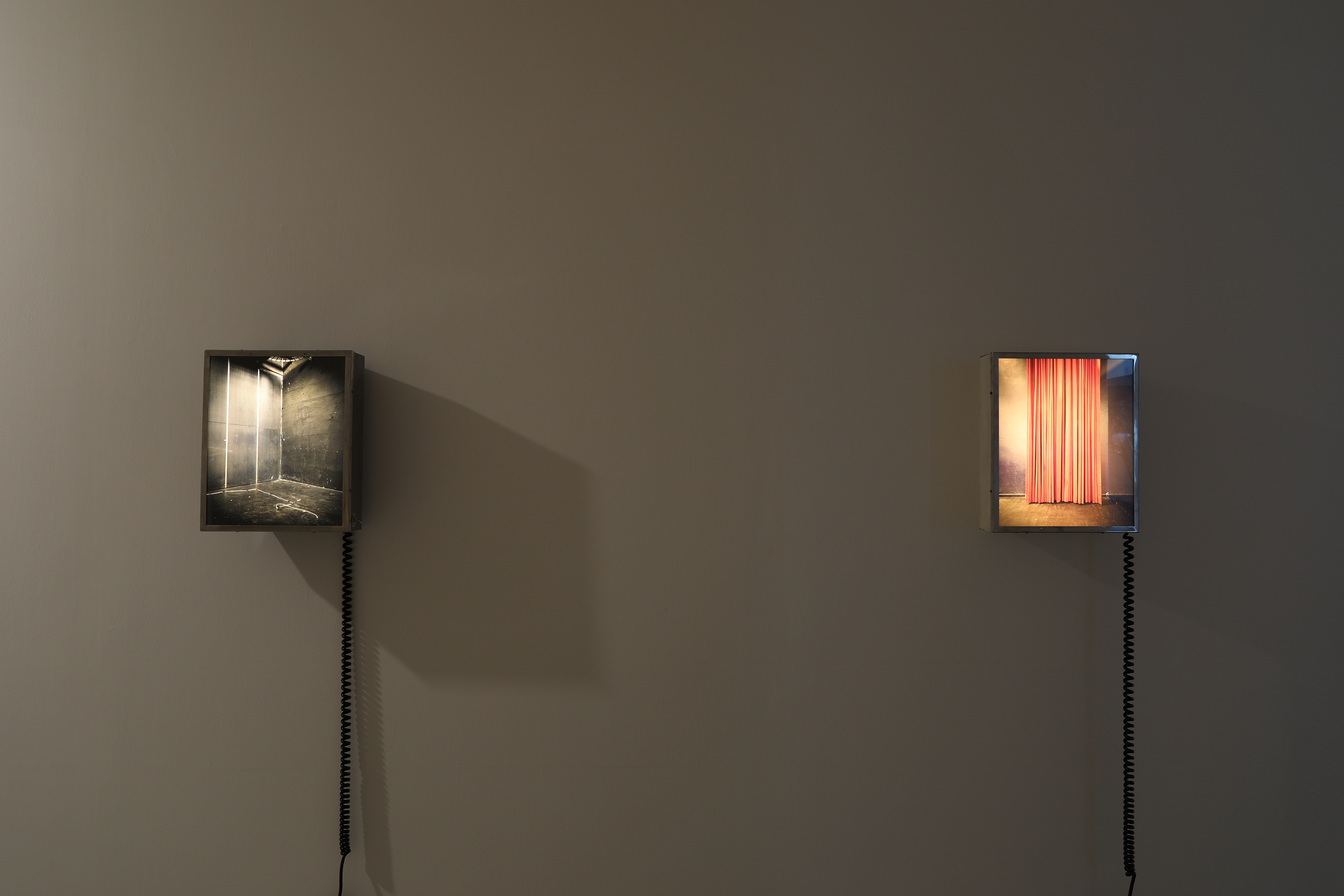
Exhibition view at Galeria Presença. 2021.
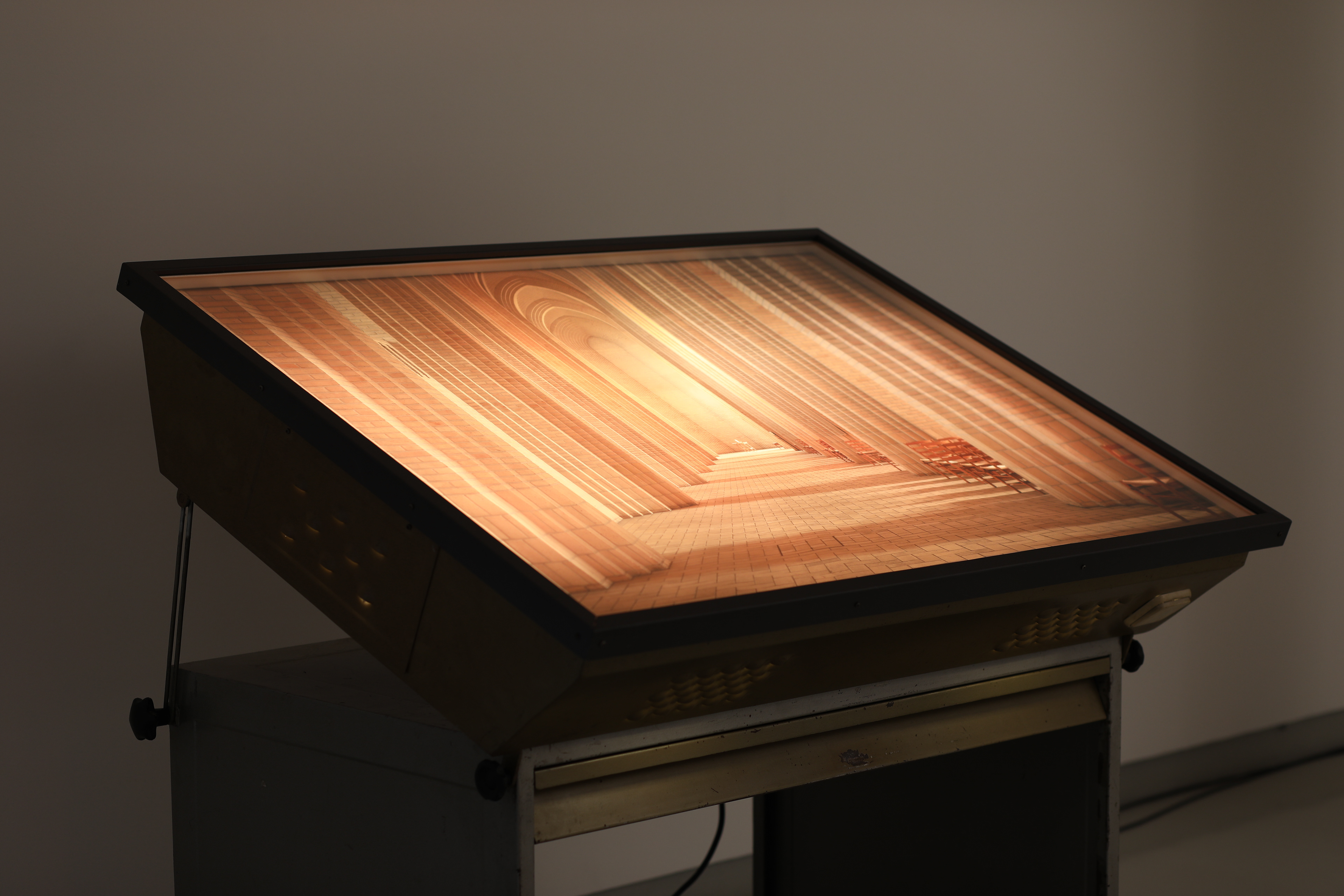
Exhibition view at Galeria Presença. 2021.
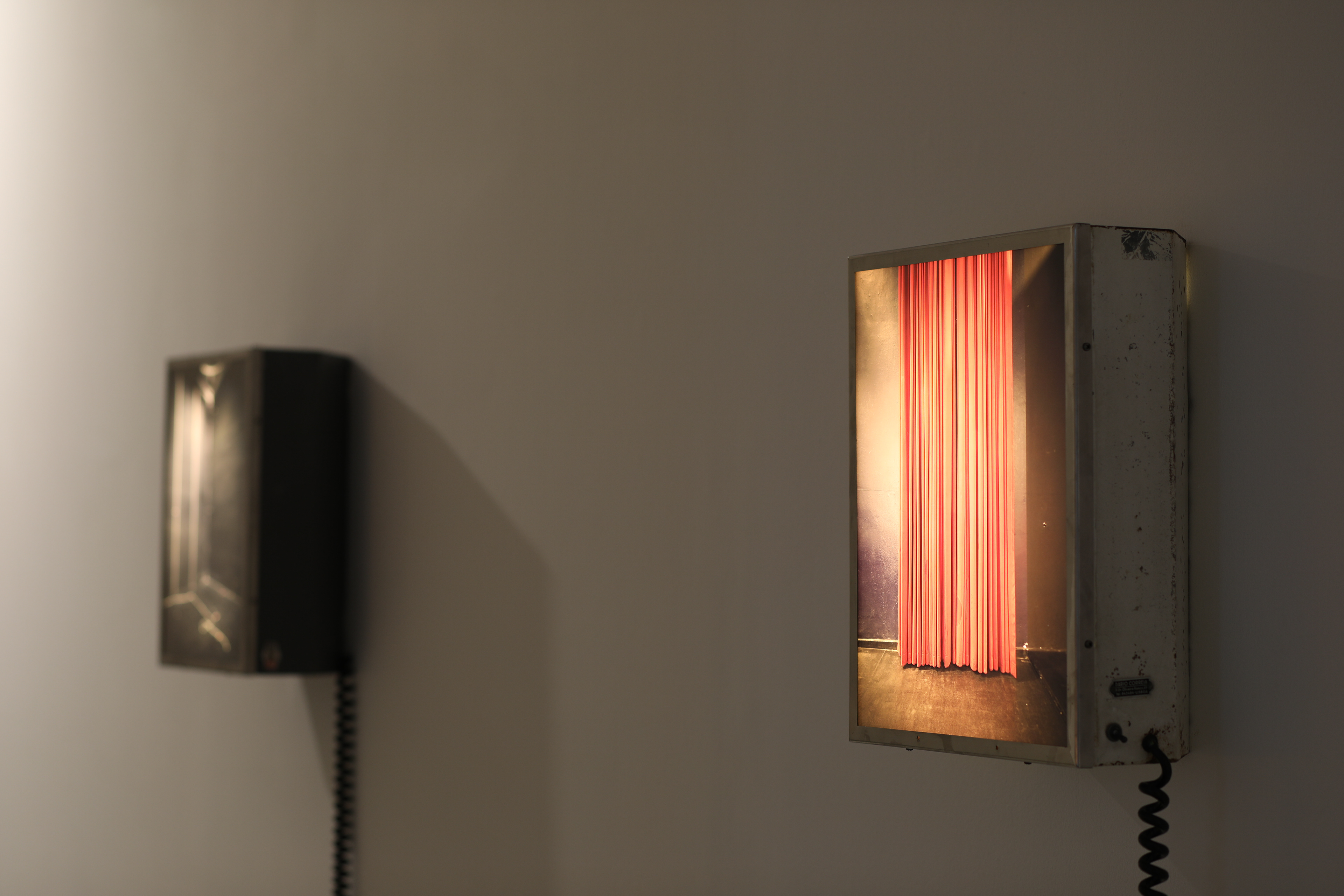
Exhibition view at Galeria Presença. 2021.
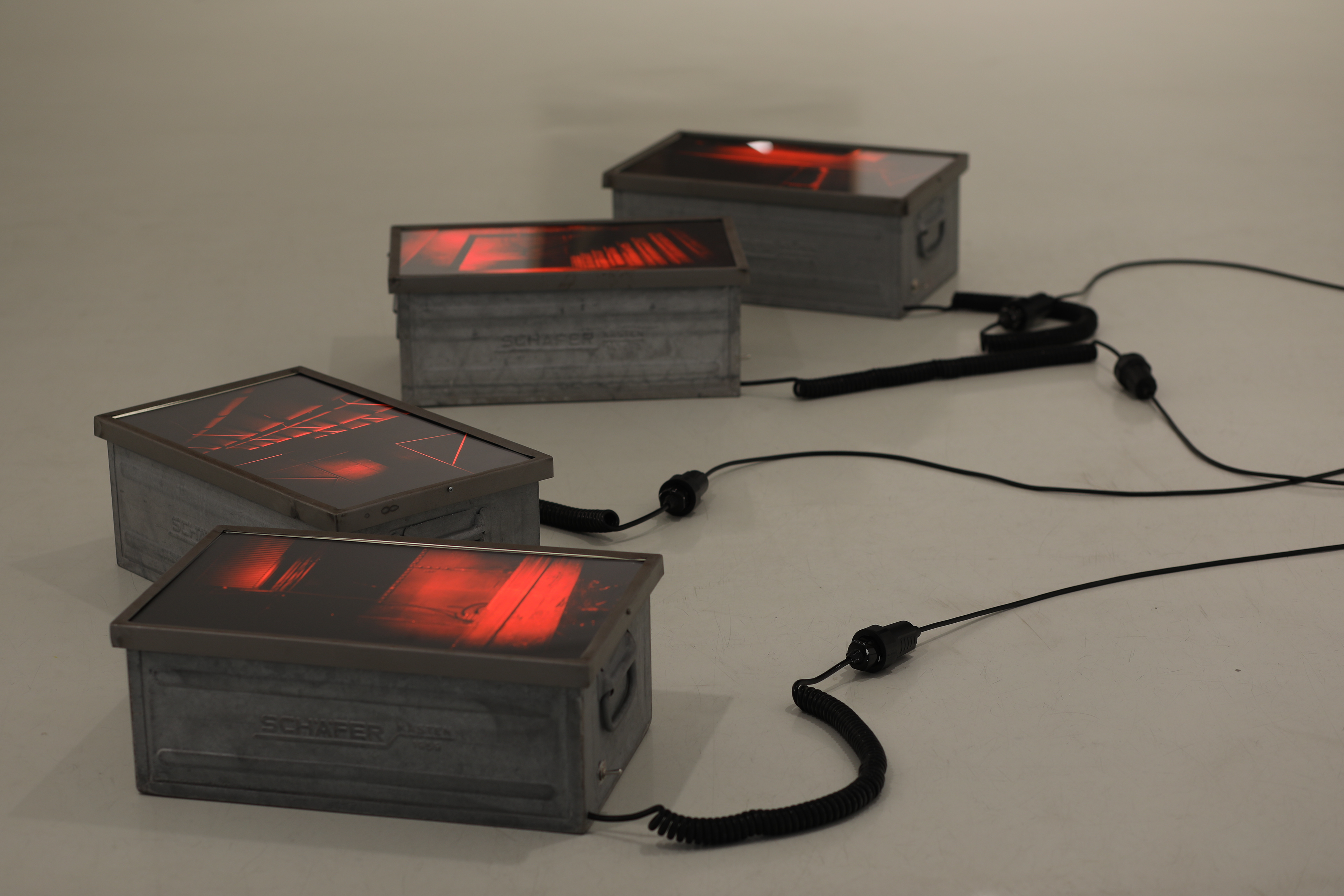
Exhibition view at Galeria Presença. 2021.
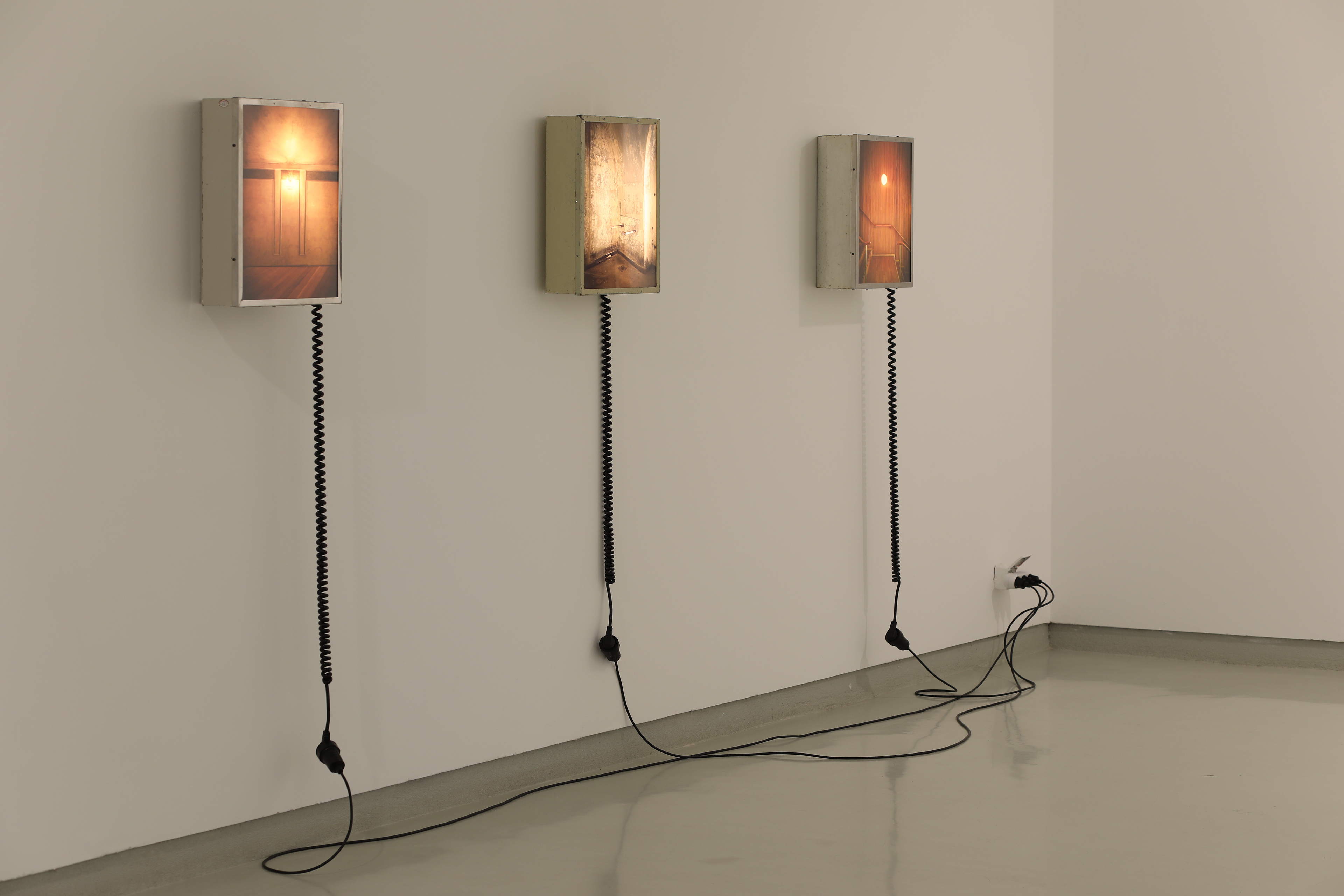
Exhibition view at Galeria Presença. 2021.
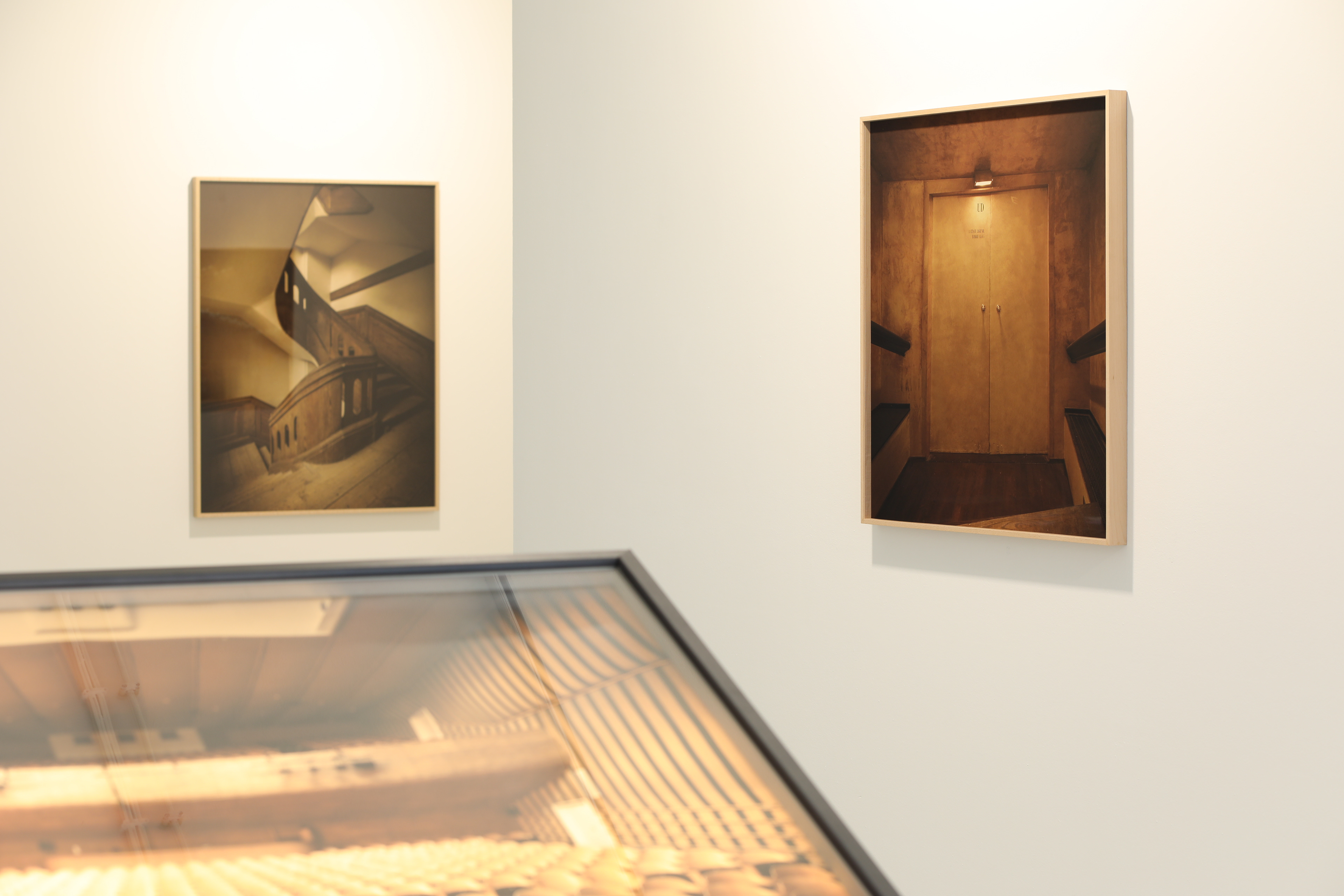
Exhibition view at Galeria Presença. 2021.
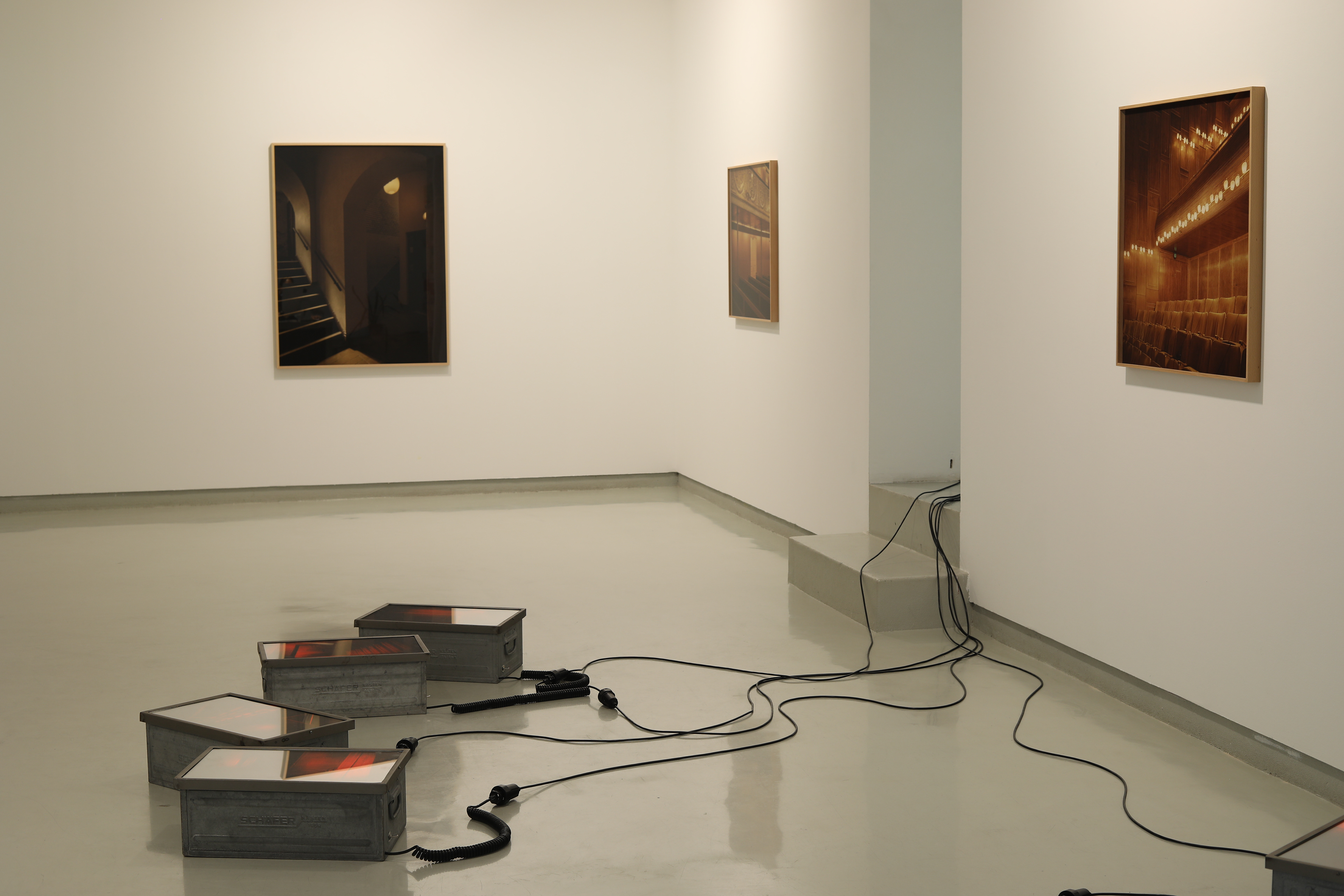
Exhibition view at Galeria Presença. 2021.
'Udgang'
Written by Hugo Dinis, 2021
The artist Inês d'Orey (1977, Porto) presents her new exhibition entitled Udgang at Galeria Presença, from June 17th to September 4th, 2021. Through a series of photographs taken in Copenhagen, Denmark, during her artistic residency at the Embassy of Portugal in September 2020, the artist reflects on the current situation and, more precisely, on cultural spaces, in a year marked by its closure due to the Covid-19 pandemic.
At such a particular moment of the history lived this last year, it will be impossible to remain indifferent to the stories that touched society and its different communities. One of these consequences was due to the fact that theaters, concert halls and cinemas had their doors closed indefinitely, until physical distance was no longer the rule in the fight against the SARS CoV-2 virus. With an attentive and precise look, the artist Inês d'Orey focused on the common signage to all these spaces, after their reopening, which indicates the exit - udgang in Danish -, but she also looked at the stairs, lost corners, closed curtains and empty seats. However, this focus seems to take two opposite paths. On the one hand, the word udgang can indicate the exit from the space to confinement, or the end of a certain time period. In this way, the movement is towards the enclosure, to the interior. On the other hand, udgang can also indicate the closure of the cultural space. And, in this sense, the movement is towards freedom, towards the outside. Well, it is in this dichotomy, between optimism and pessimism, that the images presented in this photographic project live. By staging the exit in a dubious and cloudy way, the artist stages a probably emotional story that touches us all. Stairs are possibilities for escape as well as for encounter. Curtains can either unveil or hide. Architectural corners can either stage or hide something that could be staged.
Considering the artistic path and the formal and conceptual languages that the artist has been investigating, namely, the idea of suspension of an apparent history, the uncertain narrative of images, or the solitude of the abandoned spaces, the Udgang series of works is revealed in a privileged moment to put into practice a fake realistic documentary or an unreal truthfully fiction. Not only because the story of the pandemic is very present and still unwritten, as the very own photographed spaces contain in themselves the suspension of their activities, even if they are already open, namely when they were photographed. In this way, it is possible to glimpse possible events and to feel the weight of the staged reality. It is, perhaps, in this contradiction that one can read and re-read the images presented in Udgang. As we understand the meaning of staging as the creation of a cunning instrument to deceive, it can be said that the photographs and the objects that show them are always devices that allow the staging of a given story. But, allying this story to a given reality, which is also very close and very moving, one can be faced with images that reveal themselves in the twilight and that appear by hiding what is most visible, according to the forest paths trodden by Heidegger. The concealment is never total, otherwise they would not be visible, but it leaves a ray of light, a possible exit, which can reveal the impossibility of a perennial story.
Some photographs shown in Udgang are displayed in old X-ray light boxes or luminous signs. These devices, which make it possible to unveil the images through the light that emanates from their interior, contain within themselves the premises of revealing and concealing visible reality. If one considers that light is necessary to see corporeality, physical or practical premise about visuality, one can also consider its opposite. In a philosophical or theoretical premise, it is in the lack of light, or in the darkness, that the truth is revealed and reaches the sensitive bodies and, at the limit, we can see feelings and empathy among others.
Curtains and doors are closed, chairs and stages empty, the spaces with dust and dirt, are some of the elements photographed in this series. Through them, the persistence of a certain solitary experience becomes common and communitarian due to the same experience lived by everyone. If the physical distance, rather than the social one, imposed by sanitary rules, if the individual liberties offended by successive declared states of emergency, have become limiting and enclosing, then the point of view of the photographs presented here provides not only a resistance of bodies against the invaders, but above all the promising resilience of a future to come.
Written by Hugo Dinis, 2021
The artist Inês d'Orey (1977, Porto) presents her new exhibition entitled Udgang at Galeria Presença, from June 17th to September 4th, 2021. Through a series of photographs taken in Copenhagen, Denmark, during her artistic residency at the Embassy of Portugal in September 2020, the artist reflects on the current situation and, more precisely, on cultural spaces, in a year marked by its closure due to the Covid-19 pandemic.
At such a particular moment of the history lived this last year, it will be impossible to remain indifferent to the stories that touched society and its different communities. One of these consequences was due to the fact that theaters, concert halls and cinemas had their doors closed indefinitely, until physical distance was no longer the rule in the fight against the SARS CoV-2 virus. With an attentive and precise look, the artist Inês d'Orey focused on the common signage to all these spaces, after their reopening, which indicates the exit - udgang in Danish -, but she also looked at the stairs, lost corners, closed curtains and empty seats. However, this focus seems to take two opposite paths. On the one hand, the word udgang can indicate the exit from the space to confinement, or the end of a certain time period. In this way, the movement is towards the enclosure, to the interior. On the other hand, udgang can also indicate the closure of the cultural space. And, in this sense, the movement is towards freedom, towards the outside. Well, it is in this dichotomy, between optimism and pessimism, that the images presented in this photographic project live. By staging the exit in a dubious and cloudy way, the artist stages a probably emotional story that touches us all. Stairs are possibilities for escape as well as for encounter. Curtains can either unveil or hide. Architectural corners can either stage or hide something that could be staged.
Considering the artistic path and the formal and conceptual languages that the artist has been investigating, namely, the idea of suspension of an apparent history, the uncertain narrative of images, or the solitude of the abandoned spaces, the Udgang series of works is revealed in a privileged moment to put into practice a fake realistic documentary or an unreal truthfully fiction. Not only because the story of the pandemic is very present and still unwritten, as the very own photographed spaces contain in themselves the suspension of their activities, even if they are already open, namely when they were photographed. In this way, it is possible to glimpse possible events and to feel the weight of the staged reality. It is, perhaps, in this contradiction that one can read and re-read the images presented in Udgang. As we understand the meaning of staging as the creation of a cunning instrument to deceive, it can be said that the photographs and the objects that show them are always devices that allow the staging of a given story. But, allying this story to a given reality, which is also very close and very moving, one can be faced with images that reveal themselves in the twilight and that appear by hiding what is most visible, according to the forest paths trodden by Heidegger. The concealment is never total, otherwise they would not be visible, but it leaves a ray of light, a possible exit, which can reveal the impossibility of a perennial story.
Some photographs shown in Udgang are displayed in old X-ray light boxes or luminous signs. These devices, which make it possible to unveil the images through the light that emanates from their interior, contain within themselves the premises of revealing and concealing visible reality. If one considers that light is necessary to see corporeality, physical or practical premise about visuality, one can also consider its opposite. In a philosophical or theoretical premise, it is in the lack of light, or in the darkness, that the truth is revealed and reaches the sensitive bodies and, at the limit, we can see feelings and empathy among others.
Curtains and doors are closed, chairs and stages empty, the spaces with dust and dirt, are some of the elements photographed in this series. Through them, the persistence of a certain solitary experience becomes common and communitarian due to the same experience lived by everyone. If the physical distance, rather than the social one, imposed by sanitary rules, if the individual liberties offended by successive declared states of emergency, have become limiting and enclosing, then the point of view of the photographs presented here provides not only a resistance of bodies against the invaders, but above all the promising resilience of a future to come.
'Udgang'
Escrito por Hugo Dinis, 2021
Escrito por Hugo Dinis, 2021
A artista Inês d’Orey (1977, Porto) apresenta a exposição intitulada Udgang na Galeria Presença, de 17 de junho a 4 de setembro de 2021. Através de uma série de fotografias realizadas em Copenhaga, Dinamarca, durante a residência artística na Embaixada de Portugal em setembro de 2020, a artista reflete sobre a sua atualidade e, mais precisamente, sobre os espaços culturais, num ano marcado pelo seu encerramento devido à pandemia de COVID-19.
Num momento tão particular da história vivida neste último ano, impossível será ficar indiferente às estórias que tocaram a sociedade e as suas diversas comunidades. Umas destas consequências deveu-se ao facto dos teatros, salas de espetáculos e cinemas terem estado de portas fechadas por tempo indeterminado, até que o distanciamento físico deixasse de ser regra na luta contra o vírus SARS CoV-2. Com um olhar atento e preciso a artista Inês d’Orey focou-se na sinalética comum a todos estes espaços, após a sua reabertura, que indica a saída - udgang em dinamarquês -, mas também olhou para as escadas, cantos perdidos, cortinas fechadas e lugares vazios. Contudo, este foco parece dirigir-se em dois percursos opostos. Por um lado, a palavra udgang pode indicar a saída do espaço para o confinamento, ou o fim de um determinado período. Neste sentido, o movimento é para a clausura, para o interior. Por outro lado, udgang também pode indiciar o encerramento do espaço cultural. E, neste sentido, o movimento é para a liberdade, para o exterior. Ora, é nesta dicotomia, entre o otimismo e o pessimismo, que vivem as imagens apresentadas neste projeto fotográfico. Ao encenar a saída de um modo duvidoso e nubloso, a artista coloca em cena uma possível estória emocional que nos toca a todos. As escadas são possibilidades de fuga, mas também de um possível encontro. As cortinas tanto podem desvelar como ocultar. Os cantos arquitetónicos tanto colocam em cena como escondem algo que poderia ser encenado.
Considerando o percurso artístico e as linguagens formais e conceptuais que a artista tem vindo a investigar, nomeadamente, a ideia de suspensão de uma aparente história, a narrativa incerta das imagens, ou a solidão dos espaços abandonados, a série de trabalhos Udgang revela-se um momento privilegiado para colocar em prática um falso documentário realista ou uma verdadeira ficção irreal. Não só porque a história da pandemia está muito presente e ainda continua por escrever, como os próprios espaços fotografados contêm em si a suspensão das suas atividades, mesmo que já se encontrem abertos, nomeadamente, quando foram fotografados. Deste modo, é possível vislumbrar possíveis acontecimentos e sentir o peso da encenação da realidade. É, talvez, nesta contradição que se pode ler e reler as imagens apresentadas em Udgang. Entendendo o significado de encenar como a criação de um artifício ardiloso para iludir, pode referir-se que as fotografias e os objetos que as mostram são sempre dispositivos que permitem a encenação de uma dada história. Mas, aliando essa história a uma dada realidade, ainda por cima muito próxima e muito comovente, pode estar-se perante imagens que se revelam na penumbra e que mostram ocultando o que mais está visível, segundo os caminhos de floresta trilhados por Heidegger. A ocultação nunca é total, caso contrário não seriam visíveis, mas deixa um raio de luz, uma possível saída, podem relevar a impossibilidade de uma história perene.
Algumas fotografias apresentadas em Udgang são apresentadas em antigas caixas de luz para radiografias ou reclames luminosos. Estes dispositivos, que permitem desvelar imagens através da luz que imana do seu interior, contêm em si as premissas da revelação e ocultação da realidade visível. Se se considerar que é necessária luz para ver a corporalidade, premissa física ou prática sobre a visualidade, também se pode considerar o seu contrário. Numa premissa filosófica ou teórica, é na falta de luz, ou na escuridão, que a verdade se revela e atinge os corpos sensíveis e, no limite, se veem sentimentos e empatias entre os demais.
As cortinas e as portas que se encontram fechadas, as cadeiras e os palcos vazios, os espaços com pó e sujidade, são alguns dos elementos fotografados nesta série. Através deles, a persistência de uma certa vivência solitária torna-se comum e comunitária porque é uma experiência compartilhada. Se o distanciamento físico, e não social, imposto pelas regras sanitárias, se as liberdades individuais ofendidas pelos sucessivos estados de emergência declarados, se tornam limitadores e enclausurantes, então fotografias aqui presentes propiciam não apenas uma resistência dos corpos contra os invasores, mas sobretudo a resiliência promissora de um futuro provindo.
Num momento tão particular da história vivida neste último ano, impossível será ficar indiferente às estórias que tocaram a sociedade e as suas diversas comunidades. Umas destas consequências deveu-se ao facto dos teatros, salas de espetáculos e cinemas terem estado de portas fechadas por tempo indeterminado, até que o distanciamento físico deixasse de ser regra na luta contra o vírus SARS CoV-2. Com um olhar atento e preciso a artista Inês d’Orey focou-se na sinalética comum a todos estes espaços, após a sua reabertura, que indica a saída - udgang em dinamarquês -, mas também olhou para as escadas, cantos perdidos, cortinas fechadas e lugares vazios. Contudo, este foco parece dirigir-se em dois percursos opostos. Por um lado, a palavra udgang pode indicar a saída do espaço para o confinamento, ou o fim de um determinado período. Neste sentido, o movimento é para a clausura, para o interior. Por outro lado, udgang também pode indiciar o encerramento do espaço cultural. E, neste sentido, o movimento é para a liberdade, para o exterior. Ora, é nesta dicotomia, entre o otimismo e o pessimismo, que vivem as imagens apresentadas neste projeto fotográfico. Ao encenar a saída de um modo duvidoso e nubloso, a artista coloca em cena uma possível estória emocional que nos toca a todos. As escadas são possibilidades de fuga, mas também de um possível encontro. As cortinas tanto podem desvelar como ocultar. Os cantos arquitetónicos tanto colocam em cena como escondem algo que poderia ser encenado.
Considerando o percurso artístico e as linguagens formais e conceptuais que a artista tem vindo a investigar, nomeadamente, a ideia de suspensão de uma aparente história, a narrativa incerta das imagens, ou a solidão dos espaços abandonados, a série de trabalhos Udgang revela-se um momento privilegiado para colocar em prática um falso documentário realista ou uma verdadeira ficção irreal. Não só porque a história da pandemia está muito presente e ainda continua por escrever, como os próprios espaços fotografados contêm em si a suspensão das suas atividades, mesmo que já se encontrem abertos, nomeadamente, quando foram fotografados. Deste modo, é possível vislumbrar possíveis acontecimentos e sentir o peso da encenação da realidade. É, talvez, nesta contradição que se pode ler e reler as imagens apresentadas em Udgang. Entendendo o significado de encenar como a criação de um artifício ardiloso para iludir, pode referir-se que as fotografias e os objetos que as mostram são sempre dispositivos que permitem a encenação de uma dada história. Mas, aliando essa história a uma dada realidade, ainda por cima muito próxima e muito comovente, pode estar-se perante imagens que se revelam na penumbra e que mostram ocultando o que mais está visível, segundo os caminhos de floresta trilhados por Heidegger. A ocultação nunca é total, caso contrário não seriam visíveis, mas deixa um raio de luz, uma possível saída, podem relevar a impossibilidade de uma história perene.
Algumas fotografias apresentadas em Udgang são apresentadas em antigas caixas de luz para radiografias ou reclames luminosos. Estes dispositivos, que permitem desvelar imagens através da luz que imana do seu interior, contêm em si as premissas da revelação e ocultação da realidade visível. Se se considerar que é necessária luz para ver a corporalidade, premissa física ou prática sobre a visualidade, também se pode considerar o seu contrário. Numa premissa filosófica ou teórica, é na falta de luz, ou na escuridão, que a verdade se revela e atinge os corpos sensíveis e, no limite, se veem sentimentos e empatias entre os demais.
As cortinas e as portas que se encontram fechadas, as cadeiras e os palcos vazios, os espaços com pó e sujidade, são alguns dos elementos fotografados nesta série. Através deles, a persistência de uma certa vivência solitária torna-se comum e comunitária porque é uma experiência compartilhada. Se o distanciamento físico, e não social, imposto pelas regras sanitárias, se as liberdades individuais ofendidas pelos sucessivos estados de emergência declarados, se tornam limitadores e enclausurantes, então fotografias aqui presentes propiciam não apenas uma resistência dos corpos contra os invasores, mas sobretudo a resiliência promissora de um futuro provindo.