
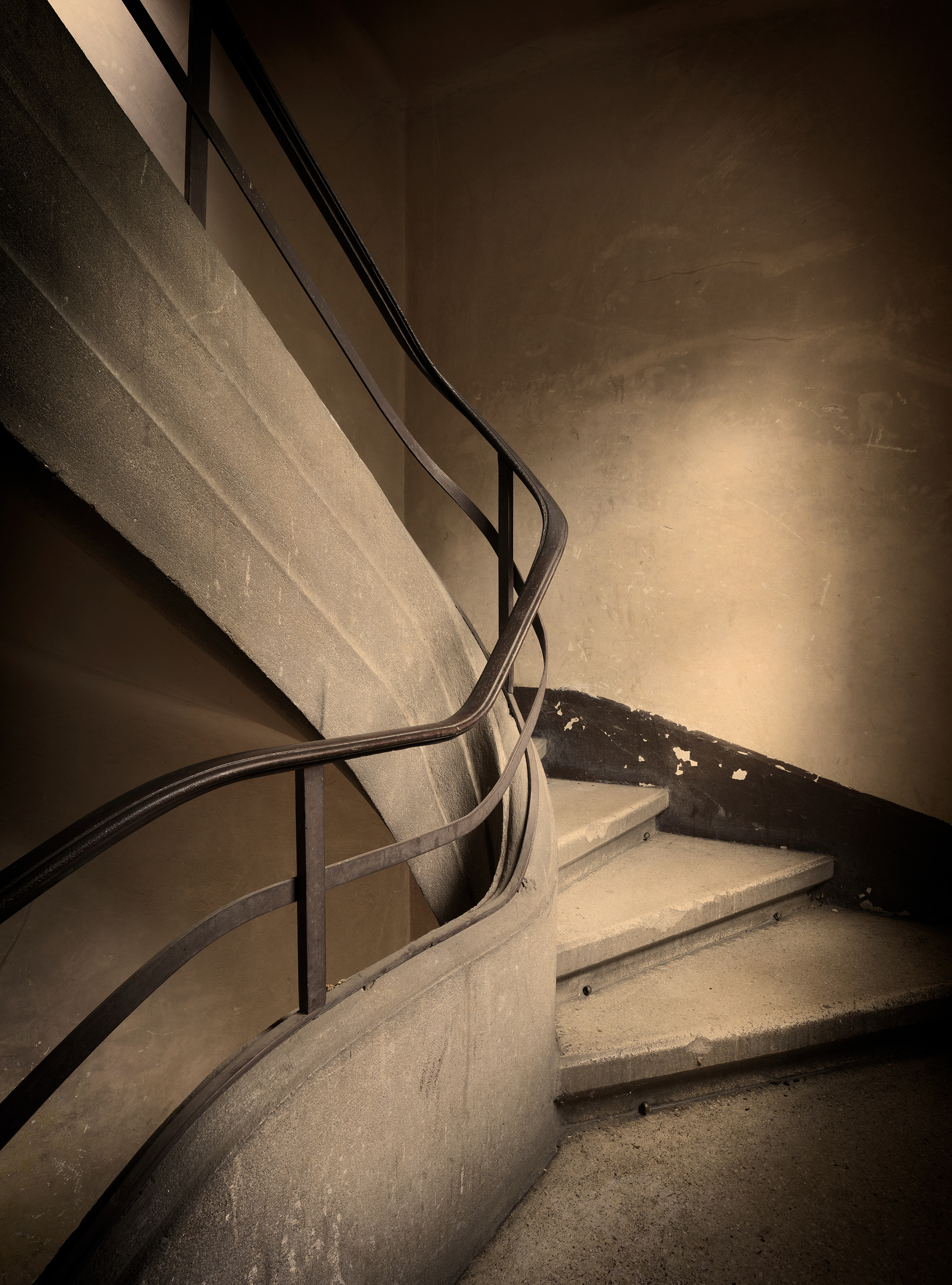
Scari #1
Fine art photographic inkjet print on fine art paper. Beech frame with museum glass.
135 × 100 cm. Edition of 3 + AP.
Dada City is a photography and video project based on the research of the architectural landscape of the city of Bucharest. This series explores symbols of power structures in urban landscapes and architecture, and how these are influenced by the socioeconomic context, historical situation and ideological changes of each era. It was Dan Popescu, a local gallery owner, who, when describing Bucharest, called it Dada City: a beautiful Dadaist palimpsest that superimposes several urban layers and a diversity of architectural styles, ranging from Beaux Arts and Neo-Romanian to Socialist Modernism and post-war brutalism. This series focuses on 20th century modernism, when you witness a wide variety of changes in Romanian history that affect the discipline of architecture, such as the graduation of the first women architects in the world. Dada City reflects on the ever-evolving relationship between architecture and the society it serves.
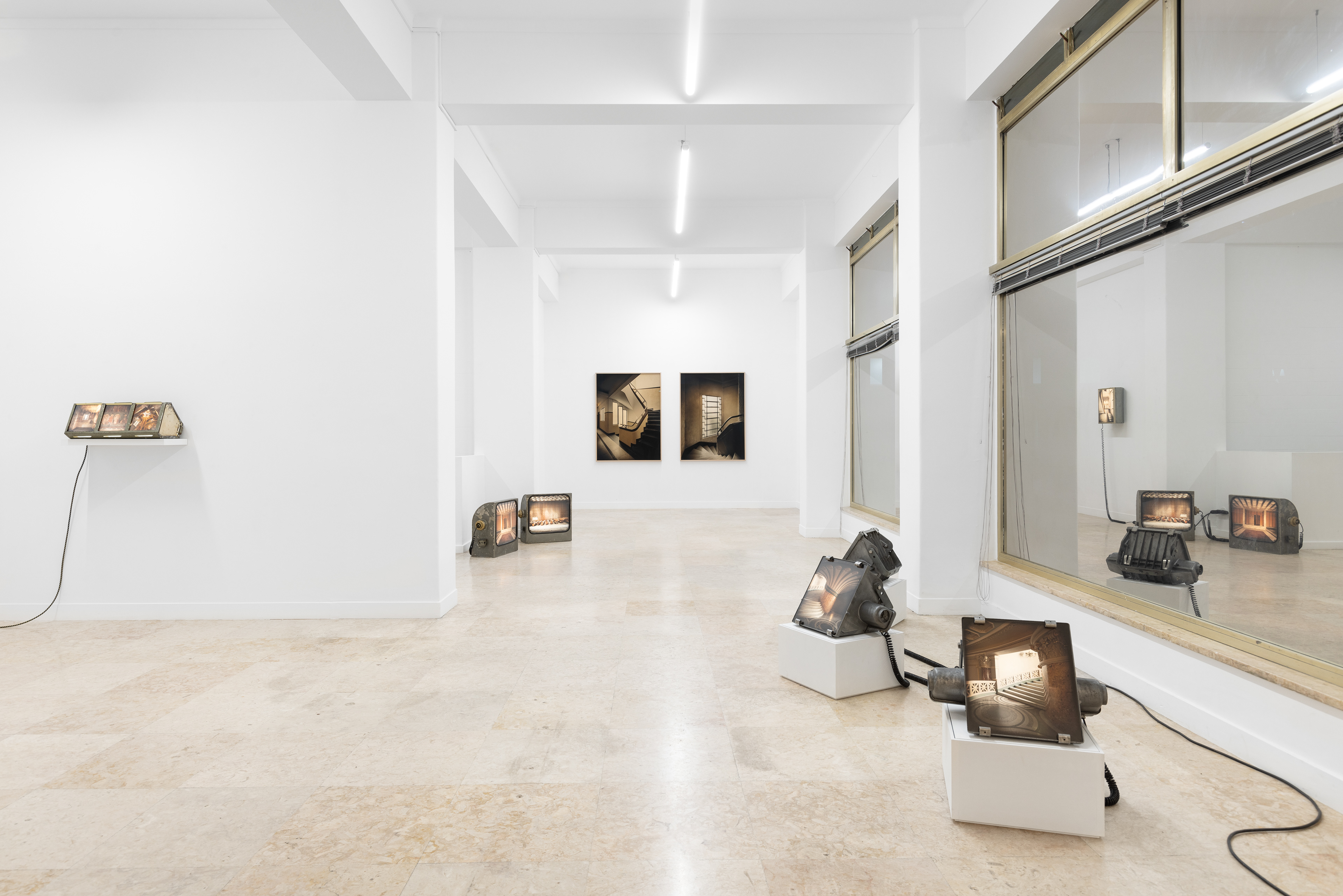
Exhibition view at Galeria das Salgadeiras. 2024.
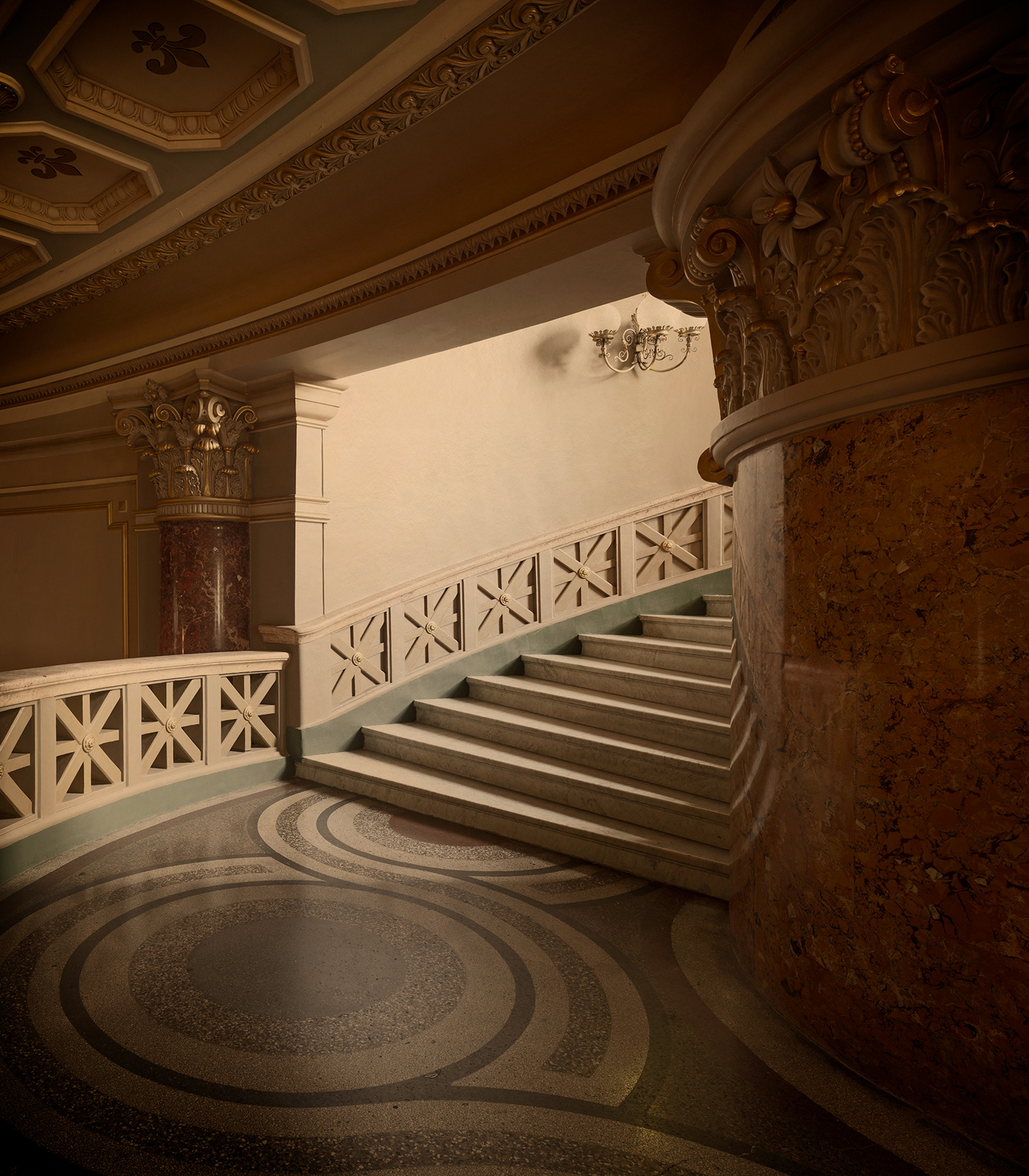
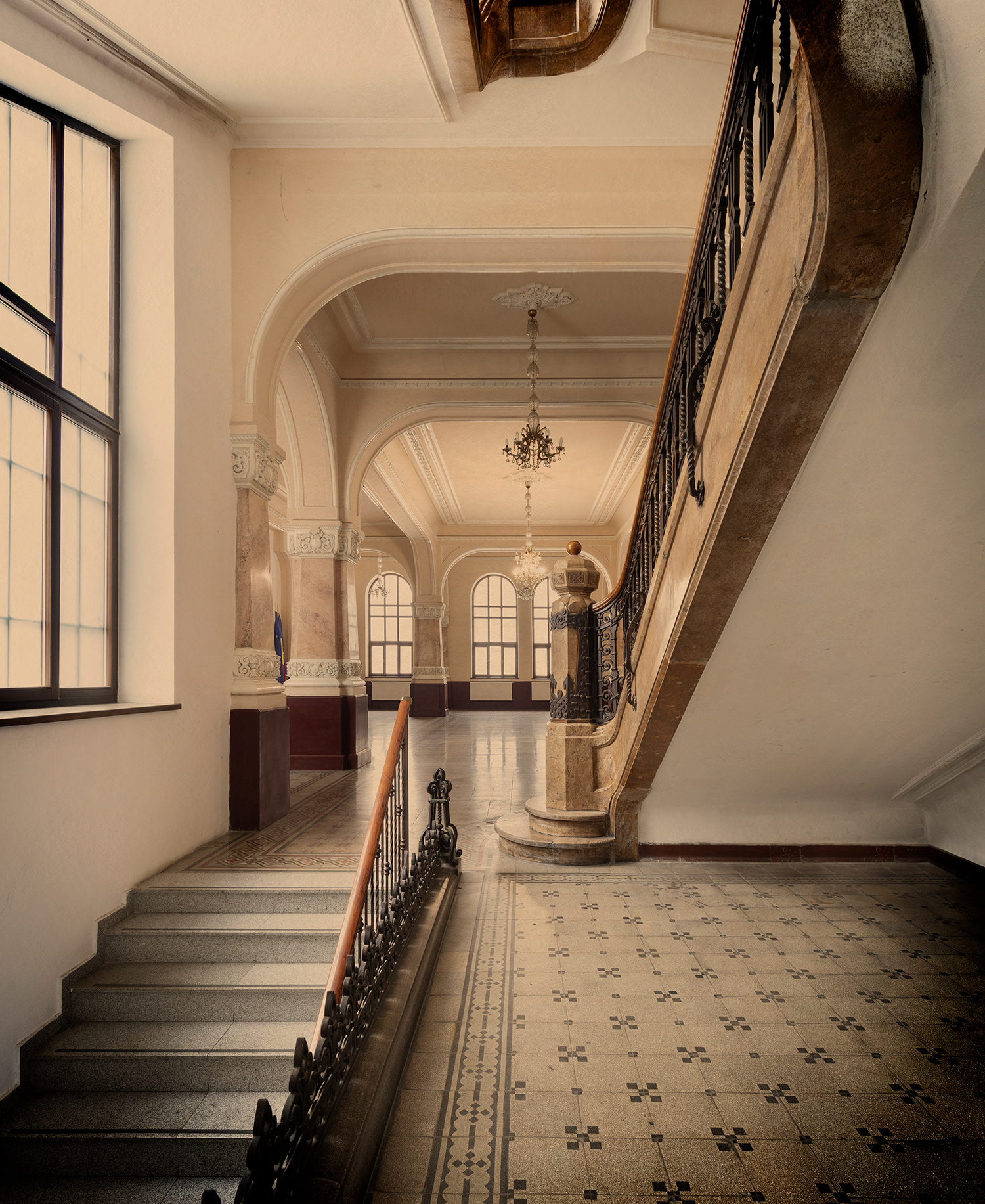
The Romanian Athenaeum Palace was built between 1886 and 1888, funded through a public subscription and national lottery, and designed by French architect Albert Galleron with the contribution of several Romanian architects. Built in the Beaux-Arts style, its circular form and richly decorated interiors culminate in a monumental domed concert hall, and it remains home to the “George Enescu” Philharmonic.
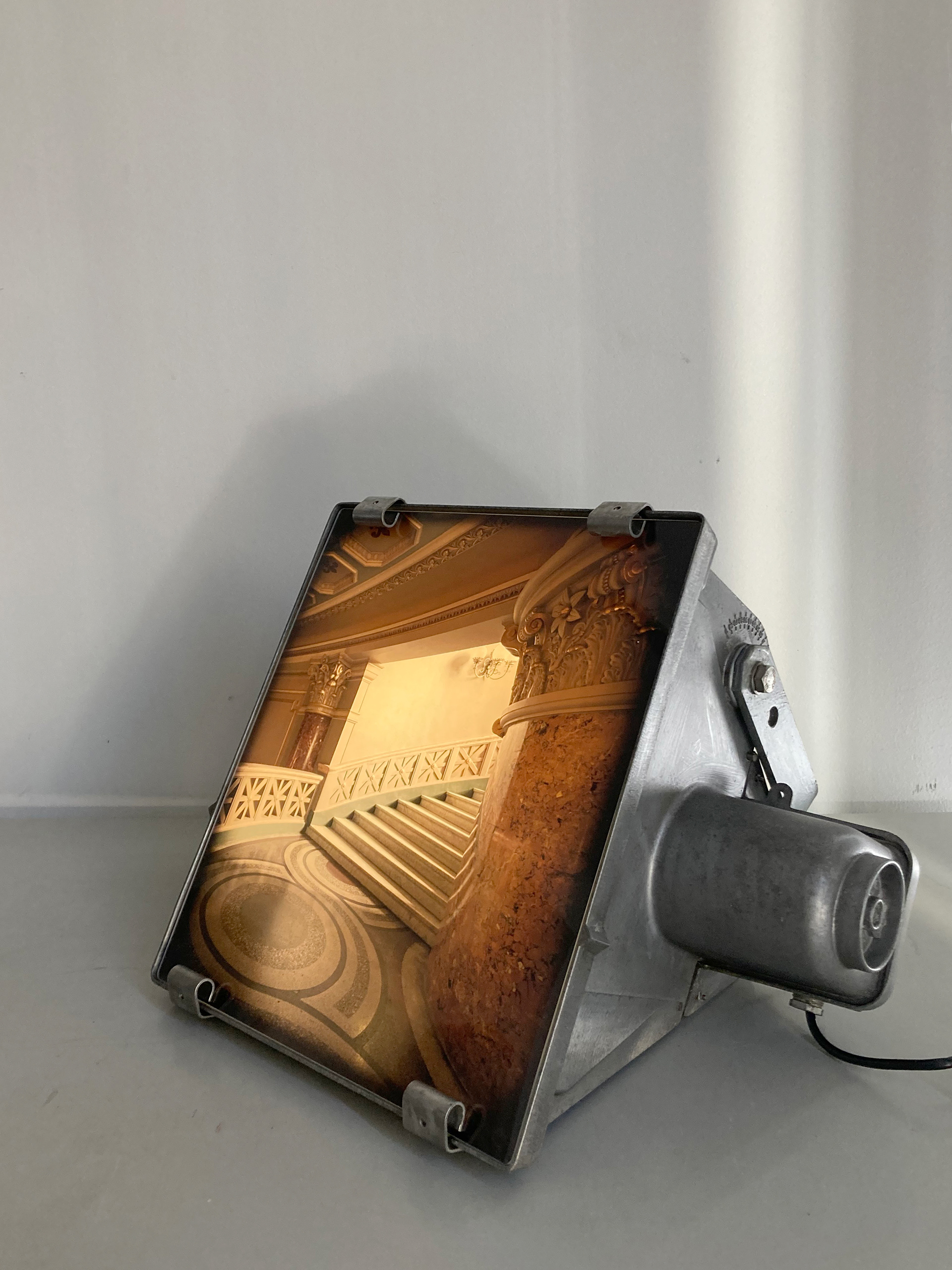
Romanian Athenaeum #3. Backlit photographic print. Industrial floodlight from the mid-20th century 35 × 31 × 28 cm. Unique piece
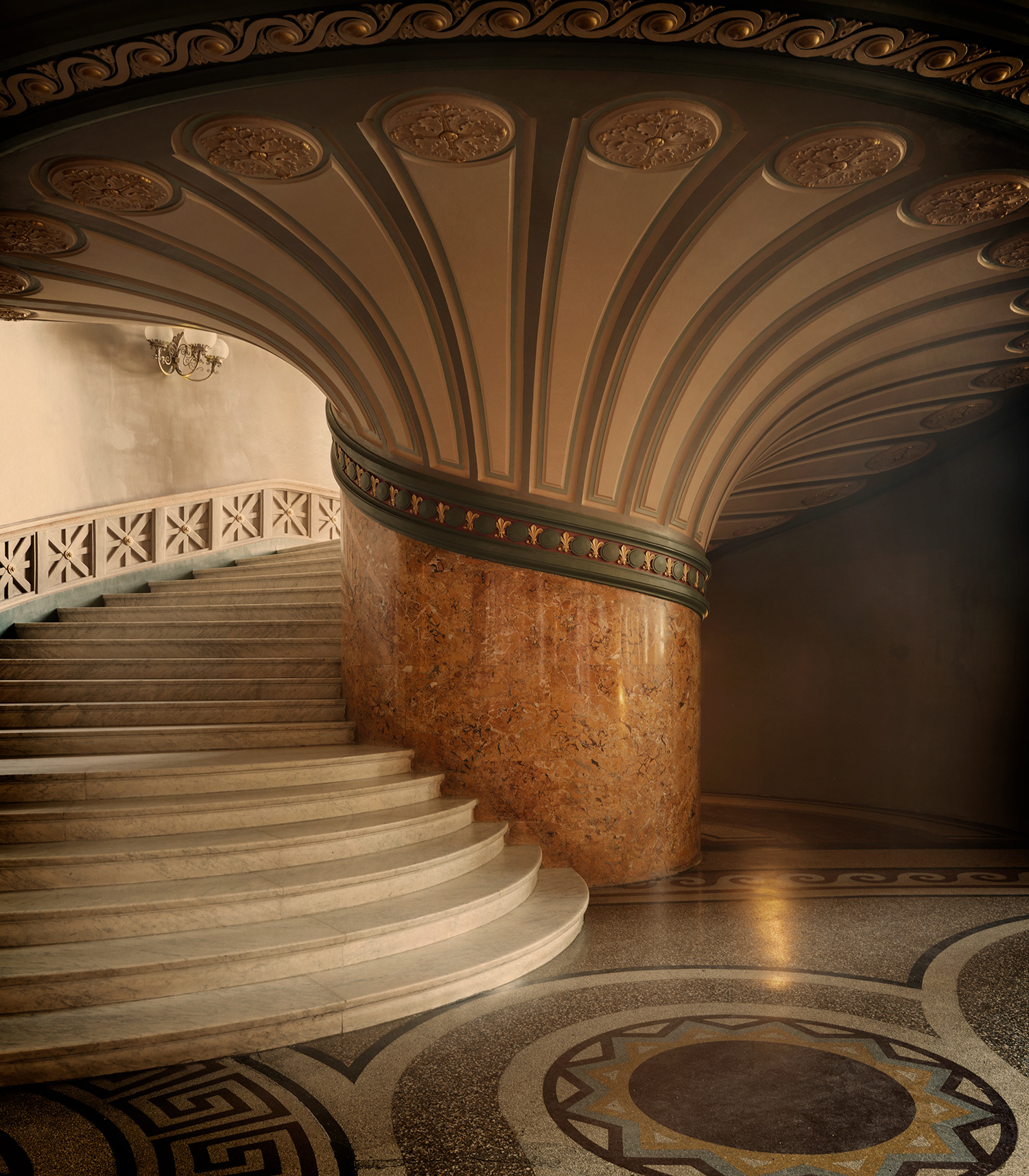
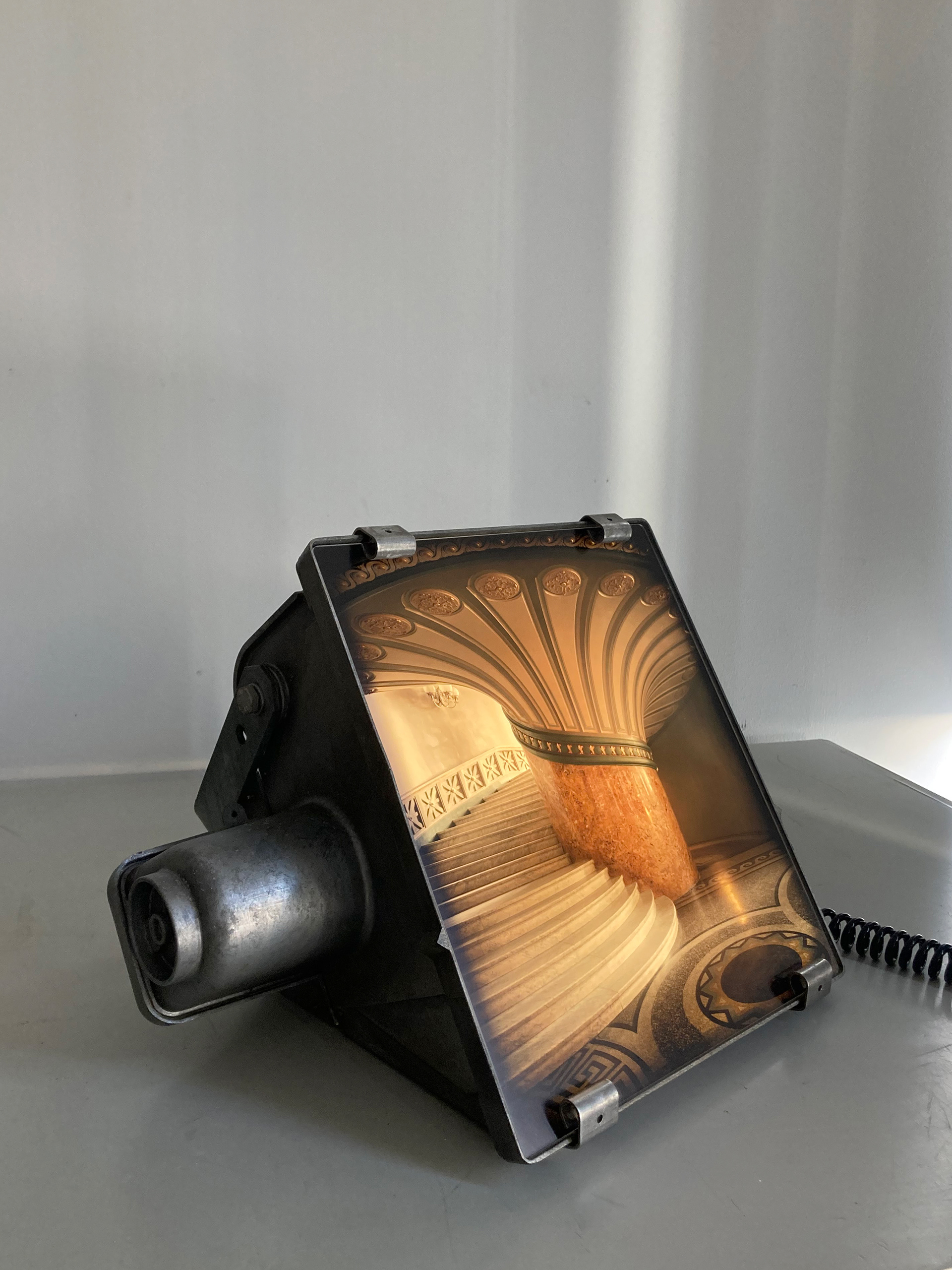
Romanian Athenaeum #4. Backlit photographic print. Industrial floodlight from the mid-20th century 35 × 31 × 28 cm. Unique piece
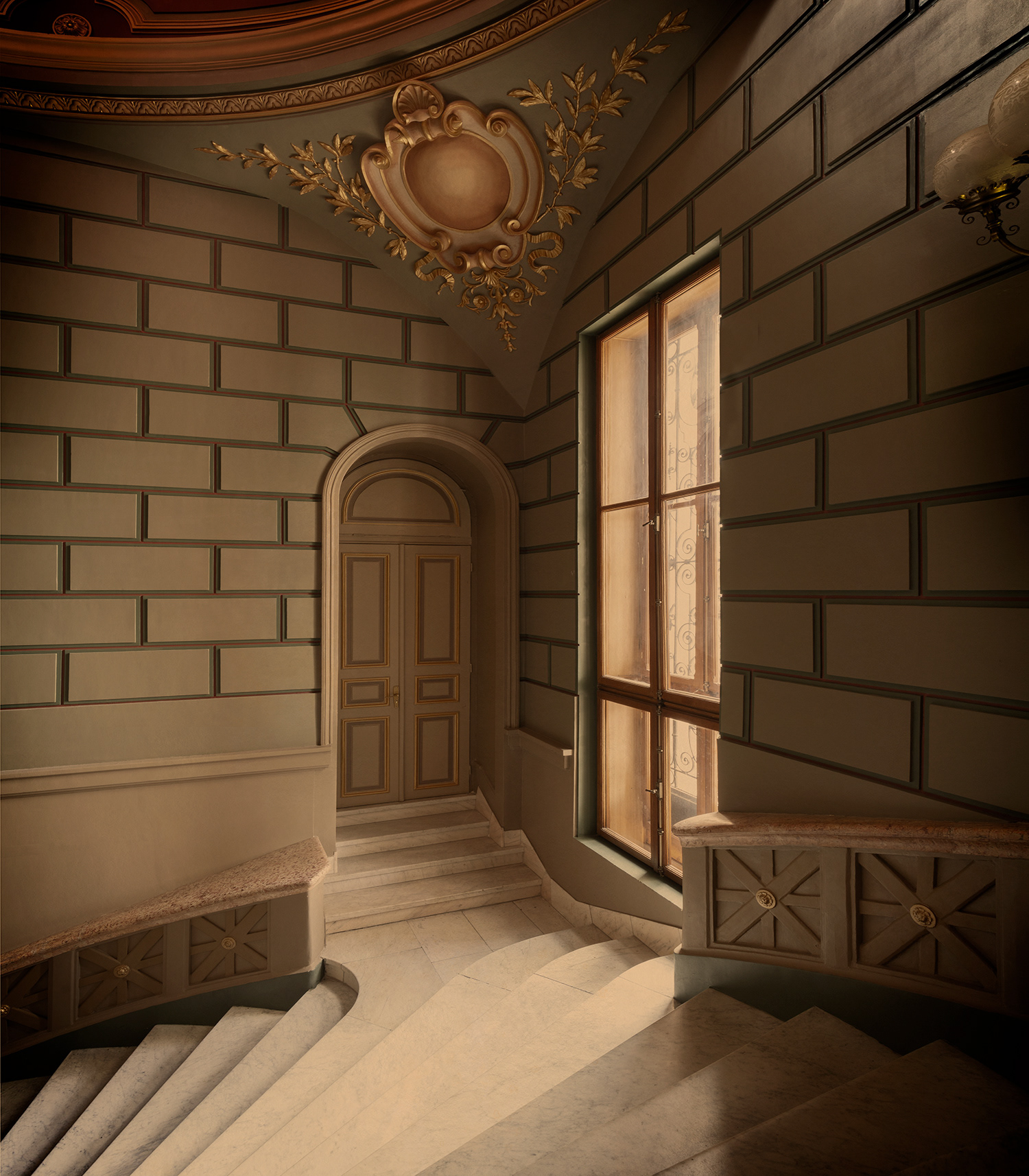
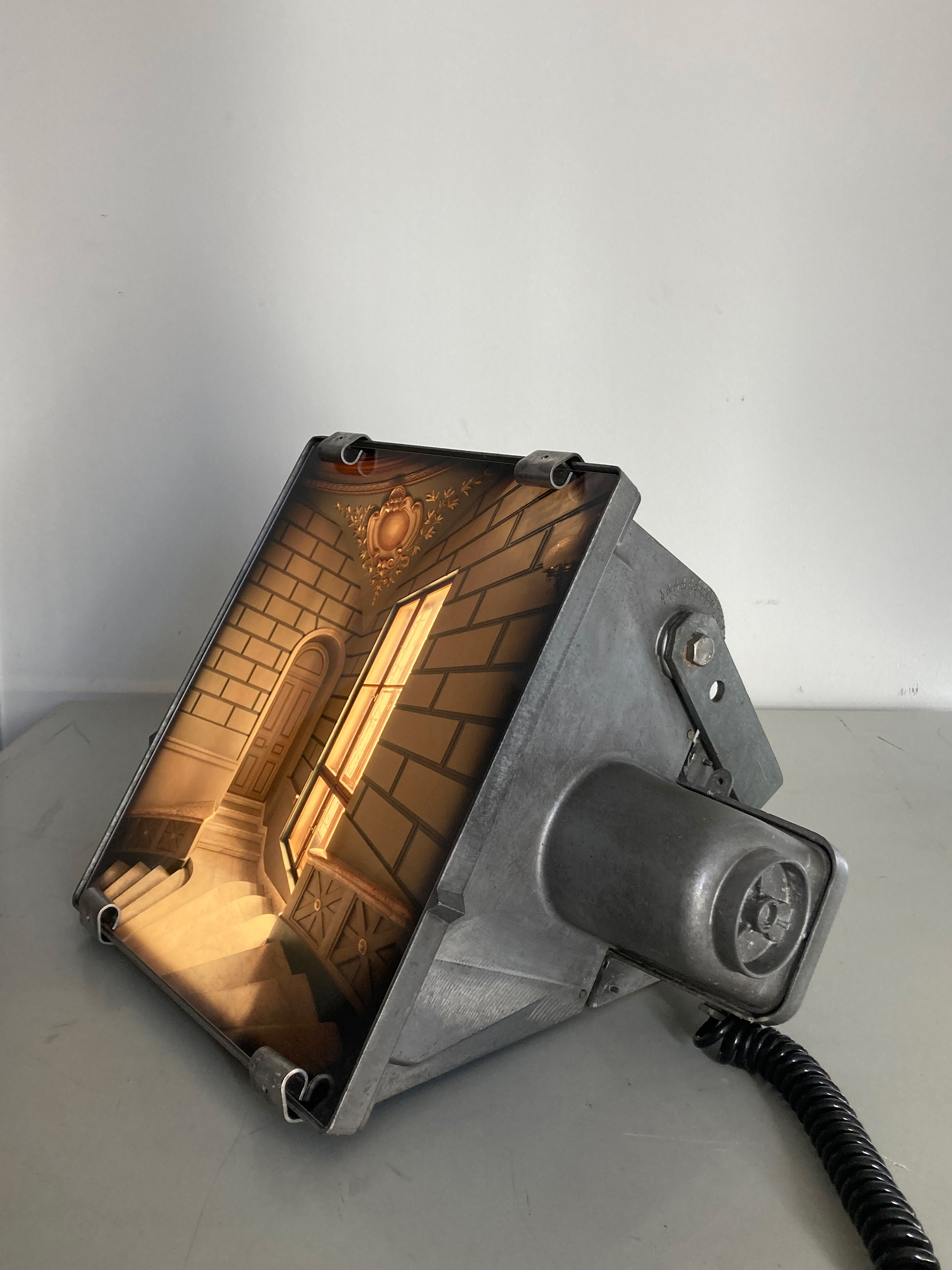
Romanian Athenaeum #3. Backlit photographic print. Industrial floodlight from the mid-20th century 35 × 31 × 28 cm. Unique piece
The Post Office Customs Palace was built between 1914 and 1926 by architect Statie Ciortan in the Neo-Romanian style, inspired by traditional Romanian architecture and the medieval and Brâncovenesc heritage promoted by Ion Mincu. After serving as a headquarters for the communist secret police and later the Ministry of Internal Administration, the building is now the headquarters of the General Inspectorate of the Romanian Police.
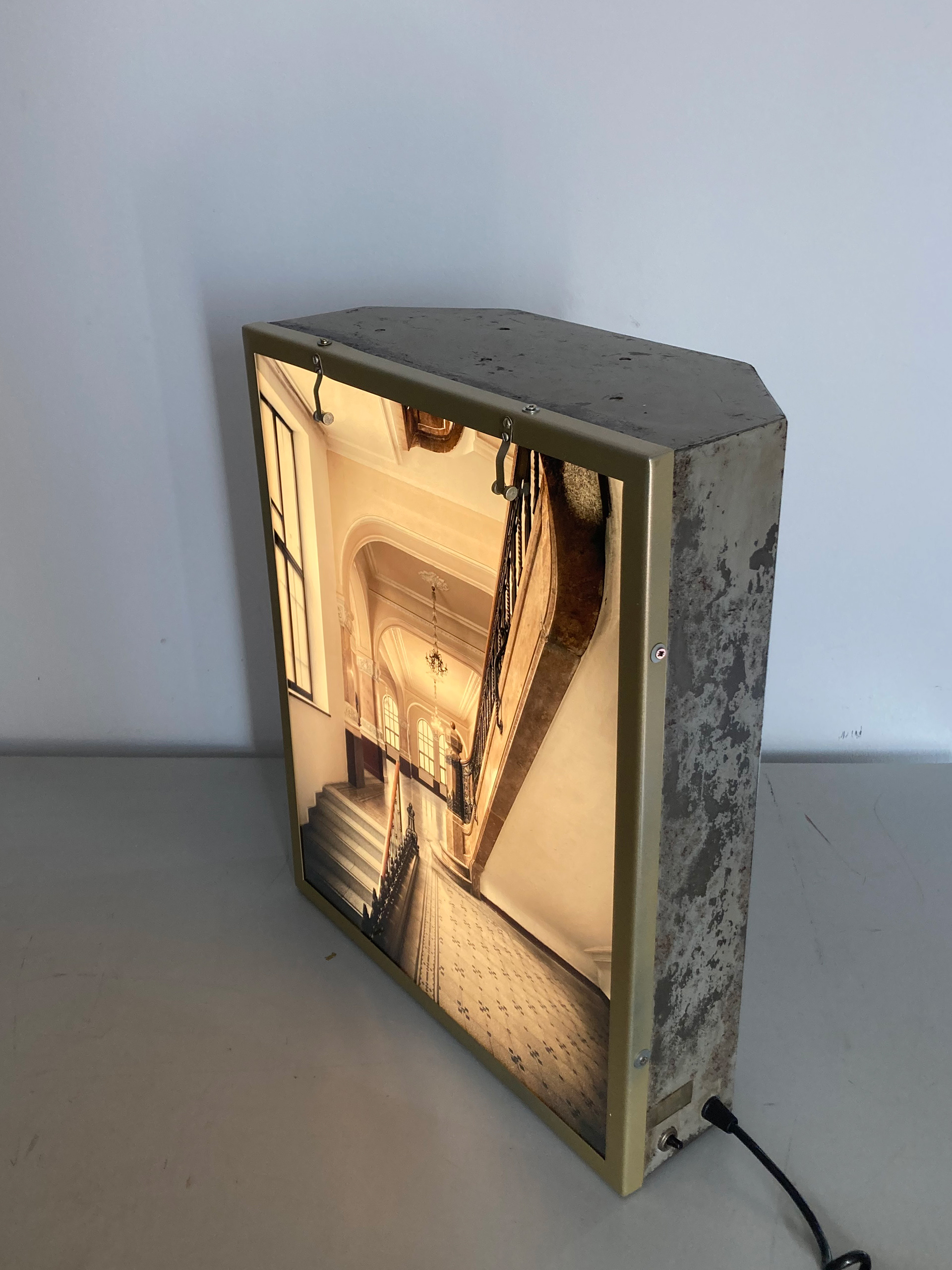
Vama Poștei Palace. Backlit photographic print. Mid-20th-century X-ray viewer. 45 × 37 × 17 cm. Unique piece.
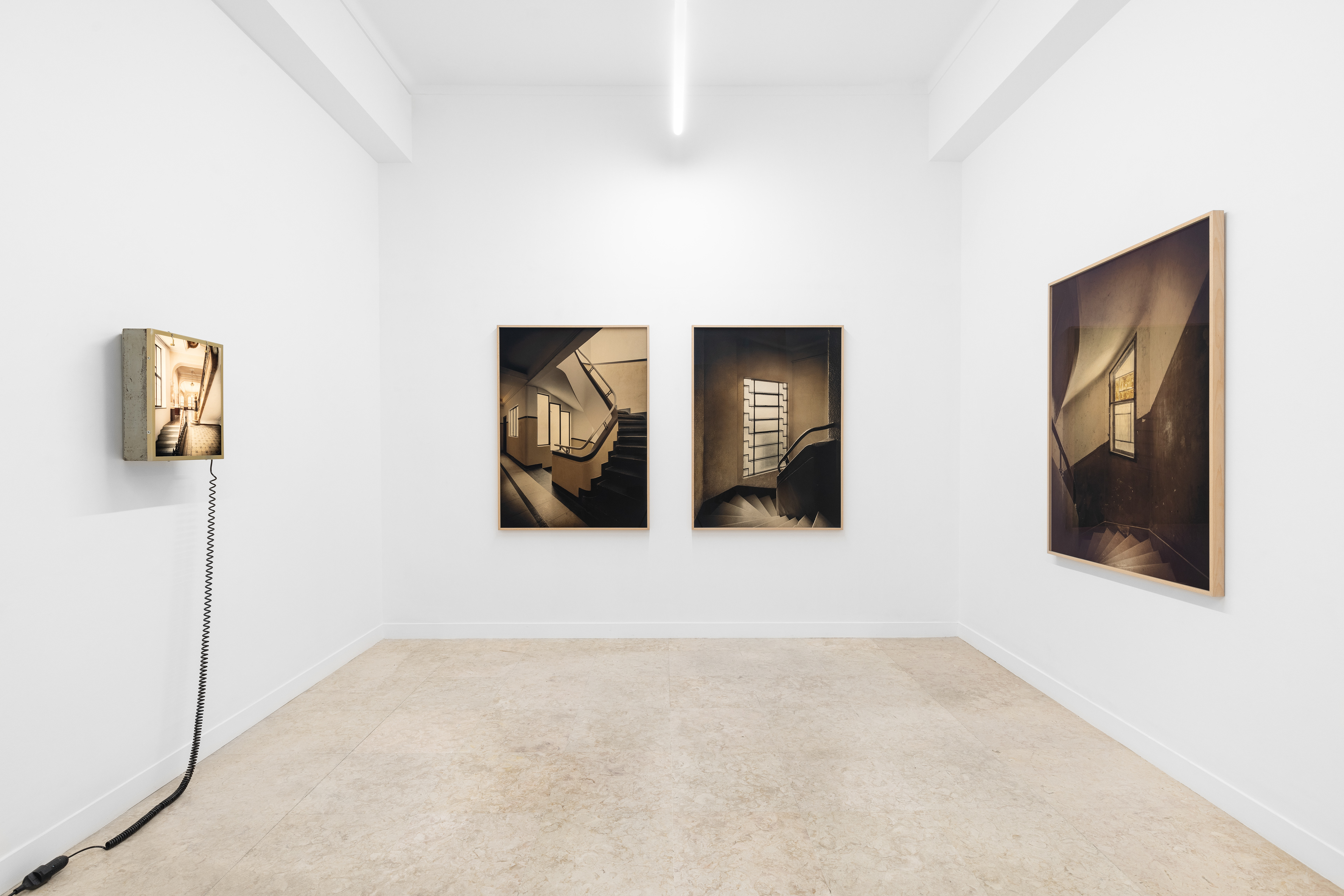
Exhibition view at Galeria das Salgadeiras. 2024.
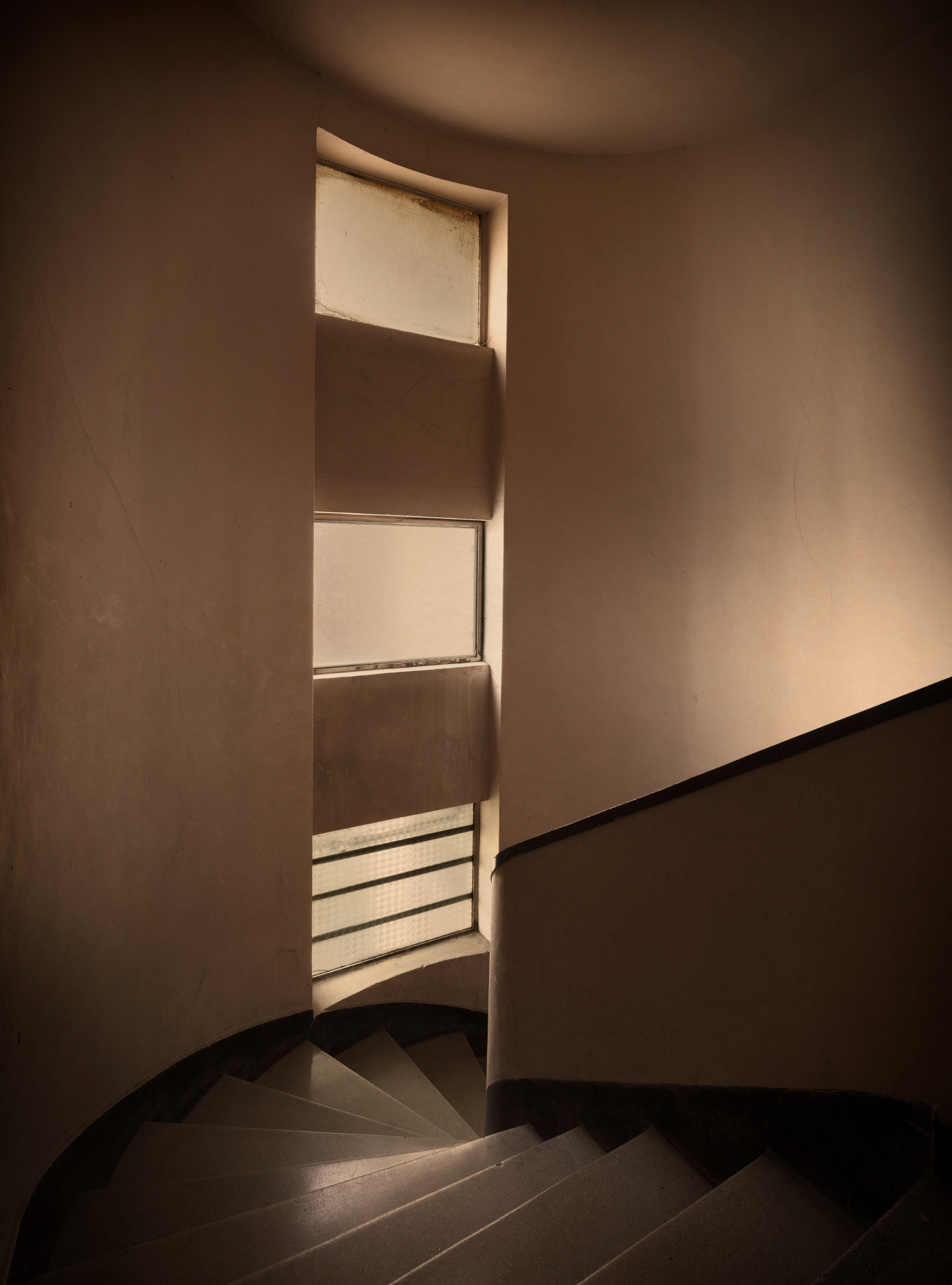
Scari #3 Fine art photographic inkjet print on fine art paper. Beech frame with museum glass. 135 × 100 cm. Edition of 3 + AP.
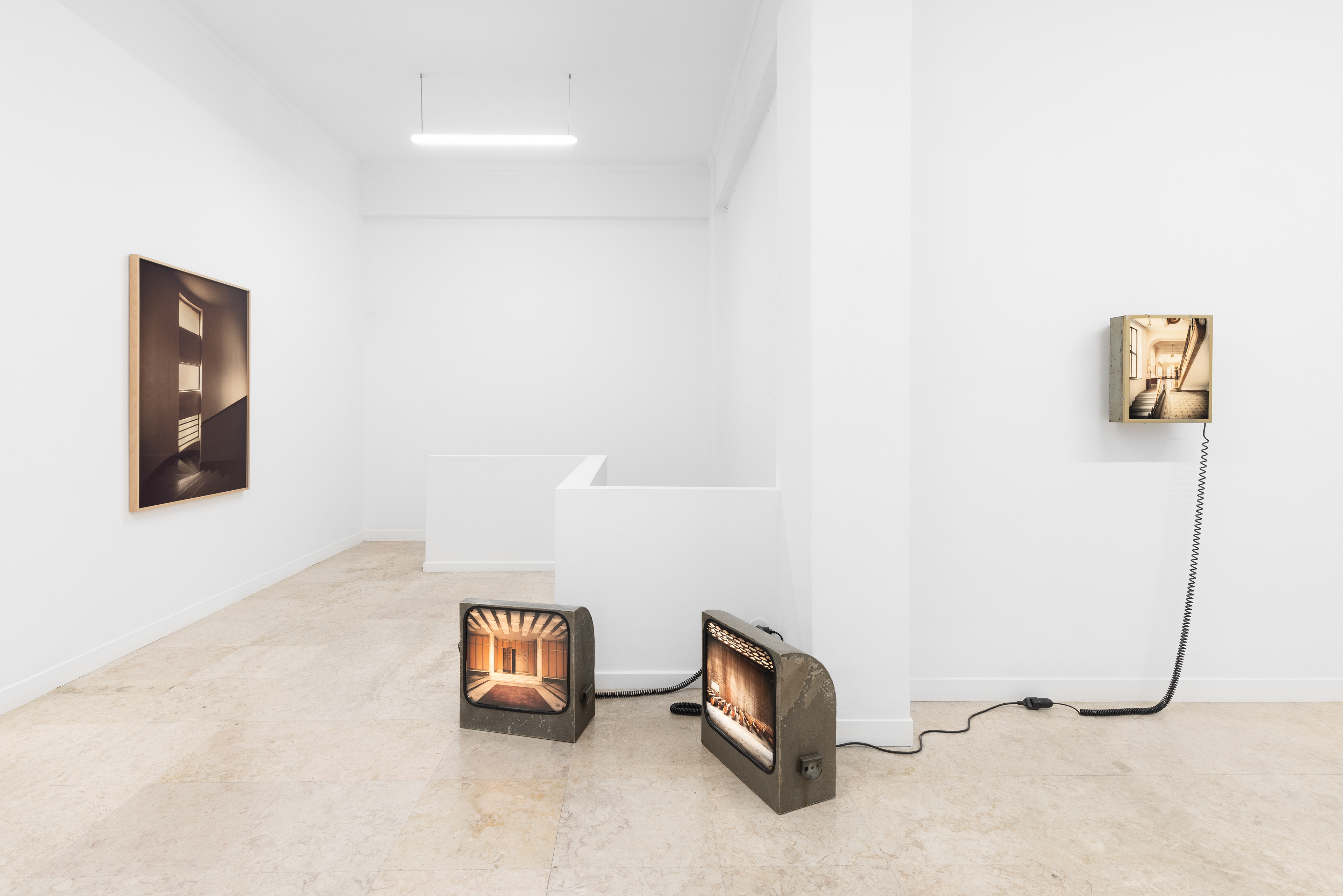
Exhibition view at Galeria das Salgadeiras. 2024.
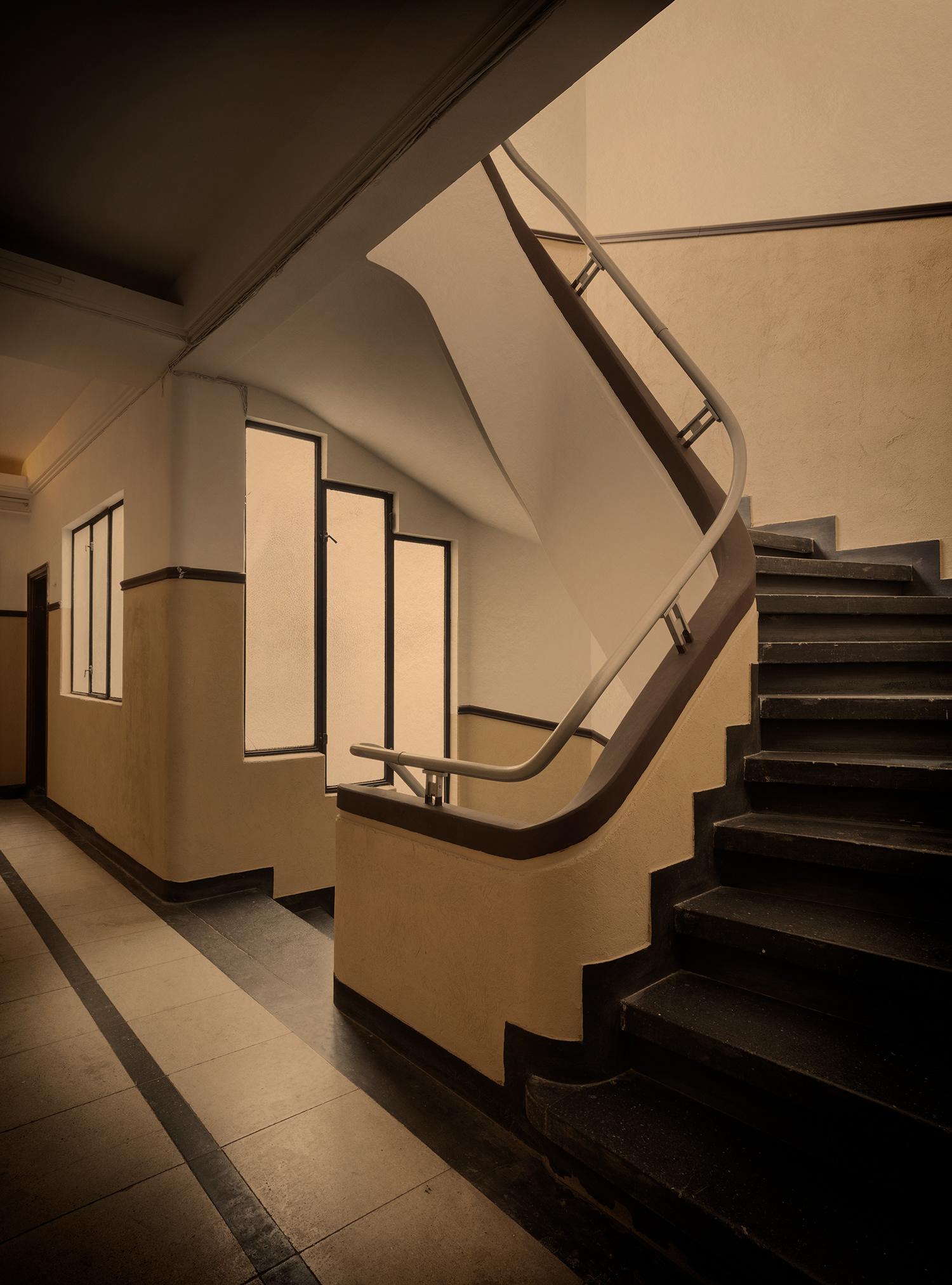
Scari #5 Fine art photographic inkjet print on fine art paper. Beech frame with museum glass. 135 × 100 cm. Edition of 3 + AP.
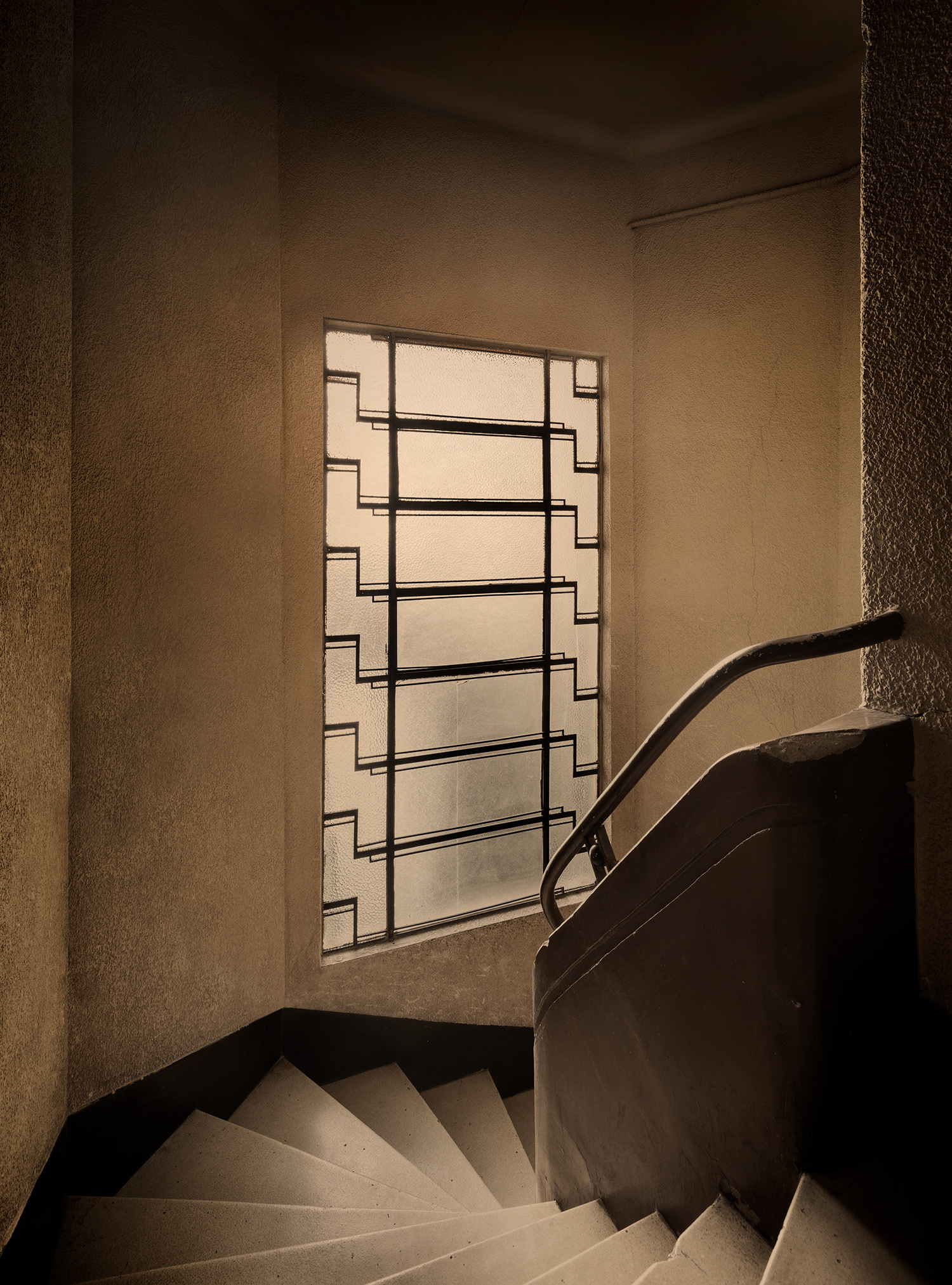
Scari #2 Fine art photographic inkjet print on fine art paper. Beech frame with museum glass. 135 × 100 cm. Edition of 3 + AP.
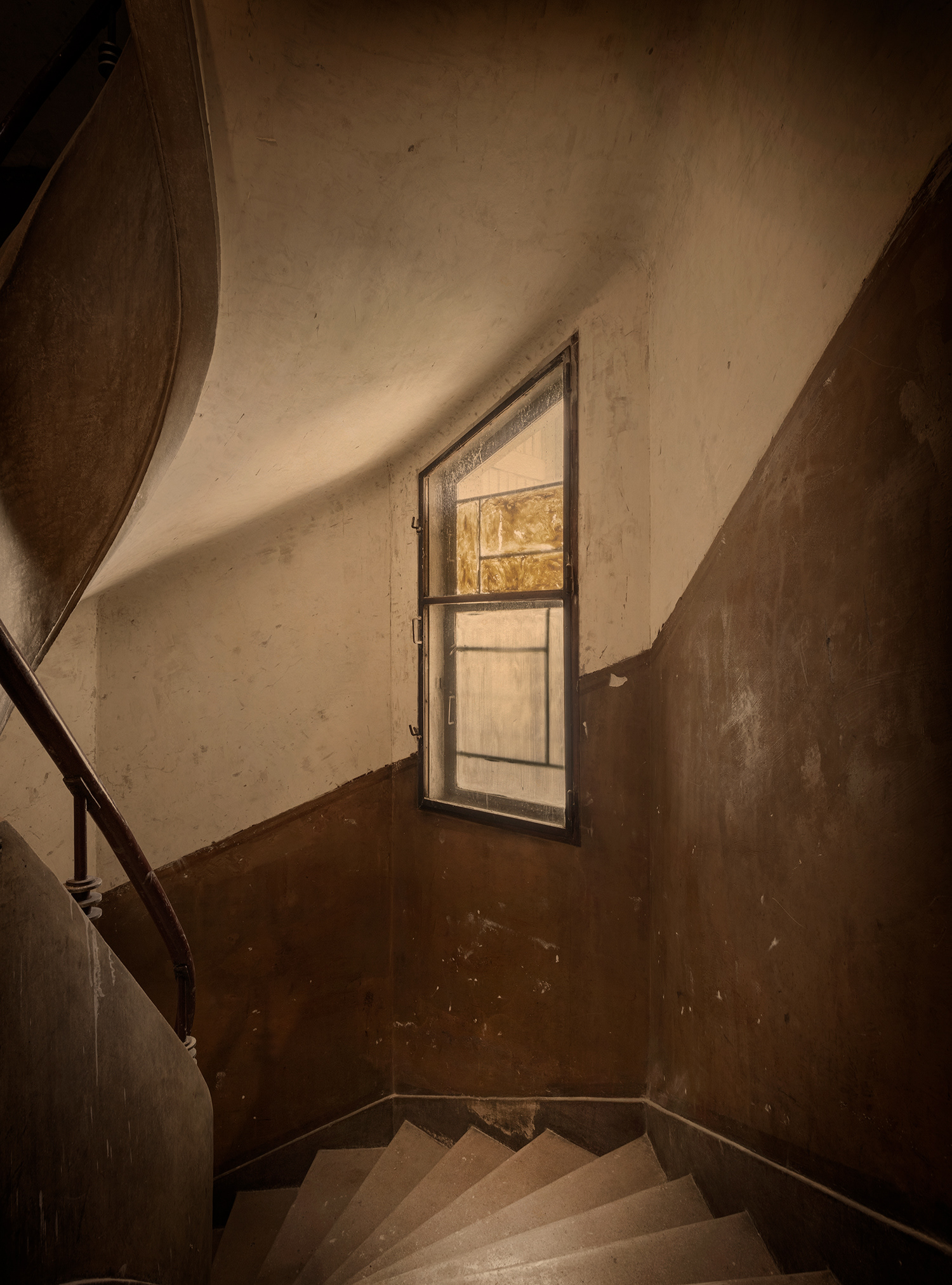
Scari #4 Fine art photographic inkjet print on fine art paper. Beech frame with museum glass. 135 × 100 cm. Edition of 3 + AP.
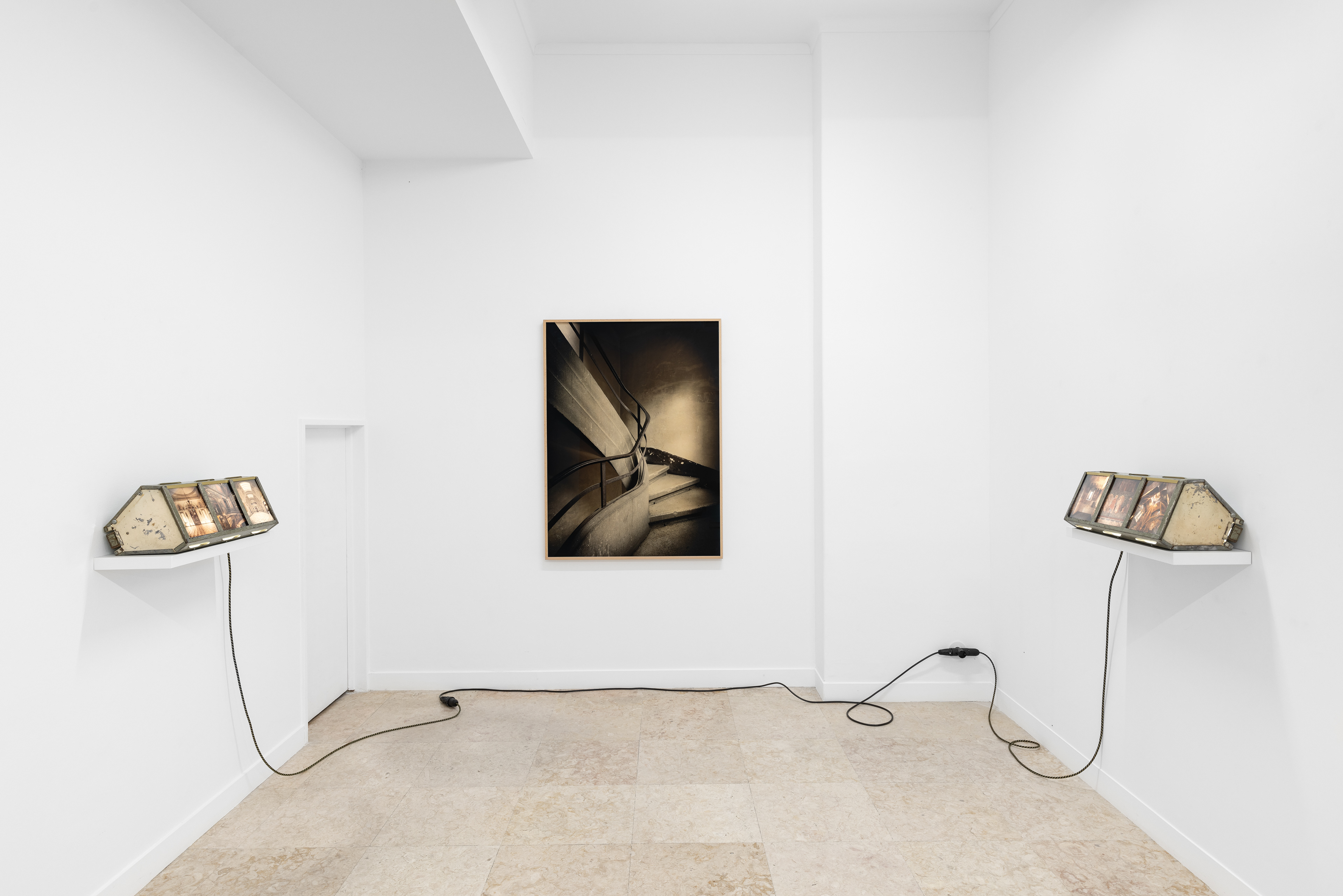
Exhibition view at Galeria das Salgadeiras. 2024.
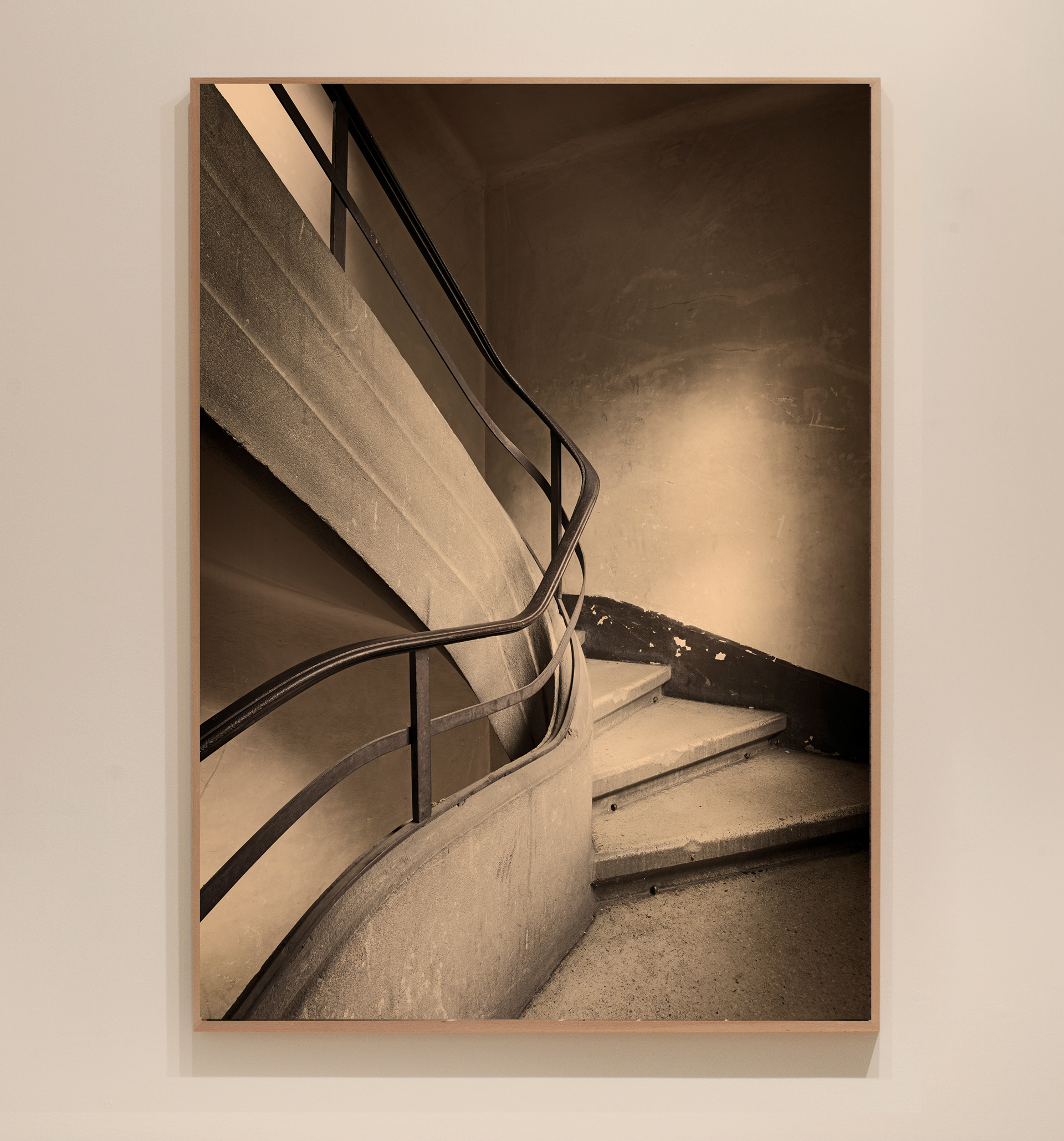
Virginia Haret (1894–1962) was the first woman admitted to the School of Architecture in 1912 and later became Romania’s first female Inspector General of Architecture, designing around forty buildings across a wide range of styles, from Neo-Romanian and Neoclassical to Art Deco, Modernism and Functionalism. The Art Deco and Modernist influences in her own family residence, where she lived from 1934 until her death, led Inês d’Orey to discover that the Modernist building interior she had photographed was also Haret’s work.
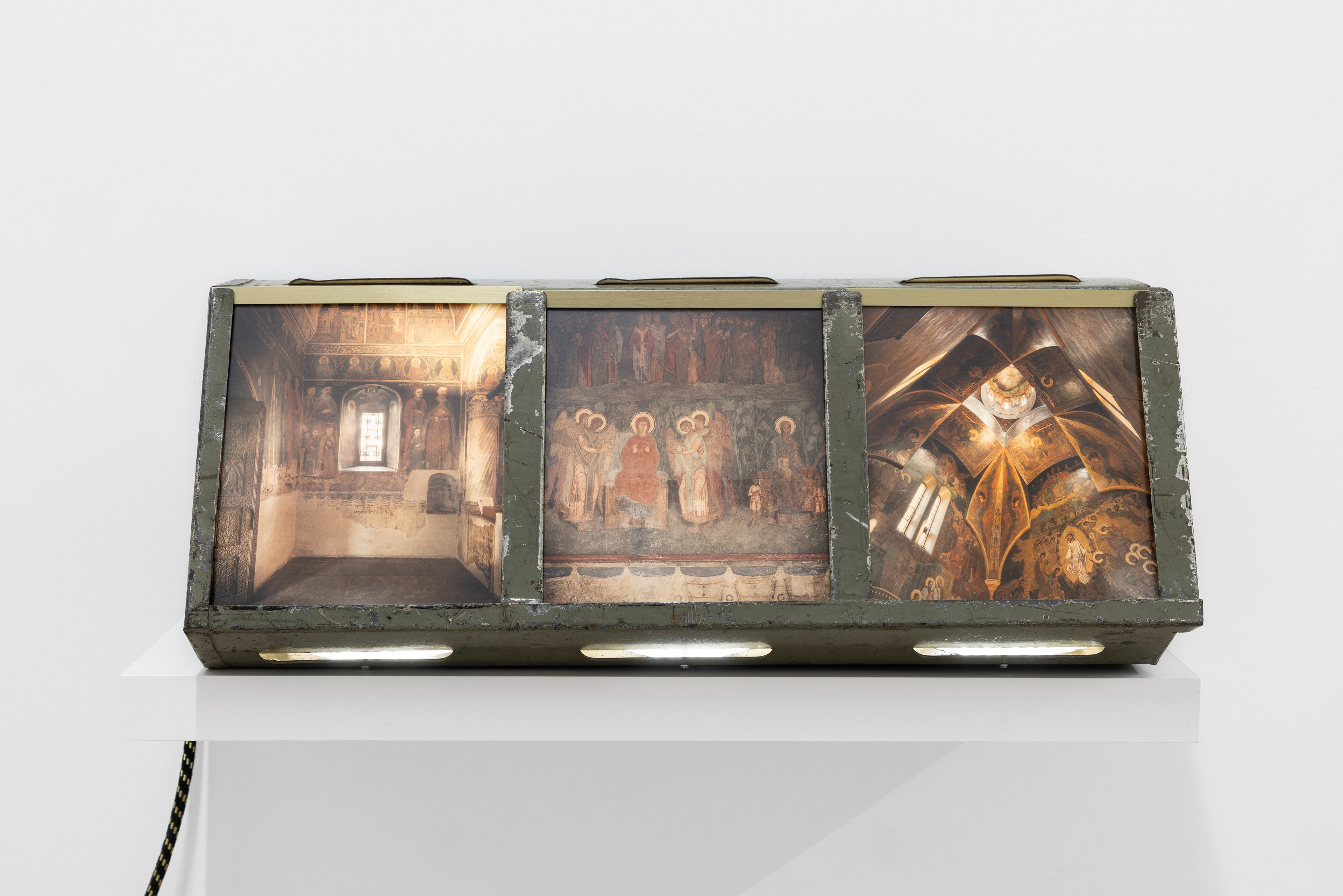
Orthodox Triptych. 3 backlit photographic prints. Theatre floodlight from the first half of the 20th century. 57,5 x 21 x 26 cm. Unique piece.
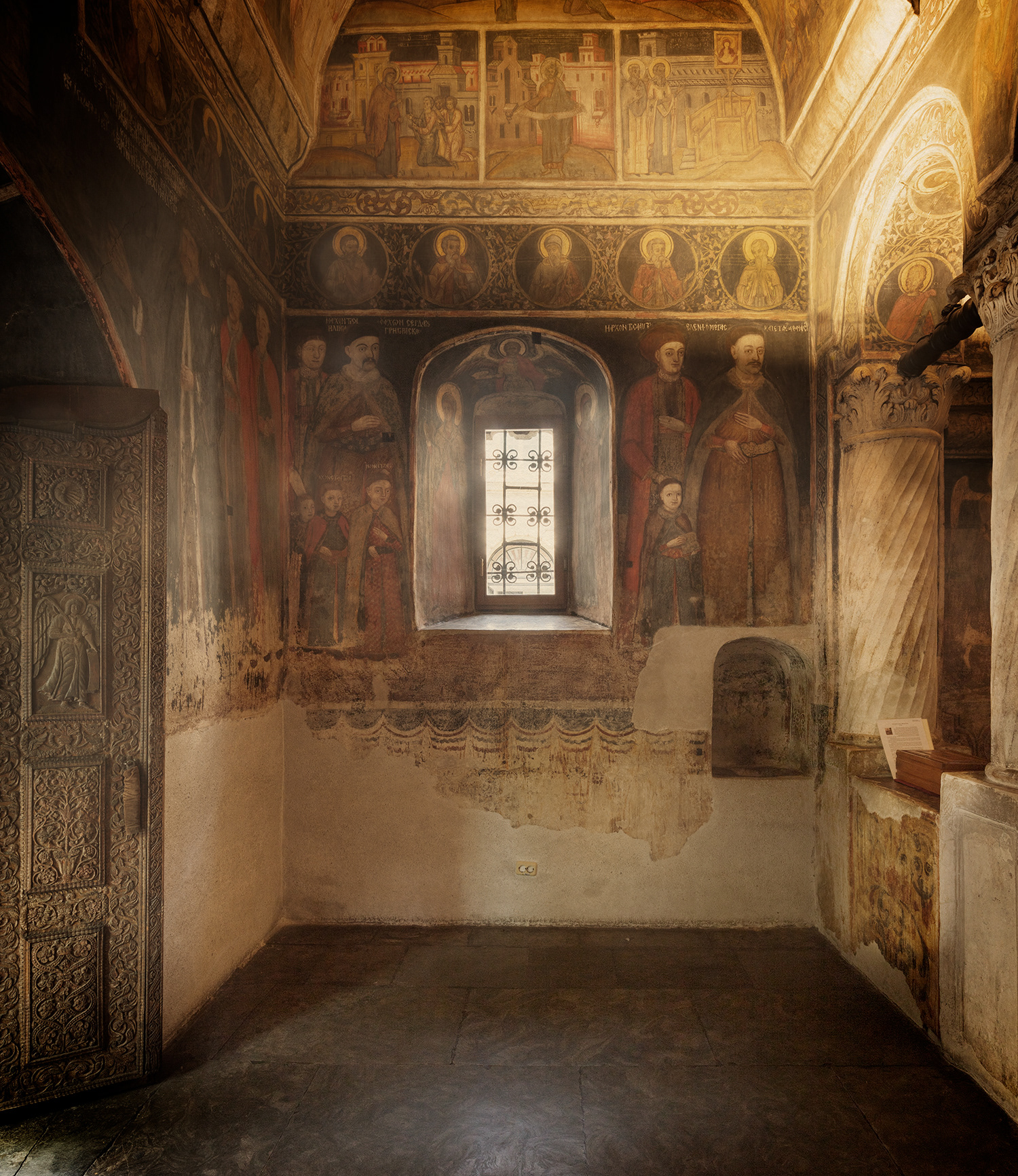
The Stavropoleos Monastery was built in 1724 by Archimandrite Ioannikios Stratonikeas, during the reign of Prince Nicholas Mavrocordatos, with the church and monastery originally supported by income from an adjoining inn. After earthquakes caused the dome to collapse and the original complex was largely demolished, a new building designed by Ion Mincu in the Neo-Romanian style was added between 1897 and 1912, housing a library, conference room and museum.
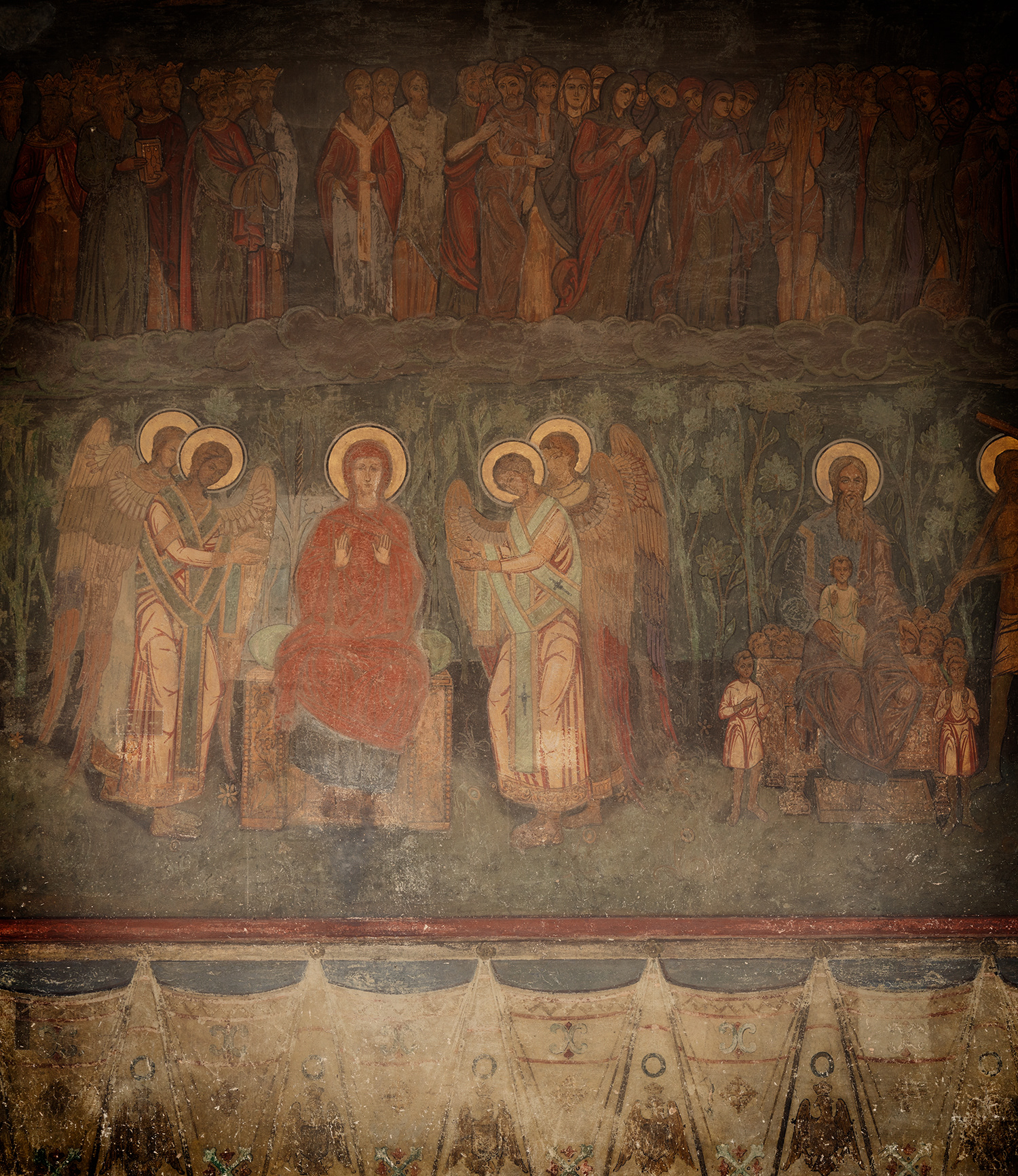
The Patriarchal Cathedral of Saints Constantine and Helena was built between 1655 and 1659 under Prince Constantin Șerban, with a Brâncovenesc-style façade and frescoes painted by Dimitrie Belizarie in 1923. The Brâncovenesc style combines Byzantine, Ottoman and medieval influences with distinctive porticos, trilobed arches, columns and intricate vegetal ornamentation, often incorporating groups of three symbolising the Holy Trinity.
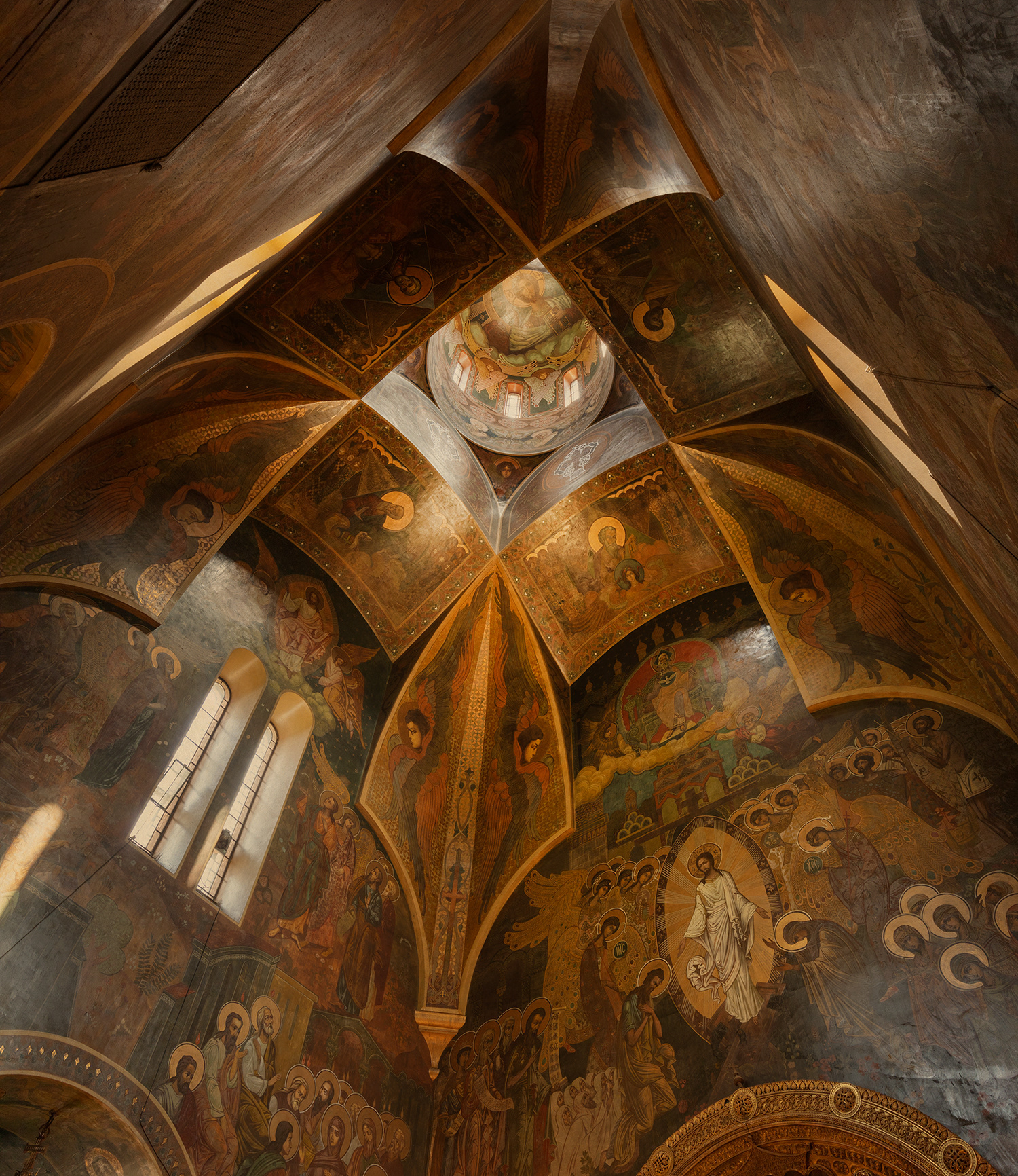
Saint Nicholas Church was built between 1905 and 1909 at the request of the Russian ambassador Mihail Nicolaevici Giers, with the consent of Tsar Nicholas II, and designed in the Art Nouveau style by Russian architect Preobrajensky, serving both the Russian community and as an expression of imperial prestige. Severely damaged by the 1977 earthquake and neglected during the communist period, it became the University Chapel of the University of Bucharest in 1992, the first church in Romania to serve this purpose after 1990.
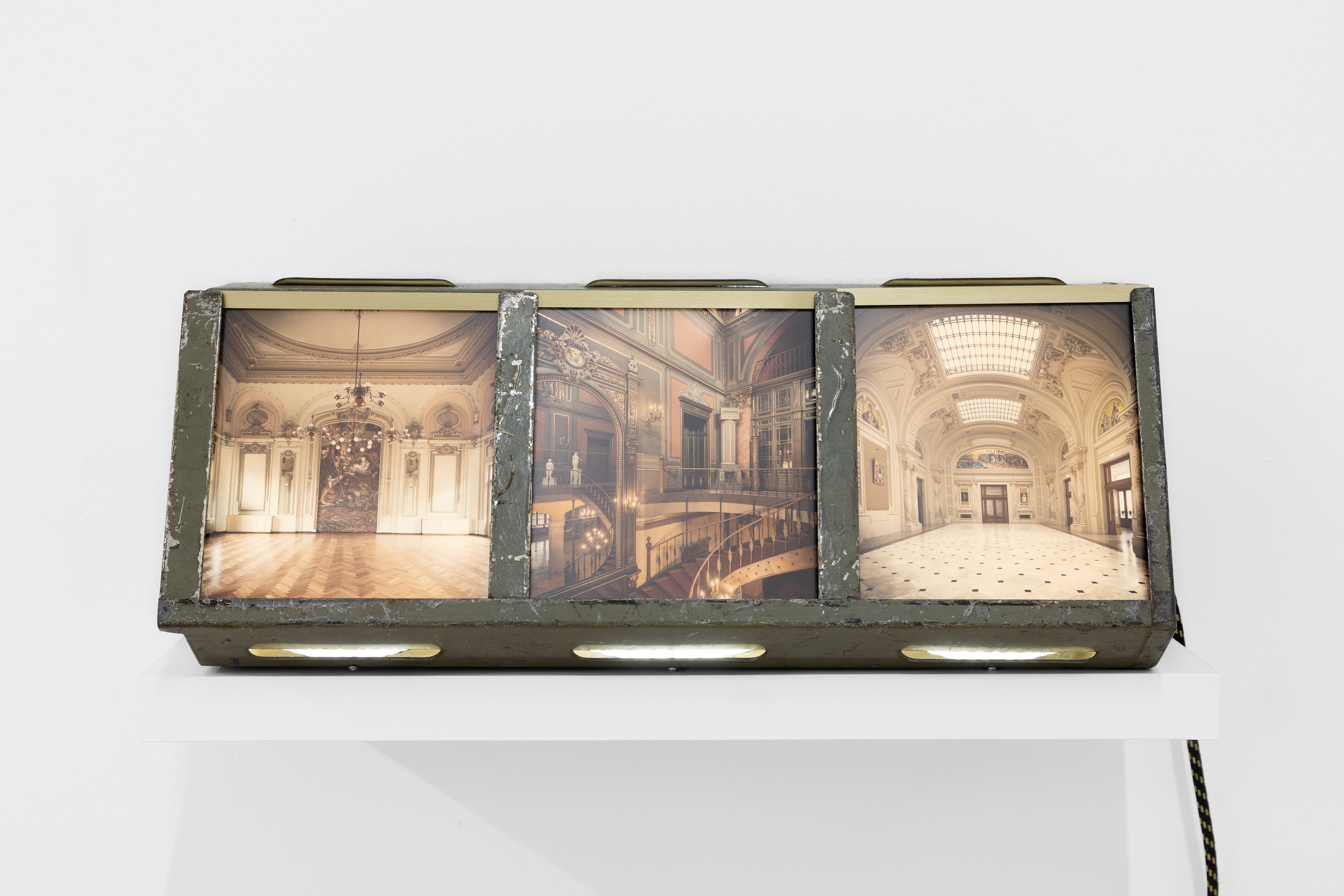
Beaux-Arts Triptych. 3 backlit photographic prints. Theatre floodlight from the first half of the 20th century. 57,5 x 21 x 26 cm. Unique piece.
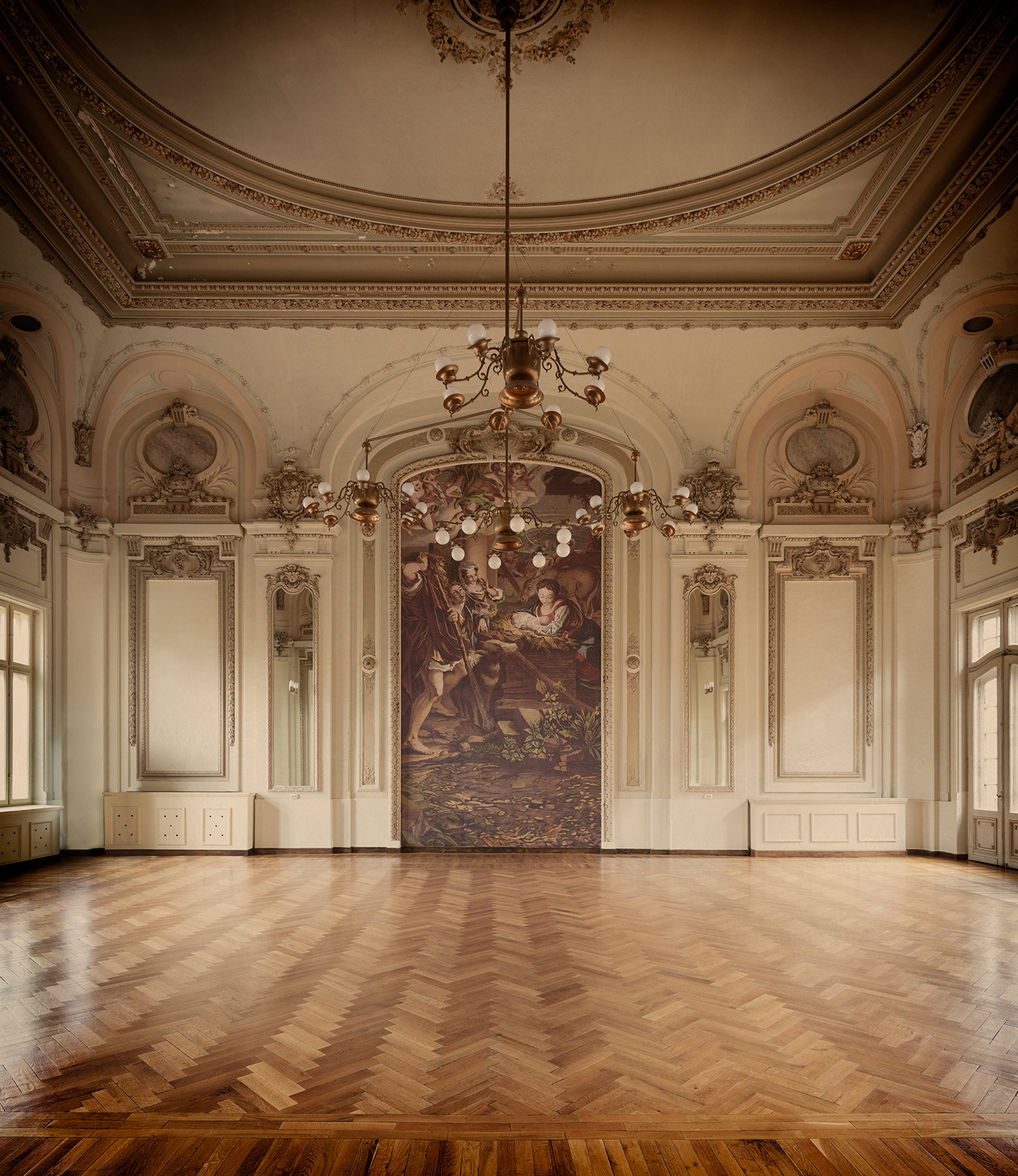
The Palace of the Stock Exchange was built between 1906 and 1912 to house the Chamber of Commerce and Industry of Bucharest, designed by architect Ștefan Burcuș in the Beaux-Arts style with Corinthian pilasters and columns. From 1955 it housed the Central State Library, before being returned to its original owner in 2008, and it is now occupied by various companies and businesses.
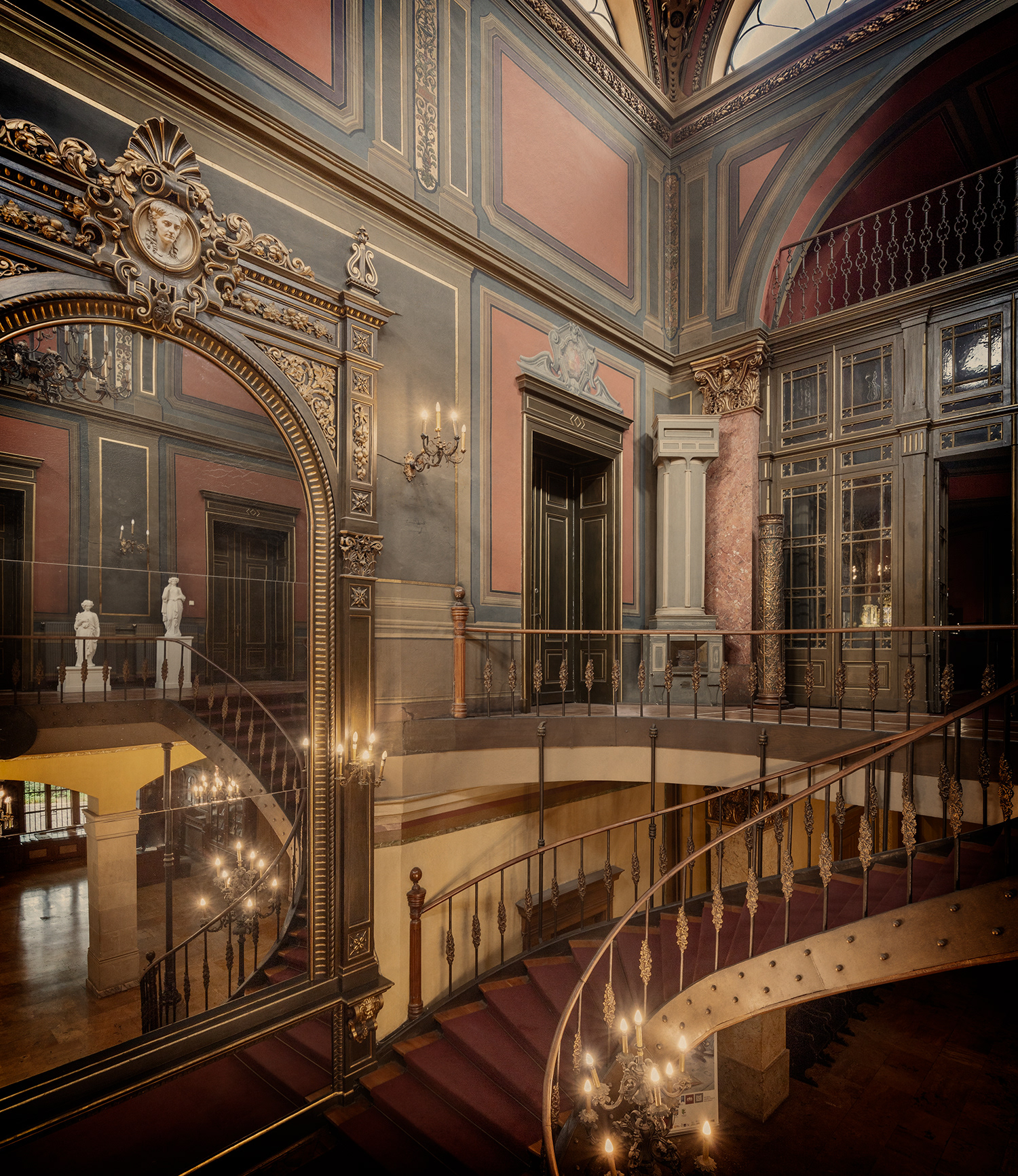
Șuțu Palace, one of Bucharest’s oldest aristocratic residences, was built between 1833 and 1835 by Viennese architects Conrad Schwink and Johann Veit in a Neoclassical and Neo-Gothic style, with richly decorated interiors and distinctive Gothic towers. Since 1959, it has housed the Bucharest City Museum and is known for displaying the 1459 document issued by Prince Vlad III that first mentions the citadel of Bucharest.
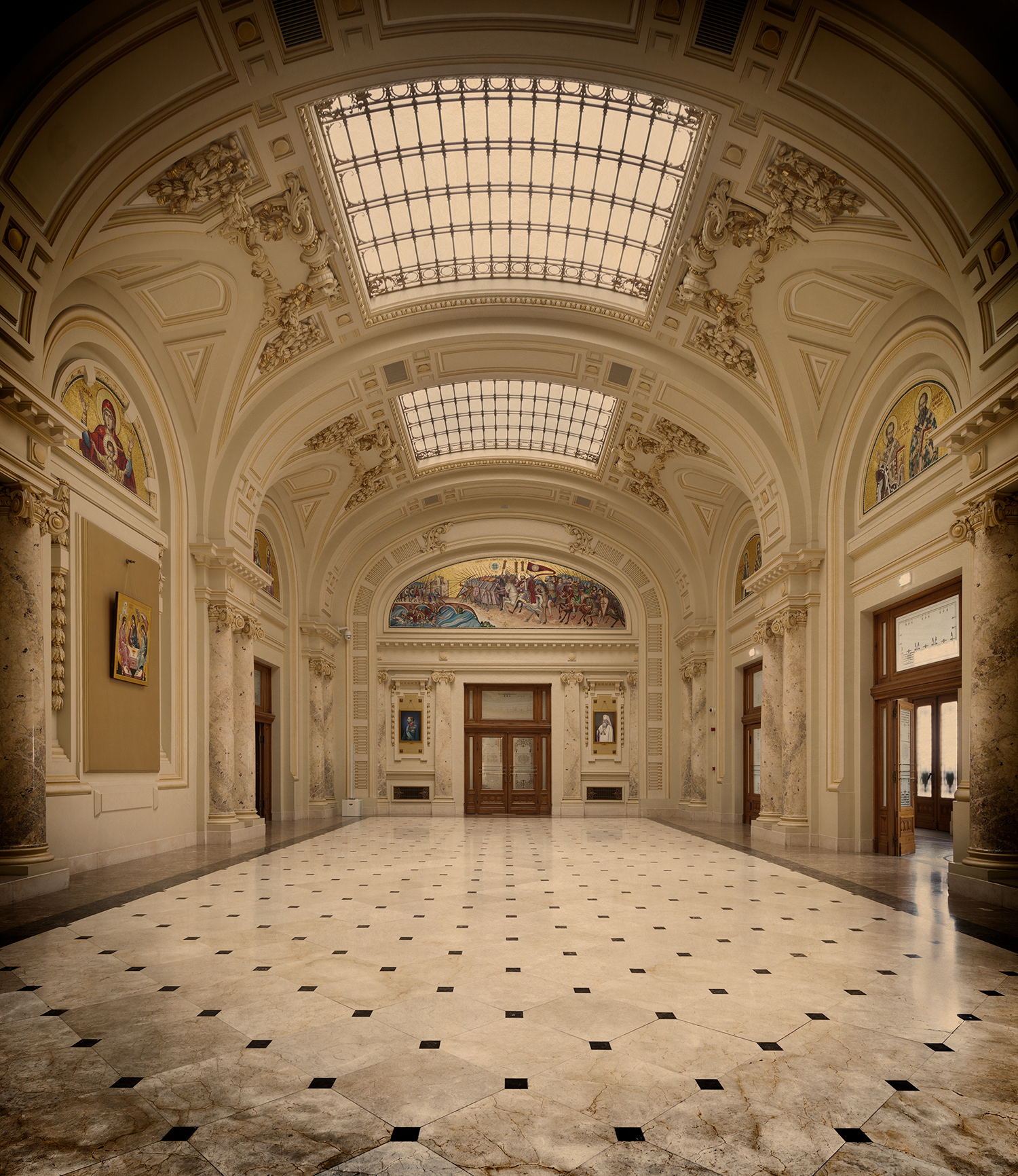
The Palace of the Chamber of Deputies, now the Palace of the Patriarchate, was built between 1906 and 1908 by architect Dimitrie Maimarolu on the Dealul Mitropoliei plateau, serving successively as the seat of Romania’s legislatures from the Kingdom through the communist era and after the 1989 Revolution. It was the country’s first reinforced-concrete building and underwent several alterations, including the restoration of its dome after it collapsed in the 1940 earthquake.
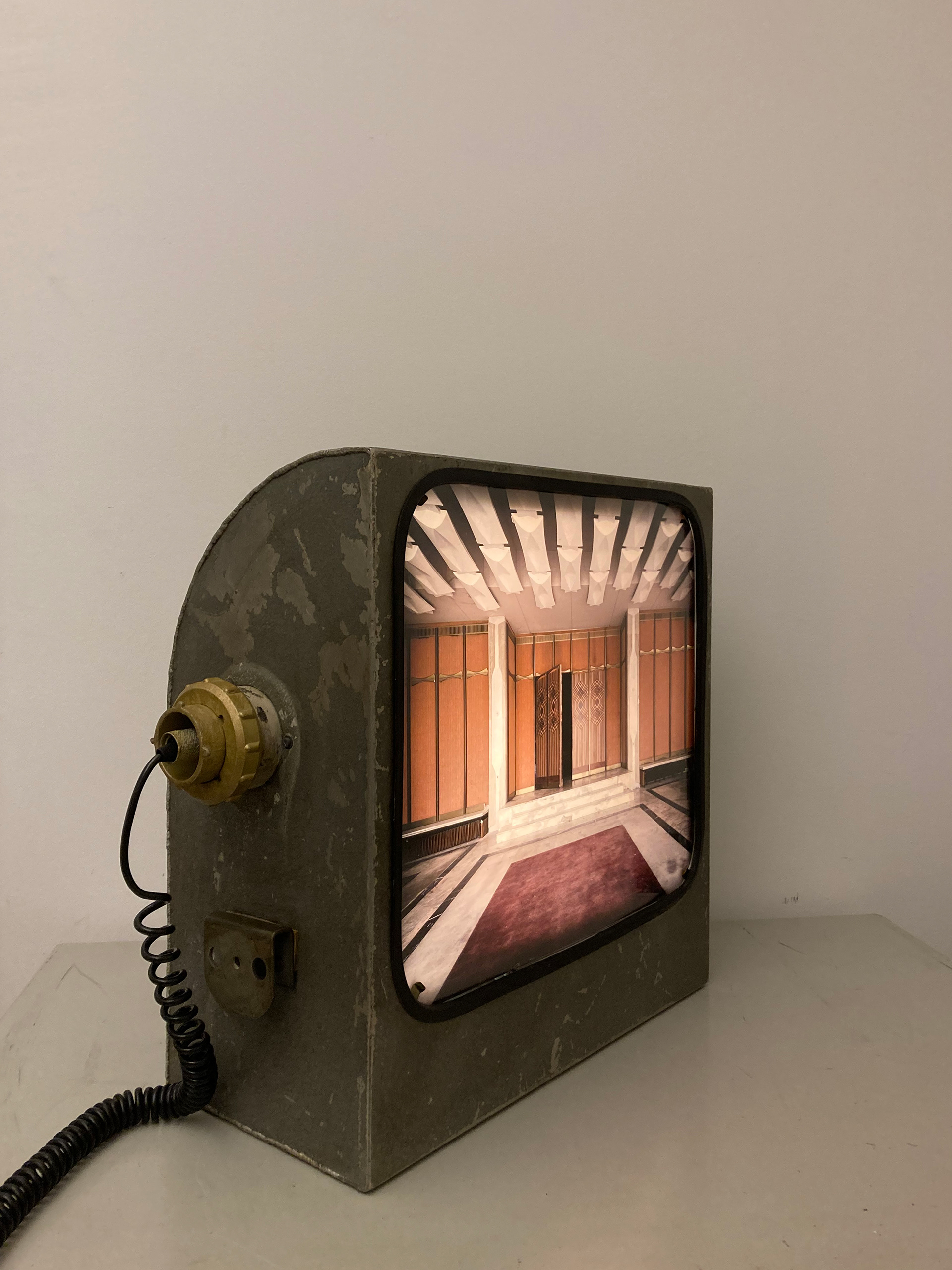
Omnia #1. Backlit photographic print. Mid-20th-century industrial projector. 52 × 50 × 24 cm. Unique piece
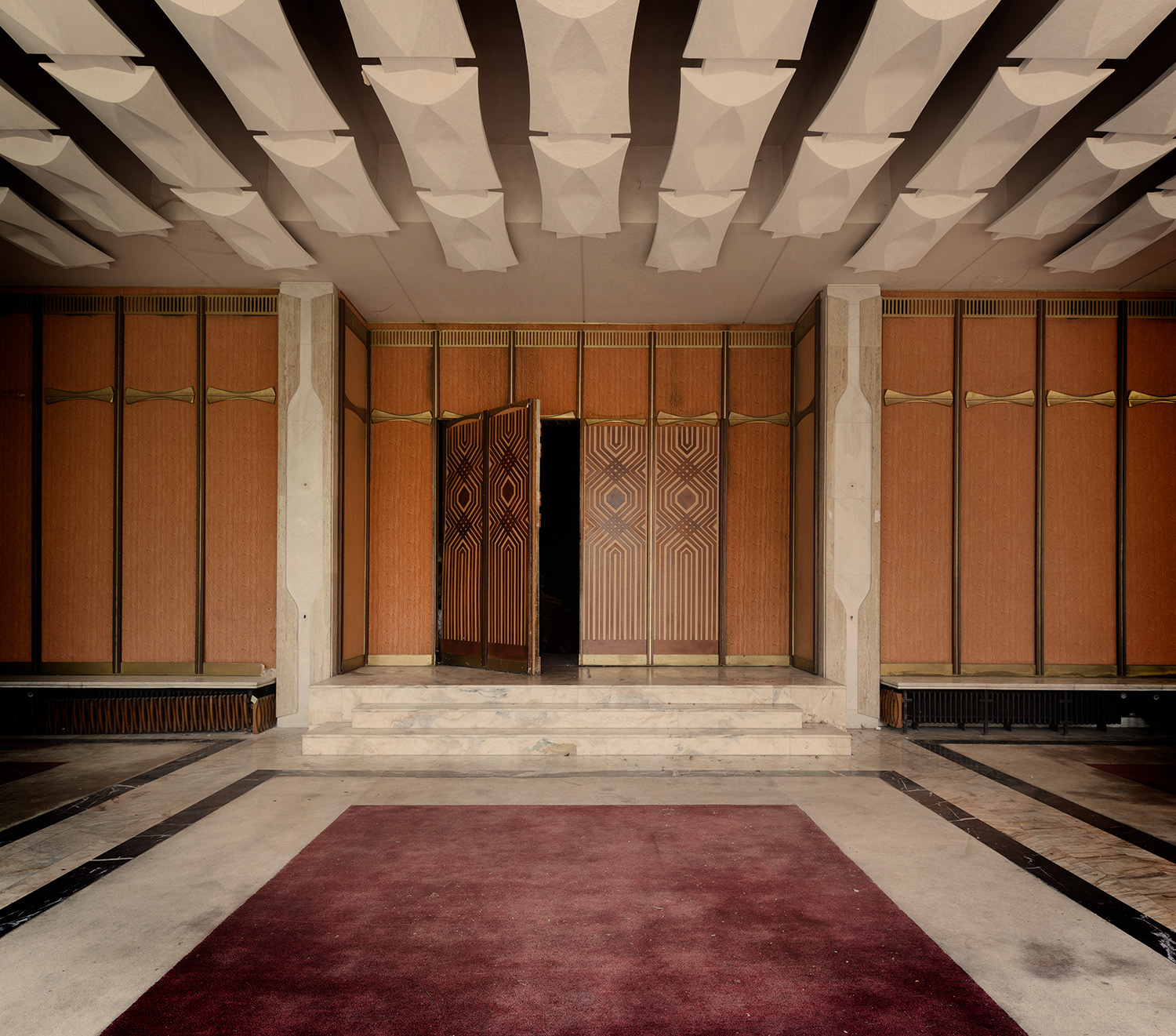
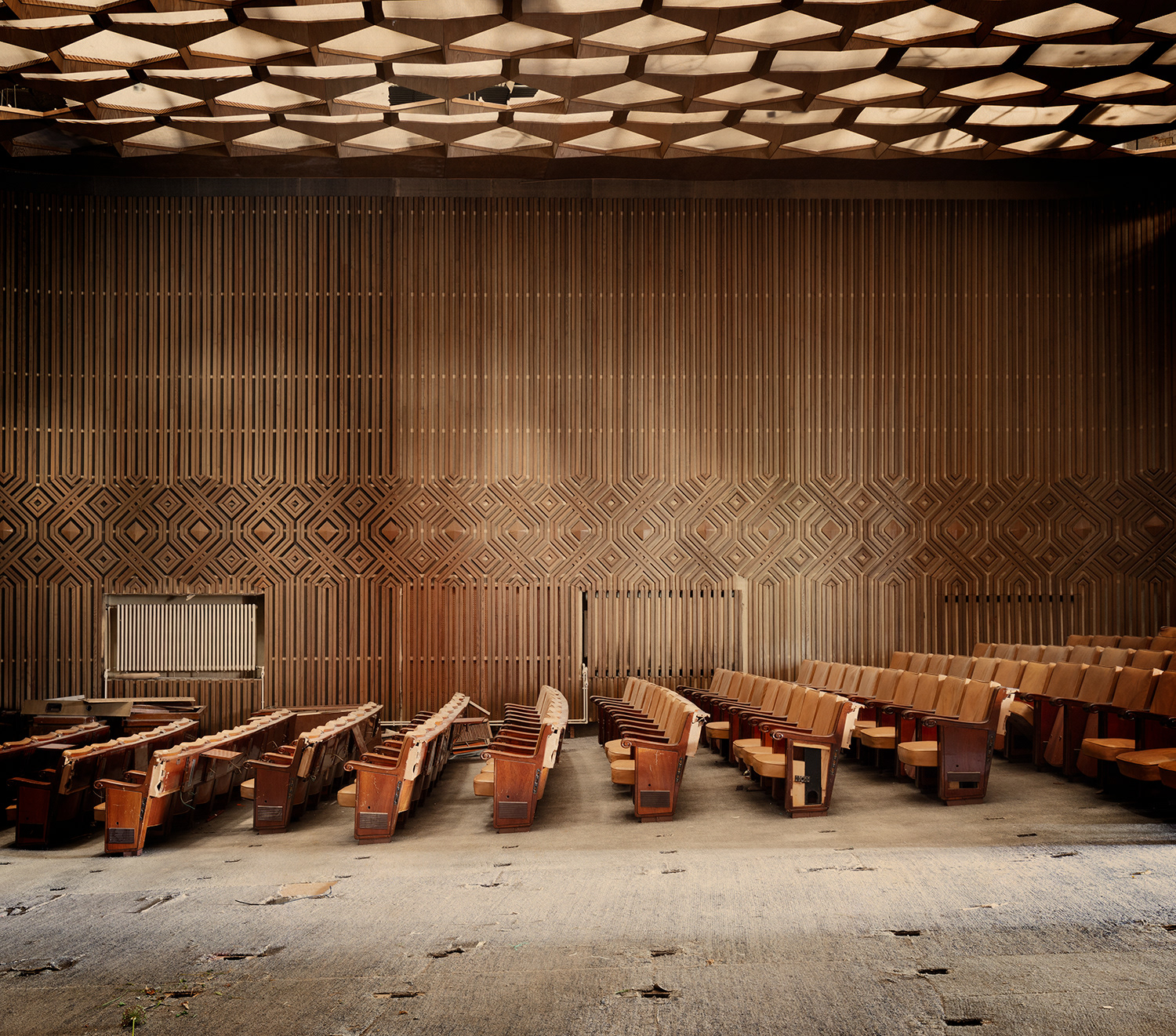
Omnia Hall was designed by Romanian architect Cezar Lăzărescu in 1967 as an annex to the headquarters of the Central Committee of the Romanian Communist Party, combining a Modernist Brutalist aesthetic with futuristic geometric forms and elements of Romanian folklore. Conceived as a metaphor for communism, the building’s design incorporated carefully controlled spaces and surveillance features, and after years of abandonment it was transferred to the National Dance Centre of Bucharest in 2016, where it awaits restoration.
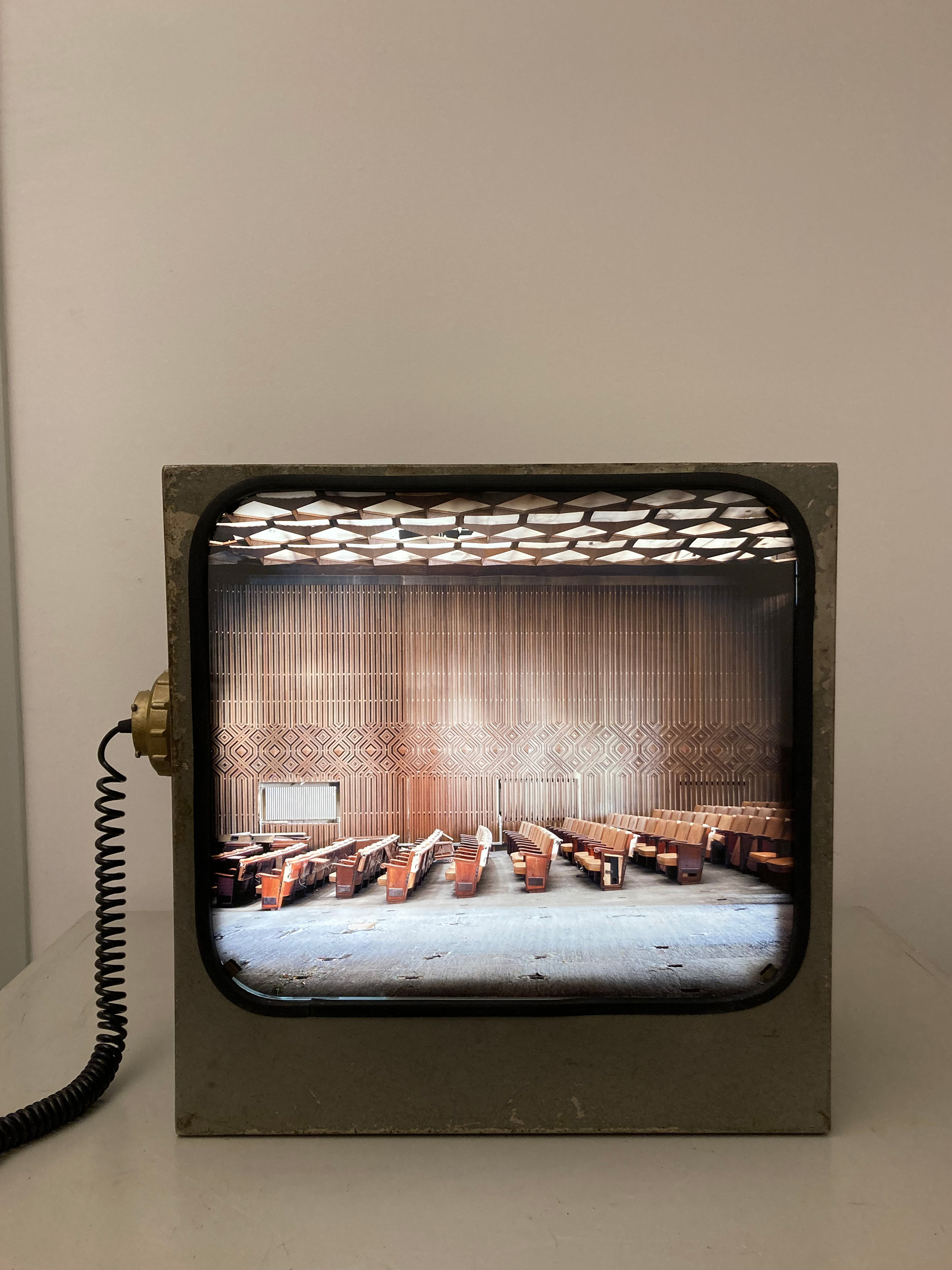
Omnia #2. Backlit photographic print. Mid-20th-century industrial projector. 52 × 50 × 24 cm. Unique piece
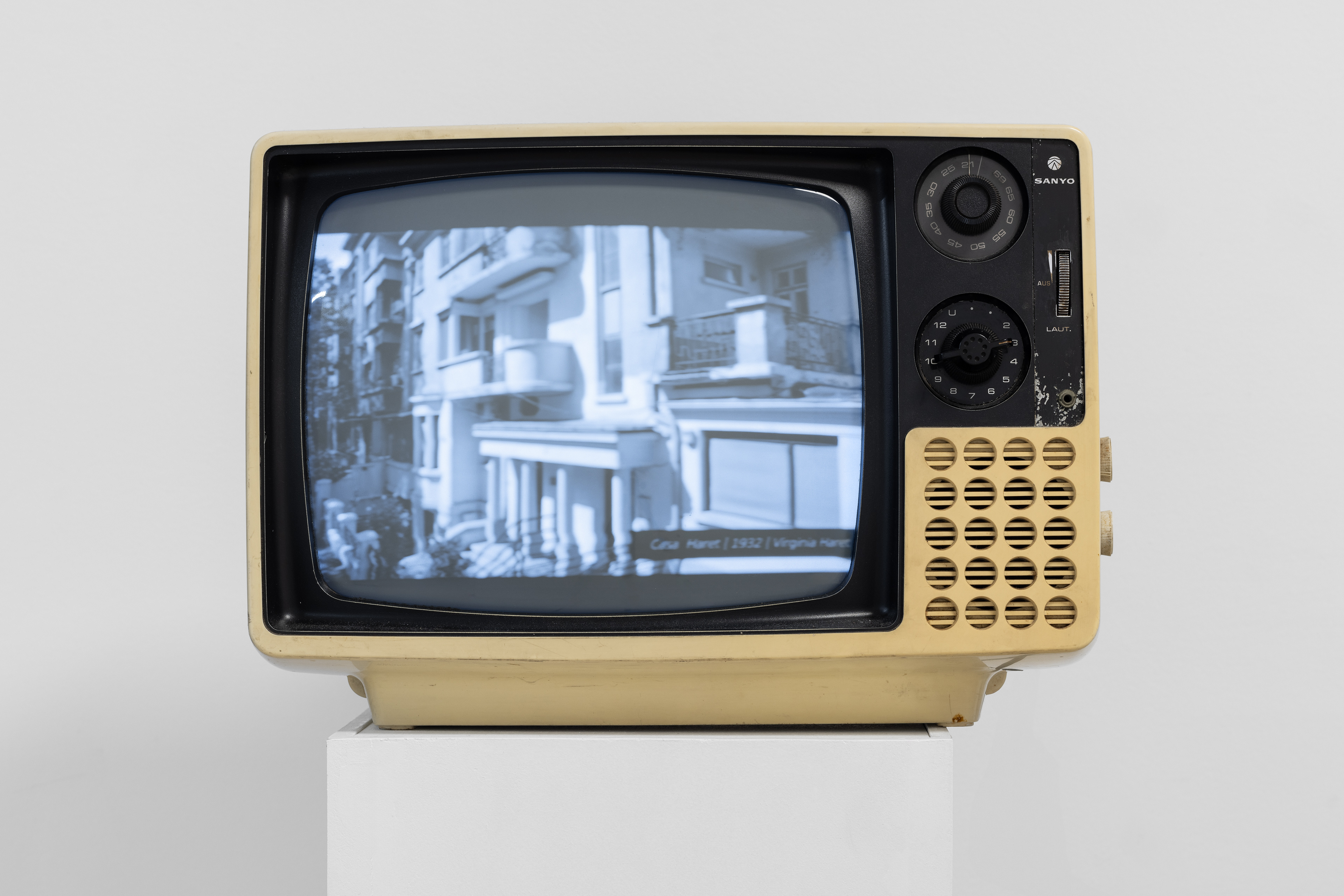
Virginia and Henrietta. HD Video. The Modernist work of two of the first Romanian women architects, Virginia Haret and Henrietta Delavrancea, is presented in the contemporary context of a changing city.
Virginia and Henrietta. HD video, 4.5,
B&W, no sound, 5.55 minutes.
Dada City
Galeria das Salgadeiras
Galeria das Salgadeiras
Written by Tiago Bartolomeu Costa
Brotéria magazine
January 2025
The photographic sculptures by Inês d’Orey, displayed in that state between the first arrival and the eve of departure, evoke spaces, and above all a time, where the grandeur of the architecture served as a scale for the belittling of the individual. In a disheartened Romania, these are narrative hypotheses about political power in its close relationship with art and artistic creation, even if, in many cases, they are propaganda. The dryness that time has imposed on the monumental spaces of churches, cinemas and schools photographed by the artist becomes a matter for reflection: what effective, individual and continuous control has actually materialized?
Dada City, based on a concept by gallery owner Dan Popescu, was developed in Bucharest between April and May 2024, resulting in an encapsulation of time, both immaterial and physical. The photographer describes it this way: «This series explores the symbols of power structures in the urban landscape and architecture, and how these are influenced by the socioeconomic context, historical situation and ideological changes of each era.»
In fact, each of the pieces, and the sets that they form together, point to a triple memory: that of the political, social and cultural use of spaces; the efficiency of the objects that frame the photographs; and the presence of those who defined themselves as a silent community in the face of the manipulation of a nation.
In Omnia #1 and Omnia #2, for example, two mid-20th century industrial projectors are used to contain the immensity of the entrance and the audience of the Omnia Hall, built in 1967 as an annex to the headquarters of the Central Committee of the Romanian Communist Party, where party conferences were held, with Nicolae Ceausescu. That it was later transformed into a theatre and dance studio belongs to an afterlife that the artist seems to use to its fullest extent of this exhibition-installation.
Orthodox triptych, on the other hand, is a sculptural ensemble that prints and frames details of the many Orthodox churches on three early 20th century theater projectors. It inevitably refers to mechanisms of fiction and transformation that liturgical discourse proposes, as much as it brings it closer to the invented reality that the stages make believable. In a way, it is as if Inês d'Orey wanted to make material the mechanical, light and operational effect that allows imagination to become — and transport — real. They are, at the same time, objects and windows into a way of existing and spiritual abandonment, just as churches can be places of encounter and transcendence. By fixating on now obsolete objects, points of view on the stone, the stained glass windows, that is, on the space and the light, the artist applies herself in the relationship with the memory of photography and cinema itself, to its zones of shadow and
clarity, so close (as indeed Francis Ford Coppola showed in his Bram Stoker's Dracula) to the darkness and revelation that cinema and belief share.
On its opposite, the Beaux-Arts Triptych replicates the same device, but now for spaces of another type of monumentality and exuberance, where taste makes social and legislative policy. The same projectors now show details of the grandeur of the Sutu Palace, the oldest private residence in Bucharest, built between 1833 and 1835 and which, during the German occupation in the First World War, served as the residence of the governor of the occupied territory, and the Stock Exchange Palace, built between 1906 and 1912, to house the headquarters of the Chamber of Commerce and Industry of the City of Bucharest. They are, in the possibility they shelter of denunciation, and exposure, of imitation, the reserve of verisimilitude, since they demonstrate the effect sought in the construction itself: to act as. In this regard, they recall the caricatured situation caused by the filming of the movie Amen, by the Greek Costa-Gravas (2002), about the relation between the Nazi regime and the Catholic Church. The filming location used was the Palace of Parliament in Bucharest, which represented the corridors and rooms of the Vatican where the production team glued to the walls with an extra-strong product, reproductions of representations of saints, sins and Christian miracles that, more than ten years later, proved impossible to remove.
What stands out in this approach by Inês d'Orey, multiplied in scale, form and thought about what to take from the views left in spaces loaded with meaning, is an incessant construction on memory. In the evocation of what seemed to be a ghost place, an intimate reflection is produced on the fictionalization of the image itself, both in the attempt to read in them the function that had been attributed to them, and in the exercise of attributing to them a contemporary meaning based on the spatial impact to which they subject us.
Brotéria magazine
January 2025
The photographic sculptures by Inês d’Orey, displayed in that state between the first arrival and the eve of departure, evoke spaces, and above all a time, where the grandeur of the architecture served as a scale for the belittling of the individual. In a disheartened Romania, these are narrative hypotheses about political power in its close relationship with art and artistic creation, even if, in many cases, they are propaganda. The dryness that time has imposed on the monumental spaces of churches, cinemas and schools photographed by the artist becomes a matter for reflection: what effective, individual and continuous control has actually materialized?
Dada City, based on a concept by gallery owner Dan Popescu, was developed in Bucharest between April and May 2024, resulting in an encapsulation of time, both immaterial and physical. The photographer describes it this way: «This series explores the symbols of power structures in the urban landscape and architecture, and how these are influenced by the socioeconomic context, historical situation and ideological changes of each era.»
In fact, each of the pieces, and the sets that they form together, point to a triple memory: that of the political, social and cultural use of spaces; the efficiency of the objects that frame the photographs; and the presence of those who defined themselves as a silent community in the face of the manipulation of a nation.
In Omnia #1 and Omnia #2, for example, two mid-20th century industrial projectors are used to contain the immensity of the entrance and the audience of the Omnia Hall, built in 1967 as an annex to the headquarters of the Central Committee of the Romanian Communist Party, where party conferences were held, with Nicolae Ceausescu. That it was later transformed into a theatre and dance studio belongs to an afterlife that the artist seems to use to its fullest extent of this exhibition-installation.
Orthodox triptych, on the other hand, is a sculptural ensemble that prints and frames details of the many Orthodox churches on three early 20th century theater projectors. It inevitably refers to mechanisms of fiction and transformation that liturgical discourse proposes, as much as it brings it closer to the invented reality that the stages make believable. In a way, it is as if Inês d'Orey wanted to make material the mechanical, light and operational effect that allows imagination to become — and transport — real. They are, at the same time, objects and windows into a way of existing and spiritual abandonment, just as churches can be places of encounter and transcendence. By fixating on now obsolete objects, points of view on the stone, the stained glass windows, that is, on the space and the light, the artist applies herself in the relationship with the memory of photography and cinema itself, to its zones of shadow and
clarity, so close (as indeed Francis Ford Coppola showed in his Bram Stoker's Dracula) to the darkness and revelation that cinema and belief share.
On its opposite, the Beaux-Arts Triptych replicates the same device, but now for spaces of another type of monumentality and exuberance, where taste makes social and legislative policy. The same projectors now show details of the grandeur of the Sutu Palace, the oldest private residence in Bucharest, built between 1833 and 1835 and which, during the German occupation in the First World War, served as the residence of the governor of the occupied territory, and the Stock Exchange Palace, built between 1906 and 1912, to house the headquarters of the Chamber of Commerce and Industry of the City of Bucharest. They are, in the possibility they shelter of denunciation, and exposure, of imitation, the reserve of verisimilitude, since they demonstrate the effect sought in the construction itself: to act as. In this regard, they recall the caricatured situation caused by the filming of the movie Amen, by the Greek Costa-Gravas (2002), about the relation between the Nazi regime and the Catholic Church. The filming location used was the Palace of Parliament in Bucharest, which represented the corridors and rooms of the Vatican where the production team glued to the walls with an extra-strong product, reproductions of representations of saints, sins and Christian miracles that, more than ten years later, proved impossible to remove.
What stands out in this approach by Inês d'Orey, multiplied in scale, form and thought about what to take from the views left in spaces loaded with meaning, is an incessant construction on memory. In the evocation of what seemed to be a ghost place, an intimate reflection is produced on the fictionalization of the image itself, both in the attempt to read in them the function that had been attributed to them, and in the exercise of attributing to them a contemporary meaning based on the spatial impact to which they subject us.
Dada City
Galeria das Salgadeiras
Escrito por Tiago Bartolomeu Costa
Revista Brotéria
Janeiro 2025
As fotografias-esculturas de Inês d’Orey, dispostas naquele estado entre a primeira chegada e as vésperas da partida, evocam espaços, e sobretudo um tempo, onde a grandiosidade da arquitetura servia de escala para o apoucamento do indivíduo. Numa Roménia descorçoada, são hipóteses narrativas sobre o poder político na sua estreita relação com a arte e a criação artística, ainda que, em muitos casos, de propaganda. A secura que o tempo impôs aos espaços monumentais das igrejas, cinemas e escolas fotografadas pela artista tornam-se matéria de reflexão: que controlo efetivo, individual e continuado efetivamente se materializou?
Dada City, a partir do conceito do galerista Dan Popescu, foi desenvolvida em Bucareste entre abril e maio 2024, resultando num encapsulamento do tempo, tanto imaterial quanto físico. A fotógrafa descreve-a deste modo: «Esta série percorre os símbolos das estruturas de poder
na paisagem urbana e na arquitectura, e como estas se deixam influenciar pelo contexto socioeconómico, situação histórica e alterações ideológicas de cada época.»
Efetivamente, cada uma das peças, e os conjuntos que constroem entre si apontam para uma tripla memória: a do uso político, social e cultural dos espaços; a da eficiência dos objetos que emolduram as fotografias; e a da presença de quem se definiu enquanto comunidade silenciosa face à manipulação de uma de nação.
Em Omnia #1 e Omnia #2, por exemplo, usam-se dois projetores industriais de meados do século XX para conter a imensidão da entrada e da plateia da Sala Omnia, construída em 1967 como anexo à sede do Comité Central do Partido Comunista Romeno, onde se realizavam conferências do partido, com Nicolae Ceausescu. Que tenha, depois, sido transformado em teatro e estúdio de dança pertence a uma pós-vida que a artista parece usar em toda a extensão
desta exposição-instalação.
Tríptico ortodoxo, por outro lado, é um conjunto escultórico que imprime e emoldura detalhes das muitas igrejas ortodoxas em três projetores de teatro do início do século XX. Remete, inevitavelmente, para mecanismos de ficção e transformação que o discurso litúrgico propõe, tanto quanto o aproxima da realidade inventada que os palcos tornam verosímeis. De certo modo, é como se Inês d'Orey quisesse tornar material o efeito mecânico, de luz e operativo, que permite tornar — e transportar — real a imaginação. São, ao mesmo tempo, objetos e janelas para um modo de existir e de abandono espiritual, tanto quanto as igrejas possam ser lugares de encontro e transcendência. Ao fixar em objetos, agora obsoletos, pontos de vista
sobre as pedras, os vitrais, ou seja, sobre o espaço e a luz, a artista aplica-se na relação com a memória da própria fotografia e do cinema, às suas zonas de sombra e de
claridade, tão próximas (como aliás Francis Ford Coppola mostrou no seu Bram
Stoker's Dracula) às trevas e revelação das quais comungam o cinema e a crença.
No seu oposto, o Tríptico Beaux-Arts replica o mesmo dispositivo, mas agora
para espaços de um outro tipo de monumentalidade e exuberância, onde o gosto faz política social e legislativa. Os mesmos projetores guardam agora detalhes da imponência do Palácio Sutu, a mais antiga residência privada de Bucareste, construído entre 1833 e 1835 e que, durante a ocupação alemã na Primeira Guerra Mundial, serviu de residência ao governador do território ocupado e o Palácio da Bolsa, construído entre 1906 e 1912, para albergar a sede da Câmara de Comércio e Indústria da Cidade de Bucareste. São, na possibilidade que albergam de denúncia, e exposição, da imitação, o reservo da verosimilhança, já que demonstram o efeito
procurado na própria construção: fazer as vezes de. A esse propósito, lembram a caricatural situação provocada pela rodagem do filme Amen, do grego Costa-Gravas (2002), sobre as relações entre o regime nazi e a igreja católica. O local de rodagem usado foi o Palácio do Parlamento, em Bucareste, que representavam os corredores e salas do Vaticano onde a produção colou nas paredes com um produto extraforte, reproduções de representações de santos, pecados e milagres cristãos que, mais de dez anos depois se verificavam impossíveis de retirar.
O que se ressalva desta abordagem de Inês d'Orey, multiplicada na escala, forma e pensamento sobre o que levar dos olhares deixados em espaços carregados de sentidos, é uma incessante construção sobre a memória. Na evocação do que parecia ser lugar-fantasma, produz-se uma íntima reflexão sobre a ficcionalização da própria imagem, tanto na tentativa de ler nelas a função que lhes havia sido atribuída, como no exercício de lhes atribuir sentido contemporâneo a partir do impacto espacial a que nos sujeitam.
Galeria das Salgadeiras
Escrito por Tiago Bartolomeu Costa
Revista Brotéria
Janeiro 2025
As fotografias-esculturas de Inês d’Orey, dispostas naquele estado entre a primeira chegada e as vésperas da partida, evocam espaços, e sobretudo um tempo, onde a grandiosidade da arquitetura servia de escala para o apoucamento do indivíduo. Numa Roménia descorçoada, são hipóteses narrativas sobre o poder político na sua estreita relação com a arte e a criação artística, ainda que, em muitos casos, de propaganda. A secura que o tempo impôs aos espaços monumentais das igrejas, cinemas e escolas fotografadas pela artista tornam-se matéria de reflexão: que controlo efetivo, individual e continuado efetivamente se materializou?
Dada City, a partir do conceito do galerista Dan Popescu, foi desenvolvida em Bucareste entre abril e maio 2024, resultando num encapsulamento do tempo, tanto imaterial quanto físico. A fotógrafa descreve-a deste modo: «Esta série percorre os símbolos das estruturas de poder
na paisagem urbana e na arquitectura, e como estas se deixam influenciar pelo contexto socioeconómico, situação histórica e alterações ideológicas de cada época.»
Efetivamente, cada uma das peças, e os conjuntos que constroem entre si apontam para uma tripla memória: a do uso político, social e cultural dos espaços; a da eficiência dos objetos que emolduram as fotografias; e a da presença de quem se definiu enquanto comunidade silenciosa face à manipulação de uma de nação.
Em Omnia #1 e Omnia #2, por exemplo, usam-se dois projetores industriais de meados do século XX para conter a imensidão da entrada e da plateia da Sala Omnia, construída em 1967 como anexo à sede do Comité Central do Partido Comunista Romeno, onde se realizavam conferências do partido, com Nicolae Ceausescu. Que tenha, depois, sido transformado em teatro e estúdio de dança pertence a uma pós-vida que a artista parece usar em toda a extensão
desta exposição-instalação.
Tríptico ortodoxo, por outro lado, é um conjunto escultórico que imprime e emoldura detalhes das muitas igrejas ortodoxas em três projetores de teatro do início do século XX. Remete, inevitavelmente, para mecanismos de ficção e transformação que o discurso litúrgico propõe, tanto quanto o aproxima da realidade inventada que os palcos tornam verosímeis. De certo modo, é como se Inês d'Orey quisesse tornar material o efeito mecânico, de luz e operativo, que permite tornar — e transportar — real a imaginação. São, ao mesmo tempo, objetos e janelas para um modo de existir e de abandono espiritual, tanto quanto as igrejas possam ser lugares de encontro e transcendência. Ao fixar em objetos, agora obsoletos, pontos de vista
sobre as pedras, os vitrais, ou seja, sobre o espaço e a luz, a artista aplica-se na relação com a memória da própria fotografia e do cinema, às suas zonas de sombra e de
claridade, tão próximas (como aliás Francis Ford Coppola mostrou no seu Bram
Stoker's Dracula) às trevas e revelação das quais comungam o cinema e a crença.
No seu oposto, o Tríptico Beaux-Arts replica o mesmo dispositivo, mas agora
para espaços de um outro tipo de monumentalidade e exuberância, onde o gosto faz política social e legislativa. Os mesmos projetores guardam agora detalhes da imponência do Palácio Sutu, a mais antiga residência privada de Bucareste, construído entre 1833 e 1835 e que, durante a ocupação alemã na Primeira Guerra Mundial, serviu de residência ao governador do território ocupado e o Palácio da Bolsa, construído entre 1906 e 1912, para albergar a sede da Câmara de Comércio e Indústria da Cidade de Bucareste. São, na possibilidade que albergam de denúncia, e exposição, da imitação, o reservo da verosimilhança, já que demonstram o efeito
procurado na própria construção: fazer as vezes de. A esse propósito, lembram a caricatural situação provocada pela rodagem do filme Amen, do grego Costa-Gravas (2002), sobre as relações entre o regime nazi e a igreja católica. O local de rodagem usado foi o Palácio do Parlamento, em Bucareste, que representavam os corredores e salas do Vaticano onde a produção colou nas paredes com um produto extraforte, reproduções de representações de santos, pecados e milagres cristãos que, mais de dez anos depois se verificavam impossíveis de retirar.
O que se ressalva desta abordagem de Inês d'Orey, multiplicada na escala, forma e pensamento sobre o que levar dos olhares deixados em espaços carregados de sentidos, é uma incessante construção sobre a memória. Na evocação do que parecia ser lugar-fantasma, produz-se uma íntima reflexão sobre a ficcionalização da própria imagem, tanto na tentativa de ler nelas a função que lhes havia sido atribuída, como no exercício de lhes atribuir sentido contemporâneo a partir do impacto espacial a que nos sujeitam.
Space and its monsters
A photographic work aware of the different dimensions and intersections in the relationship between public and private and between architecture and power. David Teles Pereira
Written by David Teles Pereira
Público newspaper - Ípsilon 31.01.2025
H. P. Lovecraft's Call of Cthulhu is deservedly one of the most influential tales in horror literature of the twentieth century.in it, thanks to the junction of a series of chance and accidental discoveries, the protagonist uncovers the veil of unimaginable horror, a terrible and merciless monster long dormant in the sunken city of R'lyeh.
It is known the detail with which this author describes the architecture of the spaces that set his stories, sometimes to the limit of the reader's patience. But, more than simple vices or tricks of a verbose writer, the vehemence of the detail is consequential. This aspect is evident in his attempt to reconstruct, more fictionalized than historical, a past and a certain New England. And it is even more evident when one abandons these landscapes and reads the descriptions of alien cities, such as R'lyeh, from
bizarre and non-Euclidean geometry. The detail of these Cyclopean cities is the spice of the sense of strangeness, oppression and alienation that Lovecraft intends to suggest.
For this reason, architecture is not just a scenario, it is a foundation of cosmic horror, a central character, which interacts with the protagonists and with the reader, creating a versatile aesthetic discomfort, which both whispers decline, and amplifies the fear of the unknown and the ultimate insignificance of humanity before a merciless universe that observes us with infinite disdain.
In Dada City, the third solo exhibition by Inês d'orey (Porto, 1977) at Salgadeiras Arte Contemporânea, architecture is also a central character, continuing the work that the artist has been developing and in which she explores the complexity of built spaces and the memory(s) and history(s) that underlie them.
From her look at the architecture of the city of Bucharest, and always inside the buildings, Inês d'orey whispers to us a story that, like the ruins of the cyclopean cities of Lovecraft's tales, is about past and decline. Walking through this exhibition also allows us to sense that, in addition to architecture, there is another protagonist that manifests itself in a game of absence and presence. If the photographed spaces always appear uninhabited, the presence of the human figure is intuited through a ghostly suggestion.
It is true that photography already carries, even through its history as a medium, this spectral suggestion. And, in what is already a commonplace of horror fiction, uninhabited spaces instigate ghosts. In the photographs of Inês d'orey, this suggestion has nothing to do with the appeal to these facilitations, but rather with the rigorous work in the construction of the visual narrative, which makes the observation of spaces give the absence of the human figure an almost visible density.
There is also another dimension suggested by this exhibition, which is also drawn in the game of absence and presence, making the body a protagonist. In contrast to the absence of physical bodies, there is a certain abundance of body politic, recalling now another famous “monster”, the Leviathan of Thomas Hobbes.
In the image that Abraham Bosse drew for the frontispiece of Leviathan, one of the most recognizable and commented figures of political power, we see a crowned giant, whose body is composed of hundreds of small homunculi, who holds a sword and a staff, dominating a majestic city in which several architectural elements that represent political and ecclesiastical power stand out. One of the most permanent roles of architecture, historically, is the design of buildings that represent or House political authority. If these buildings make possible the exercise of political power, they are also essential for the creation of the state as an entity that, in order to exist, depends on its visibility. Architecture is thus one of the most effective ways in which political power presents itself to its citizens.
Dada City is, in this perspective, a study on the political history of Bucharest, told from spaces such as the Romanian Athenaeum, the Vama Postei Palace, or the Omnia room, today headquarters of the National Center for dance, but which for years was a symbolic place of political power during the regime of Nicolae Ceausescu. This exhibition shows a photographic work always aware of the different dimensions and intersections in the relationship between public and private and between architecture and power, the result of a meticulous preparation of the artist, which is intuited in these photographs, continuing and expanding a proposal that Inês d'orey had already explored in antechamber (2019), Beograd Concrete (2022) or constructed landscapes (2024).
In Space and Power: Politics, War and Architecture, Paul Hirst reflects on the intersection between physical space, political power and conflict, in which architecture influences and is influenced by political confrontation, showing that the space to be built is not only a passive backdrop for political action, it is an integral part of power dynamics. This has also been the focus of a significant part of Inês d'orey's work, recalling that, as Benjamin Disraeli wrote,
“a great city, whose image endures in the memory of man, is the symbol of a great idea.”
A photographic work aware of the different dimensions and intersections in the relationship between public and private and between architecture and power. David Teles Pereira
Written by David Teles Pereira
Público newspaper - Ípsilon 31.01.2025
H. P. Lovecraft's Call of Cthulhu is deservedly one of the most influential tales in horror literature of the twentieth century.in it, thanks to the junction of a series of chance and accidental discoveries, the protagonist uncovers the veil of unimaginable horror, a terrible and merciless monster long dormant in the sunken city of R'lyeh.
It is known the detail with which this author describes the architecture of the spaces that set his stories, sometimes to the limit of the reader's patience. But, more than simple vices or tricks of a verbose writer, the vehemence of the detail is consequential. This aspect is evident in his attempt to reconstruct, more fictionalized than historical, a past and a certain New England. And it is even more evident when one abandons these landscapes and reads the descriptions of alien cities, such as R'lyeh, from
bizarre and non-Euclidean geometry. The detail of these Cyclopean cities is the spice of the sense of strangeness, oppression and alienation that Lovecraft intends to suggest.
For this reason, architecture is not just a scenario, it is a foundation of cosmic horror, a central character, which interacts with the protagonists and with the reader, creating a versatile aesthetic discomfort, which both whispers decline, and amplifies the fear of the unknown and the ultimate insignificance of humanity before a merciless universe that observes us with infinite disdain.
In Dada City, the third solo exhibition by Inês d'orey (Porto, 1977) at Salgadeiras Arte Contemporânea, architecture is also a central character, continuing the work that the artist has been developing and in which she explores the complexity of built spaces and the memory(s) and history(s) that underlie them.
From her look at the architecture of the city of Bucharest, and always inside the buildings, Inês d'orey whispers to us a story that, like the ruins of the cyclopean cities of Lovecraft's tales, is about past and decline. Walking through this exhibition also allows us to sense that, in addition to architecture, there is another protagonist that manifests itself in a game of absence and presence. If the photographed spaces always appear uninhabited, the presence of the human figure is intuited through a ghostly suggestion.
It is true that photography already carries, even through its history as a medium, this spectral suggestion. And, in what is already a commonplace of horror fiction, uninhabited spaces instigate ghosts. In the photographs of Inês d'orey, this suggestion has nothing to do with the appeal to these facilitations, but rather with the rigorous work in the construction of the visual narrative, which makes the observation of spaces give the absence of the human figure an almost visible density.
There is also another dimension suggested by this exhibition, which is also drawn in the game of absence and presence, making the body a protagonist. In contrast to the absence of physical bodies, there is a certain abundance of body politic, recalling now another famous “monster”, the Leviathan of Thomas Hobbes.
In the image that Abraham Bosse drew for the frontispiece of Leviathan, one of the most recognizable and commented figures of political power, we see a crowned giant, whose body is composed of hundreds of small homunculi, who holds a sword and a staff, dominating a majestic city in which several architectural elements that represent political and ecclesiastical power stand out. One of the most permanent roles of architecture, historically, is the design of buildings that represent or House political authority. If these buildings make possible the exercise of political power, they are also essential for the creation of the state as an entity that, in order to exist, depends on its visibility. Architecture is thus one of the most effective ways in which political power presents itself to its citizens.
Dada City is, in this perspective, a study on the political history of Bucharest, told from spaces such as the Romanian Athenaeum, the Vama Postei Palace, or the Omnia room, today headquarters of the National Center for dance, but which for years was a symbolic place of political power during the regime of Nicolae Ceausescu. This exhibition shows a photographic work always aware of the different dimensions and intersections in the relationship between public and private and between architecture and power, the result of a meticulous preparation of the artist, which is intuited in these photographs, continuing and expanding a proposal that Inês d'orey had already explored in antechamber (2019), Beograd Concrete (2022) or constructed landscapes (2024).
In Space and Power: Politics, War and Architecture, Paul Hirst reflects on the intersection between physical space, political power and conflict, in which architecture influences and is influenced by political confrontation, showing that the space to be built is not only a passive backdrop for political action, it is an integral part of power dynamics. This has also been the focus of a significant part of Inês d'orey's work, recalling that, as Benjamin Disraeli wrote,
“a great city, whose image endures in the memory of man, is the symbol of a great idea.”
O espaço e os seus monstros
Um trabalho fotográfico consciente das diferentes dimensões e intersecções na relação entre público e privado e entre arquitectura e poder.
Escrito por David Teles Pereira
Público - Ípsilon 31.01.2025
Call of Cthulhu, de H. P. Lovecraft, é merecidamente um dos contos mais influentes da literatura de terror do século XX. Nele, graças à junção de uma série de acasos e descobertas acidentais, o protagonista destapa o véu de um horror inimaginável, um monstro terrível e impiedoso há muito adormecido na cidade afundada de R’Lyeh.
É conhecido o detalhe com que este autor descreve a arquitectura dos espaços que ambientam os seus contos, às vezes até ao limite da paciência do leitor. Mas, mais que simples vícios ou trejeitos de um escritor palavroso, a veemência do detalhe é consequente. Este aspecto é evidente na sua tentativa de reconstrução, mais ficcionada que histórica, de um passado e de uma certa Nova Inglaterra. E mais evidente ainda o é quando se abandona essas paisagens e se lêem as descrições de cidades alienígenas, como R’Lyeh, de geometria bizarra e não euclidiana. O detalhe destas cidades ciclópicas é o condimento da sensação de estranheza, opressão e alienação que Lovecraft pretende sugerir.
Por isso, a arquitectura não é apenas um cenário, é um alicerce do horror cósmico, uma personagem central, que interage com os protagonistas e com o leitor, criando um desconforto estético versátil, que tanto sussurra o declínio, como amplia o medo do desconhecido e a insignificância última da humanidade perante um universo impiedoso e que nos observa com infinito desdém.
Em Dada City, a terceira exposição individual de Inês d’Orey (Porto, 1977) na Salgadeiras Arte Contemporânea, a arquitectura é também personagem central, dando continuidade ao trabalho que a artista tem vindo a desenvolver e em que explora a complexidade dos espaços construídos e da(s) memória(s) e história(s) que lhes são subjacentes.
A partir do seu olhar sobre a arquitectura da cidade de Bucareste, e sempre no interior dos edifícios, Inês d’Orey sussurra-nos uma história que, tal como as ruínas das cidades ciclópicas dos contos de Lovecraft, é sobre passado e declínio. Percorrer esta exposição permite, também, pressentir que, além da arquitectura, há outro protagonista que se manifesta num jogo de ausência e presença. Se os espaços fotografados surgem sempre inabitados, a presença da figura humana intui-se através de uma sugestão fantasmagórica.
É verdade que a fotografia já carrega, até pela sua história enquanto meio, esta sugestão espectral. E, naquilo que já é um lugar-comum da ficção de terror, os espaços inabitados instigam fantasmas. Nas fotografias de Inês d’Orey esta sugestão nada tem que ver com o apelo a esses facilitismos, mas antes com o rigoroso trabalho na construção da narrativa visual, que faz com que a observação dos espaços dê à ausência da figura humana uma densidade quase visível.
Há ainda uma outra dimensão sugerida por esta exposição, e que também se desenha no jogo de ausência e presença, tornando o corpo um protagonista. Em contraste com a ausência de corpos físicos, há uma certa abundância de corpo político, recordando agora outro “monstro” famoso, o Leviatã de Thomas Hobbes.
Na imagem que Abraham Bosse desenhou para o frontispício do Leviatã, uma das mais reconhecíveis e comentadas figurações do poder político, vemos um gigante coroado, cujo corpo é composto por centenas de pequenos homúnculos, que segura uma espada e um báculo, dominando uma majestosa cidade em que se destacam diversos elementos arquitectónicos que representam o poder político e eclesiástico. Um dos papéis mais permanentes da arquitectura, historicamente, é o desenho de edifícios que representam ou acolhem a autoridade política. Se estes edifícios tornam possível o exercício do poder político, são também essenciais para a criação do Estado enquanto entidade que, para existir, depende da sua visibilidade. A arquitectura é, assim, uma das formas mais eficazes através das quais o poder político se apresenta perante os seus cidadãos.
Dada City é, nesta perspectiva, um estudo sobre a história política de Bucareste, contada a partir de espaços como o Ateneu Romeno, o Palácio Vama Postei, ou a Sala Omnia, hoje sede do Centro Nacional para a Dança, mas que durante anos foi um lugar simbólico do poder político durante o regime de Nicolae Ceausescu. Esta exposição mostra um trabalho fotográfico sempre consciente das diferentes dimensões e intersecções na relação entre público e privado e entre arquitectura e poder, fruto de uma preparação meticulosa da artista, que se intui nestas fotografias, continuando e ampliando uma proposta que Inês d’Orey já explorara em Antecâmara (2019), Beograd Concrete (2022) ou Paisagens Construídas (2024).
Em Space and Power: Politics, War and Architecture, Paul Hirst reflecte sobre a intersecção entre espaço físico, poder político e conflito, em que a arquitectura influencia e é influenciada pelo confronto político, mostrando que o espaço a construir não é apenas um pano de fundo passivo para a acção política, é parte integrante das dinâmicas de poder. Este tem sido, também, o foco de uma parte significativa do trabalho de Inês d’Orey, recordando que, como escreveu Benjamin Disraeli,
“uma grande cidade, cuja imagem perdura na memória do homem, é o símbolo de uma grande ideia”.
Um trabalho fotográfico consciente das diferentes dimensões e intersecções na relação entre público e privado e entre arquitectura e poder.
Escrito por David Teles Pereira
Público - Ípsilon 31.01.2025
Call of Cthulhu, de H. P. Lovecraft, é merecidamente um dos contos mais influentes da literatura de terror do século XX. Nele, graças à junção de uma série de acasos e descobertas acidentais, o protagonista destapa o véu de um horror inimaginável, um monstro terrível e impiedoso há muito adormecido na cidade afundada de R’Lyeh.
É conhecido o detalhe com que este autor descreve a arquitectura dos espaços que ambientam os seus contos, às vezes até ao limite da paciência do leitor. Mas, mais que simples vícios ou trejeitos de um escritor palavroso, a veemência do detalhe é consequente. Este aspecto é evidente na sua tentativa de reconstrução, mais ficcionada que histórica, de um passado e de uma certa Nova Inglaterra. E mais evidente ainda o é quando se abandona essas paisagens e se lêem as descrições de cidades alienígenas, como R’Lyeh, de geometria bizarra e não euclidiana. O detalhe destas cidades ciclópicas é o condimento da sensação de estranheza, opressão e alienação que Lovecraft pretende sugerir.
Por isso, a arquitectura não é apenas um cenário, é um alicerce do horror cósmico, uma personagem central, que interage com os protagonistas e com o leitor, criando um desconforto estético versátil, que tanto sussurra o declínio, como amplia o medo do desconhecido e a insignificância última da humanidade perante um universo impiedoso e que nos observa com infinito desdém.
Em Dada City, a terceira exposição individual de Inês d’Orey (Porto, 1977) na Salgadeiras Arte Contemporânea, a arquitectura é também personagem central, dando continuidade ao trabalho que a artista tem vindo a desenvolver e em que explora a complexidade dos espaços construídos e da(s) memória(s) e história(s) que lhes são subjacentes.
A partir do seu olhar sobre a arquitectura da cidade de Bucareste, e sempre no interior dos edifícios, Inês d’Orey sussurra-nos uma história que, tal como as ruínas das cidades ciclópicas dos contos de Lovecraft, é sobre passado e declínio. Percorrer esta exposição permite, também, pressentir que, além da arquitectura, há outro protagonista que se manifesta num jogo de ausência e presença. Se os espaços fotografados surgem sempre inabitados, a presença da figura humana intui-se através de uma sugestão fantasmagórica.
É verdade que a fotografia já carrega, até pela sua história enquanto meio, esta sugestão espectral. E, naquilo que já é um lugar-comum da ficção de terror, os espaços inabitados instigam fantasmas. Nas fotografias de Inês d’Orey esta sugestão nada tem que ver com o apelo a esses facilitismos, mas antes com o rigoroso trabalho na construção da narrativa visual, que faz com que a observação dos espaços dê à ausência da figura humana uma densidade quase visível.
Há ainda uma outra dimensão sugerida por esta exposição, e que também se desenha no jogo de ausência e presença, tornando o corpo um protagonista. Em contraste com a ausência de corpos físicos, há uma certa abundância de corpo político, recordando agora outro “monstro” famoso, o Leviatã de Thomas Hobbes.
Na imagem que Abraham Bosse desenhou para o frontispício do Leviatã, uma das mais reconhecíveis e comentadas figurações do poder político, vemos um gigante coroado, cujo corpo é composto por centenas de pequenos homúnculos, que segura uma espada e um báculo, dominando uma majestosa cidade em que se destacam diversos elementos arquitectónicos que representam o poder político e eclesiástico. Um dos papéis mais permanentes da arquitectura, historicamente, é o desenho de edifícios que representam ou acolhem a autoridade política. Se estes edifícios tornam possível o exercício do poder político, são também essenciais para a criação do Estado enquanto entidade que, para existir, depende da sua visibilidade. A arquitectura é, assim, uma das formas mais eficazes através das quais o poder político se apresenta perante os seus cidadãos.
Dada City é, nesta perspectiva, um estudo sobre a história política de Bucareste, contada a partir de espaços como o Ateneu Romeno, o Palácio Vama Postei, ou a Sala Omnia, hoje sede do Centro Nacional para a Dança, mas que durante anos foi um lugar simbólico do poder político durante o regime de Nicolae Ceausescu. Esta exposição mostra um trabalho fotográfico sempre consciente das diferentes dimensões e intersecções na relação entre público e privado e entre arquitectura e poder, fruto de uma preparação meticulosa da artista, que se intui nestas fotografias, continuando e ampliando uma proposta que Inês d’Orey já explorara em Antecâmara (2019), Beograd Concrete (2022) ou Paisagens Construídas (2024).
Em Space and Power: Politics, War and Architecture, Paul Hirst reflecte sobre a intersecção entre espaço físico, poder político e conflito, em que a arquitectura influencia e é influenciada pelo confronto político, mostrando que o espaço a construir não é apenas um pano de fundo passivo para a acção política, é parte integrante das dinâmicas de poder. Este tem sido, também, o foco de uma parte significativa do trabalho de Inês d’Orey, recordando que, como escreveu Benjamin Disraeli,
“uma grande cidade, cuja imagem perdura na memória do homem, é o símbolo de uma grande ideia”.