
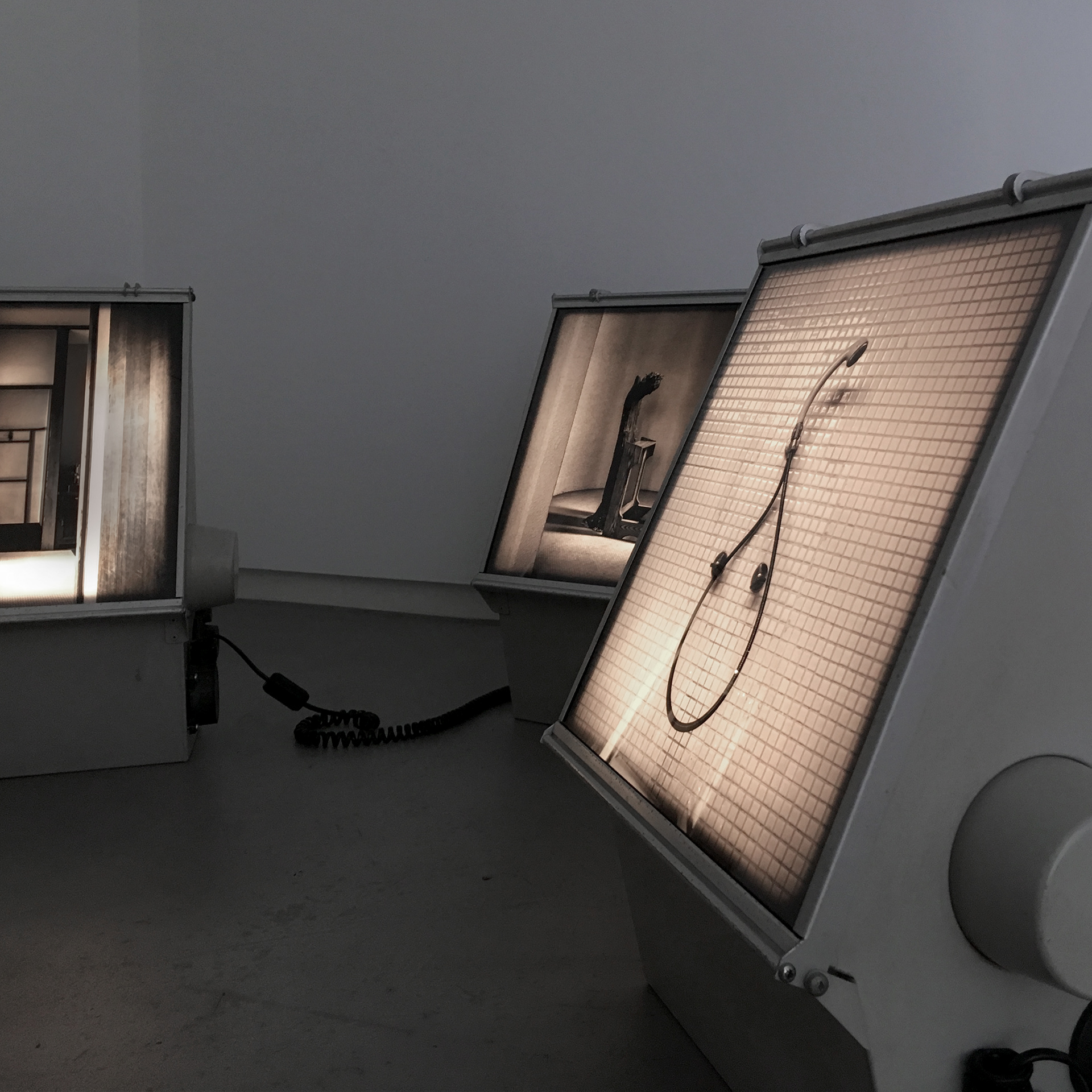
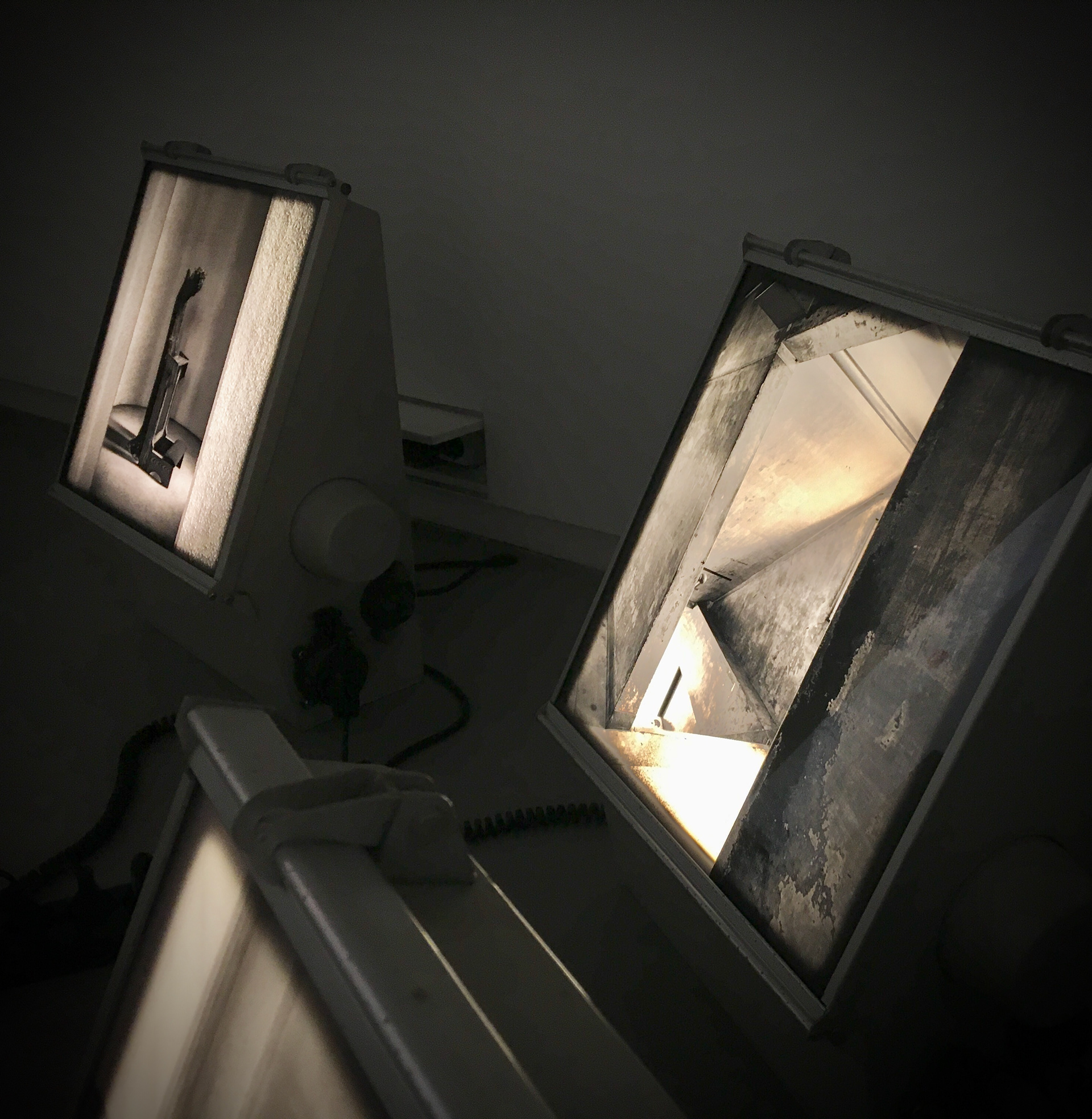
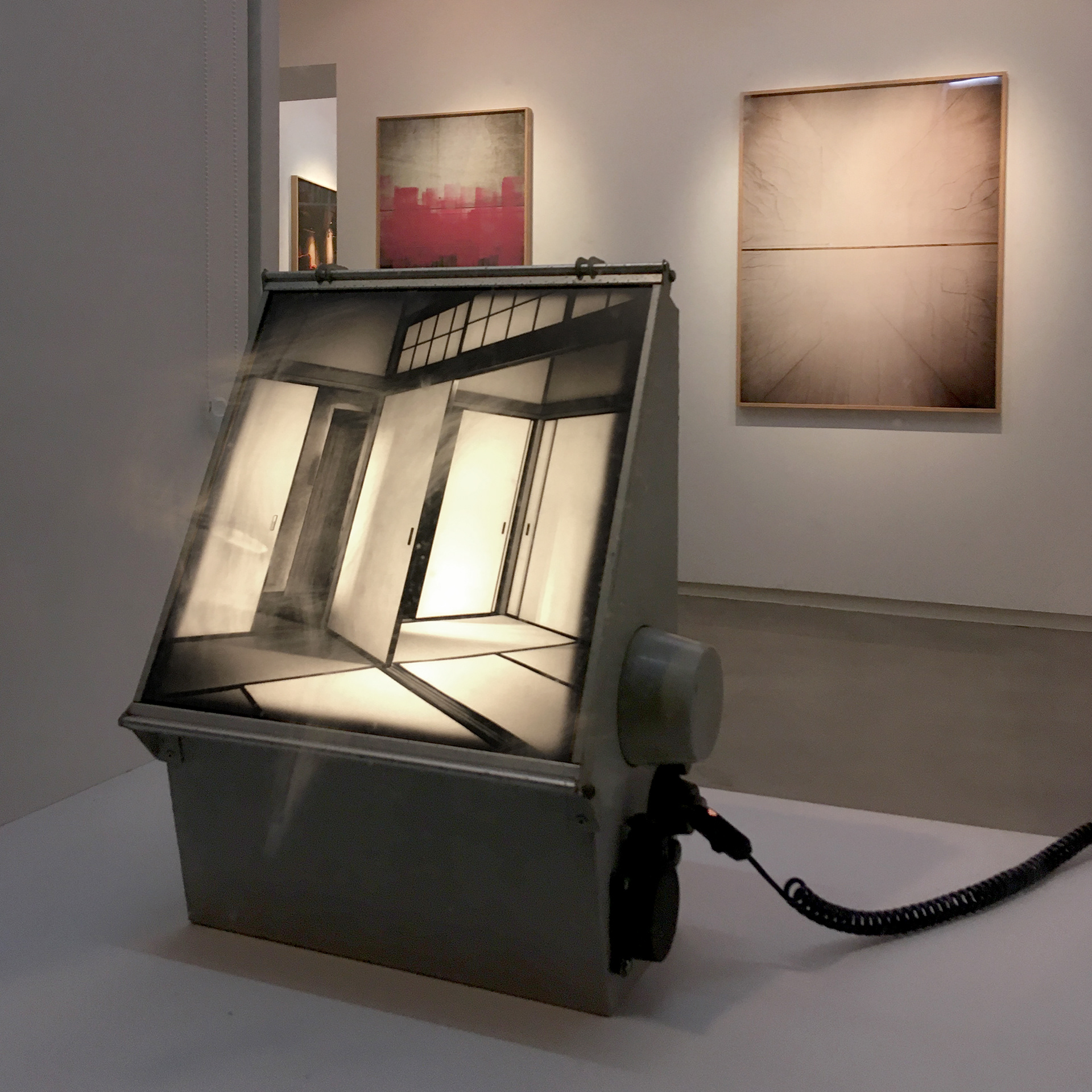
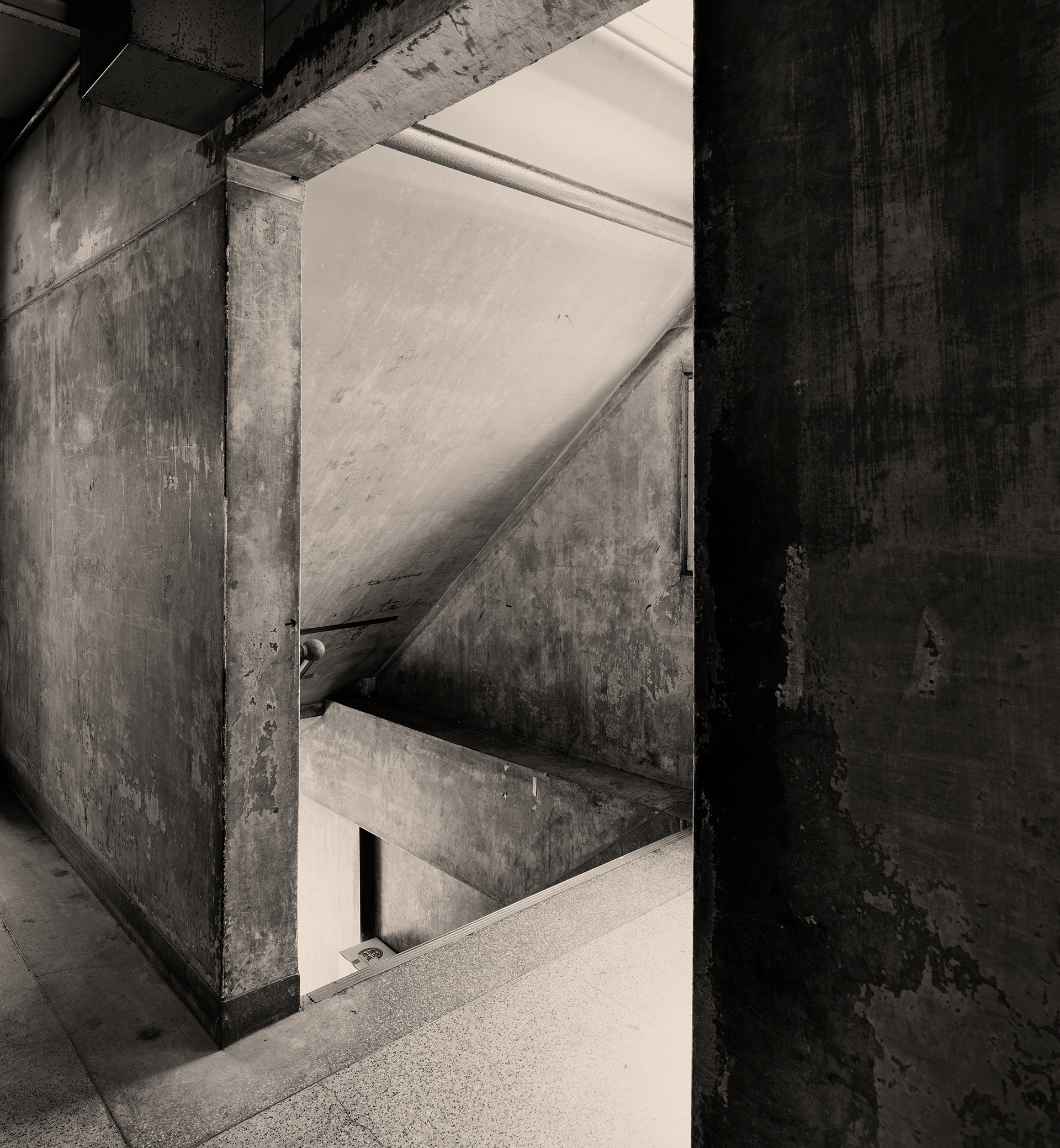
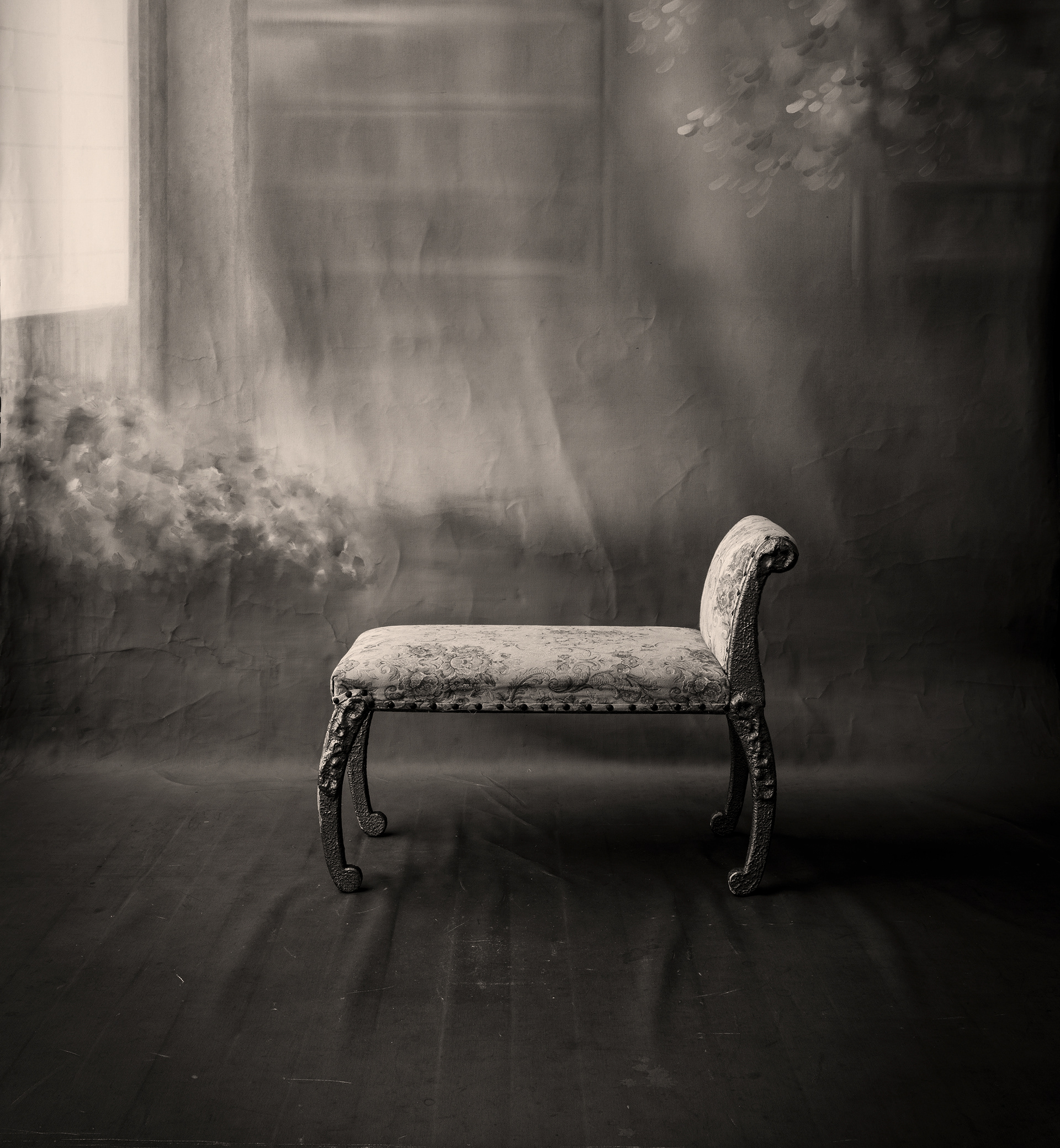
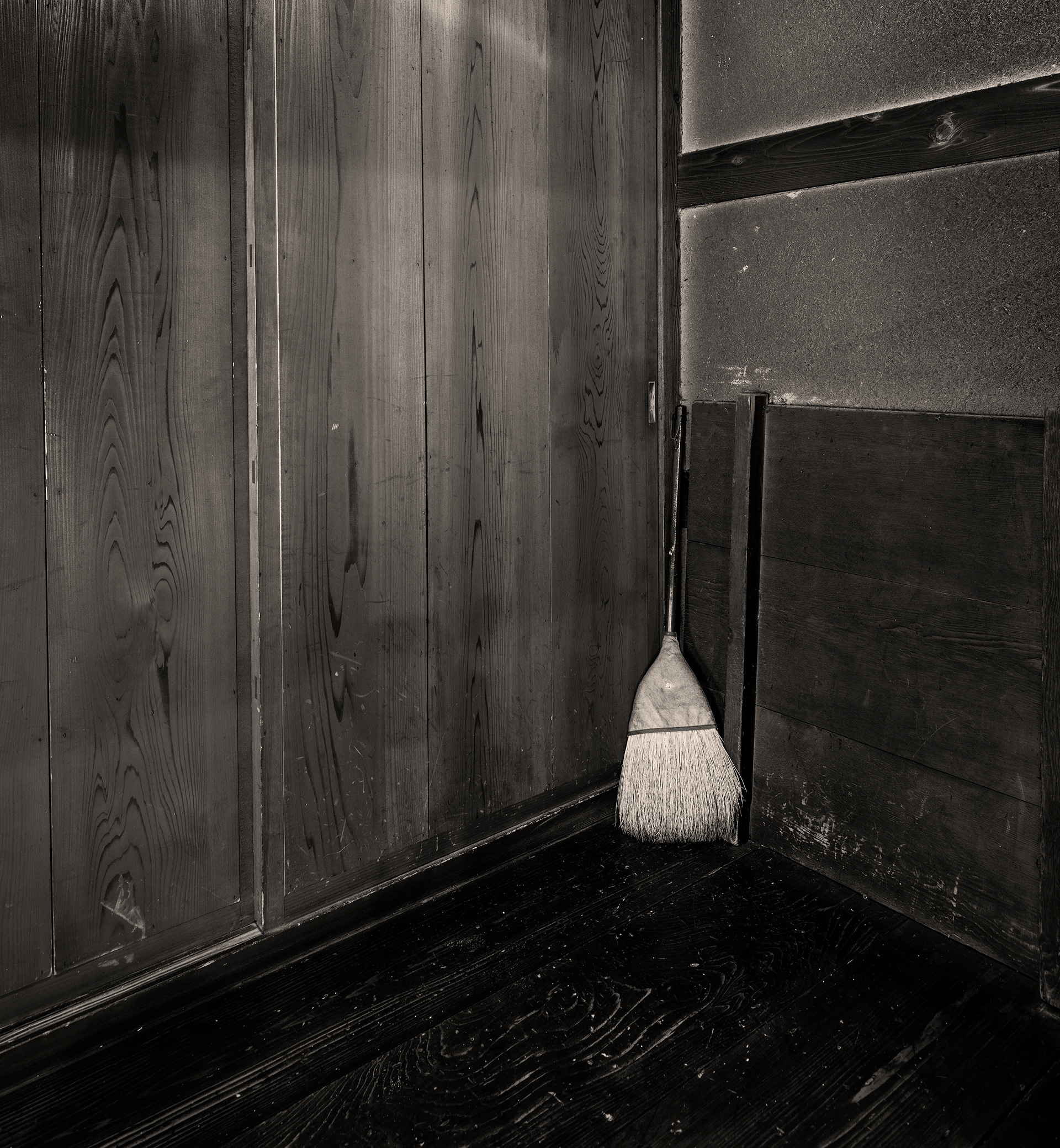
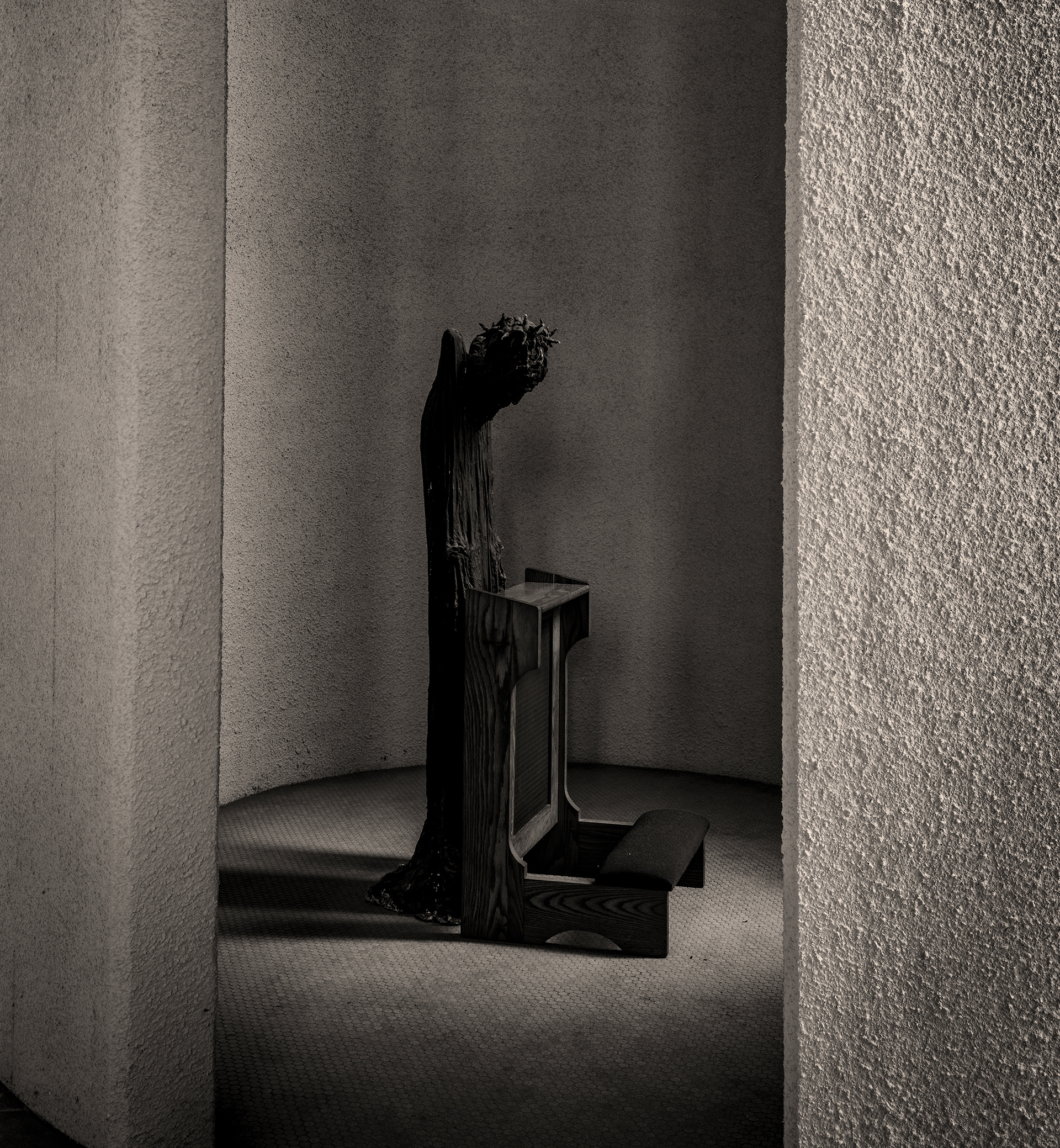
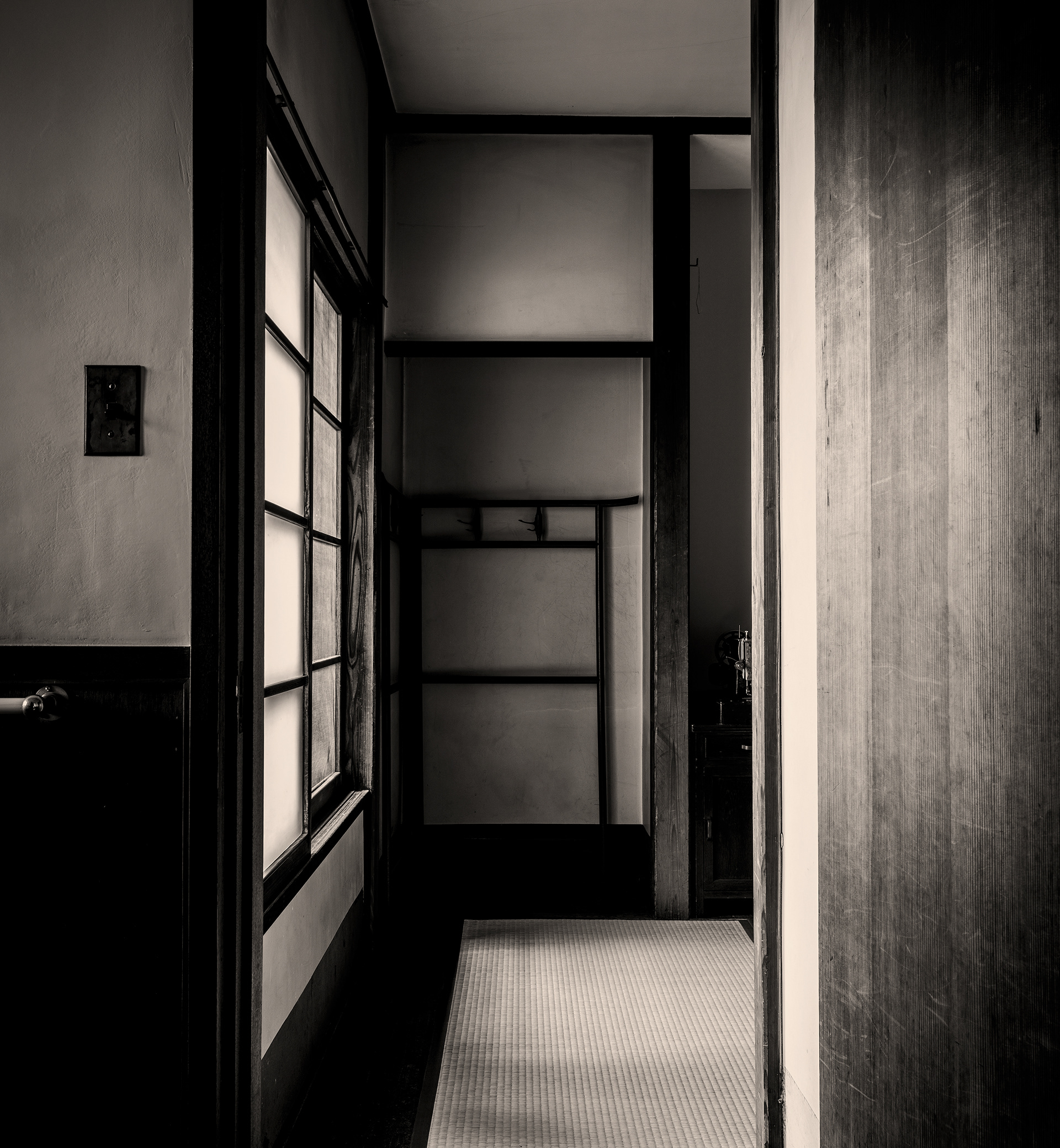
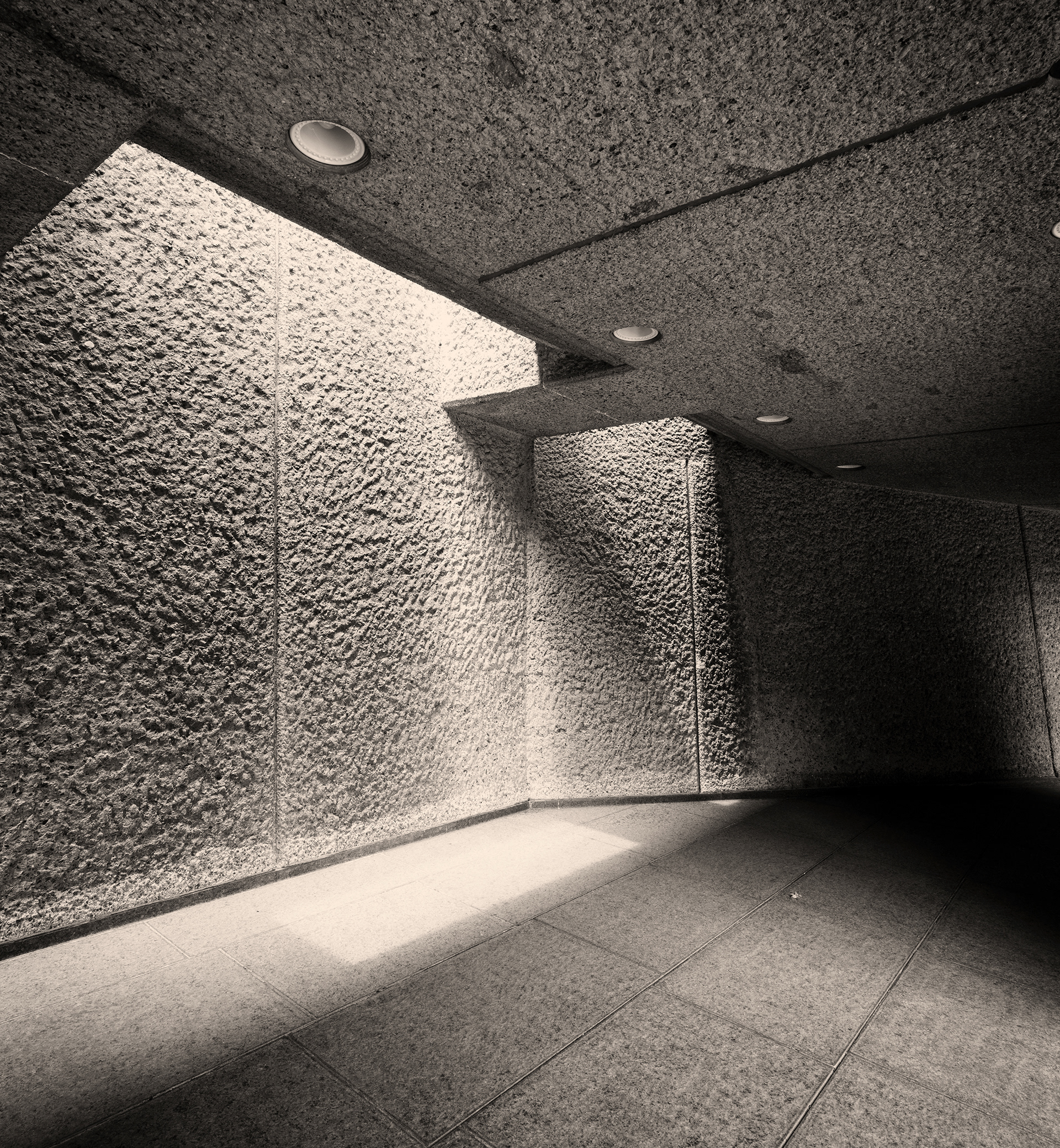
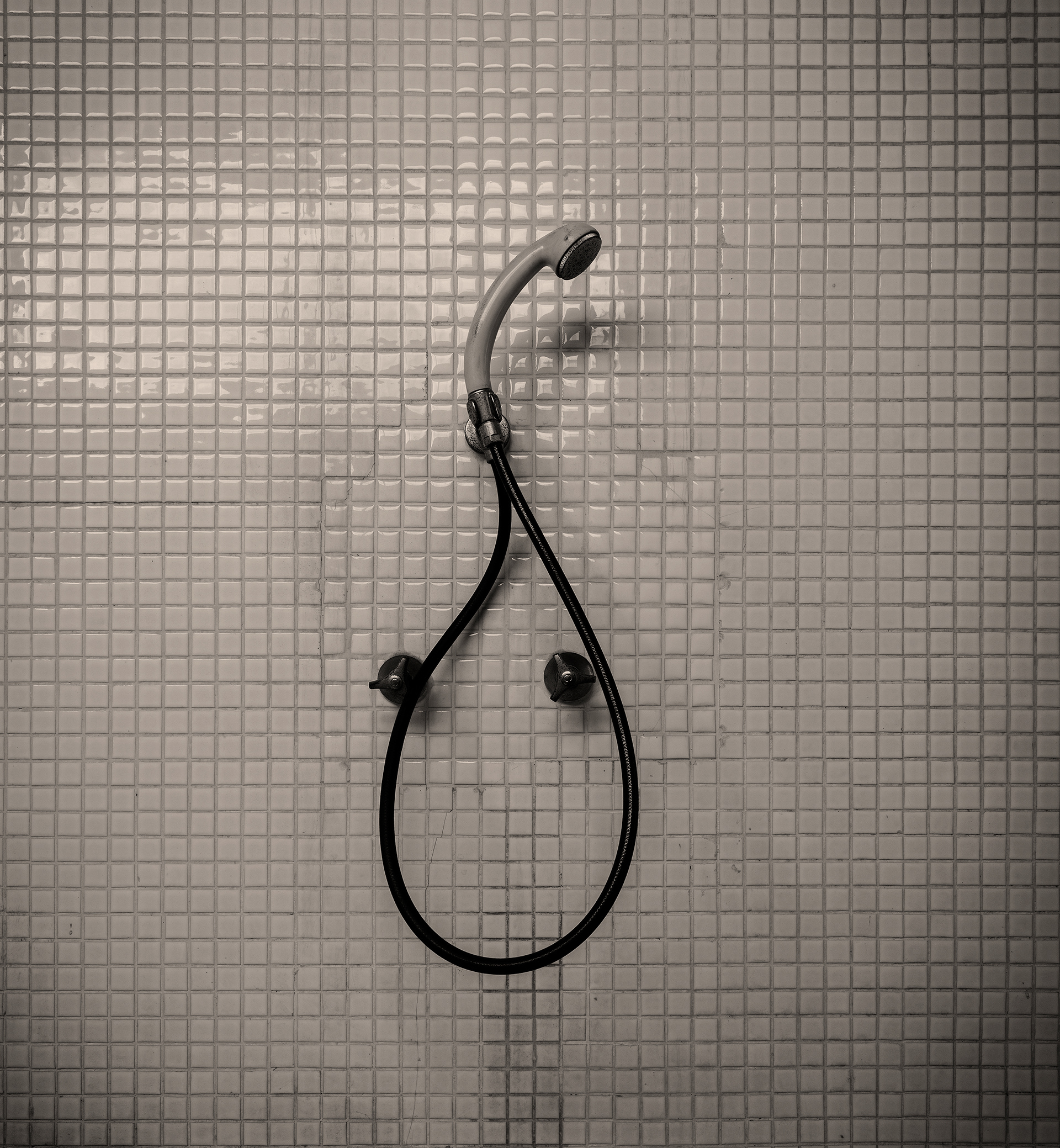
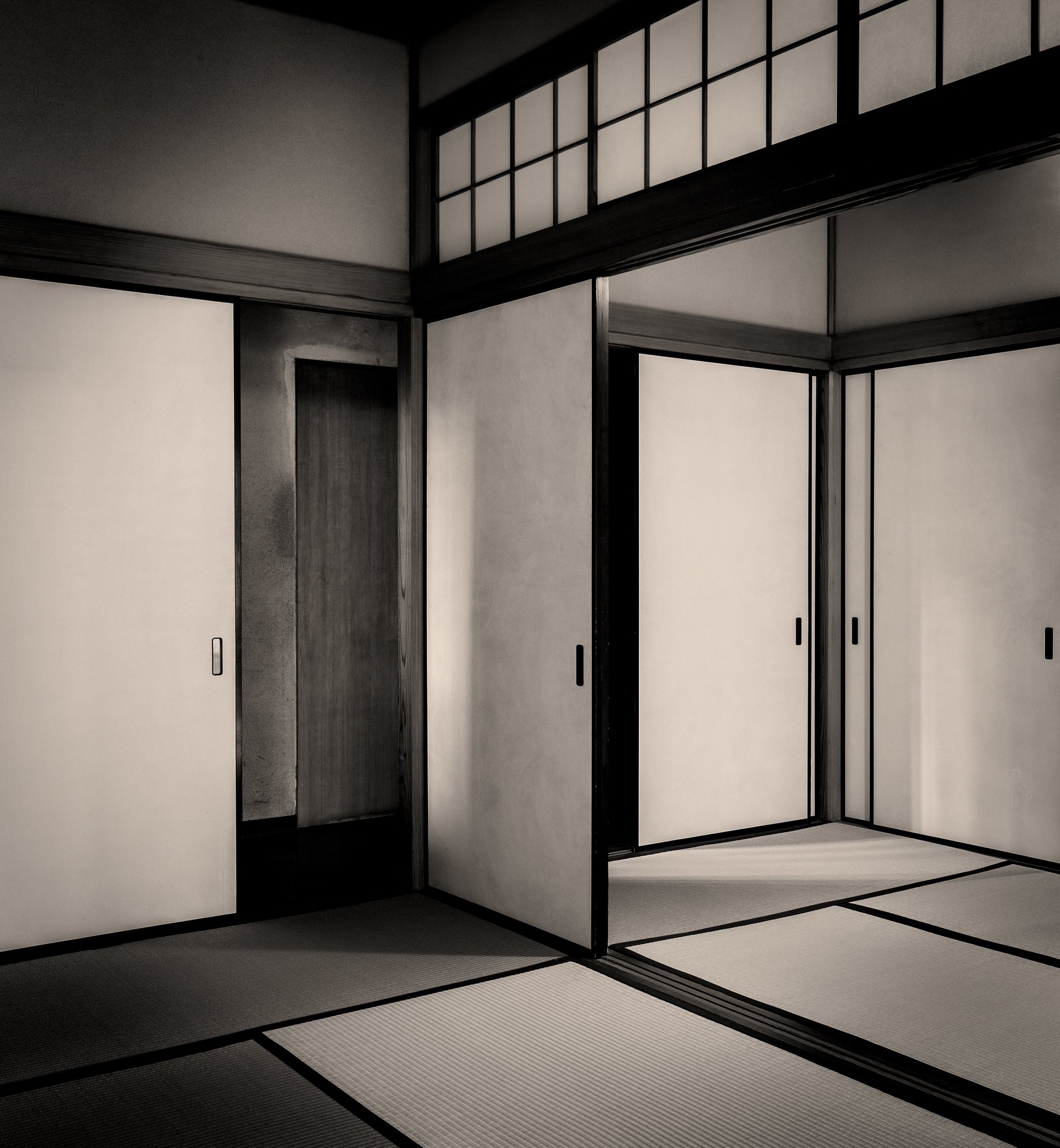
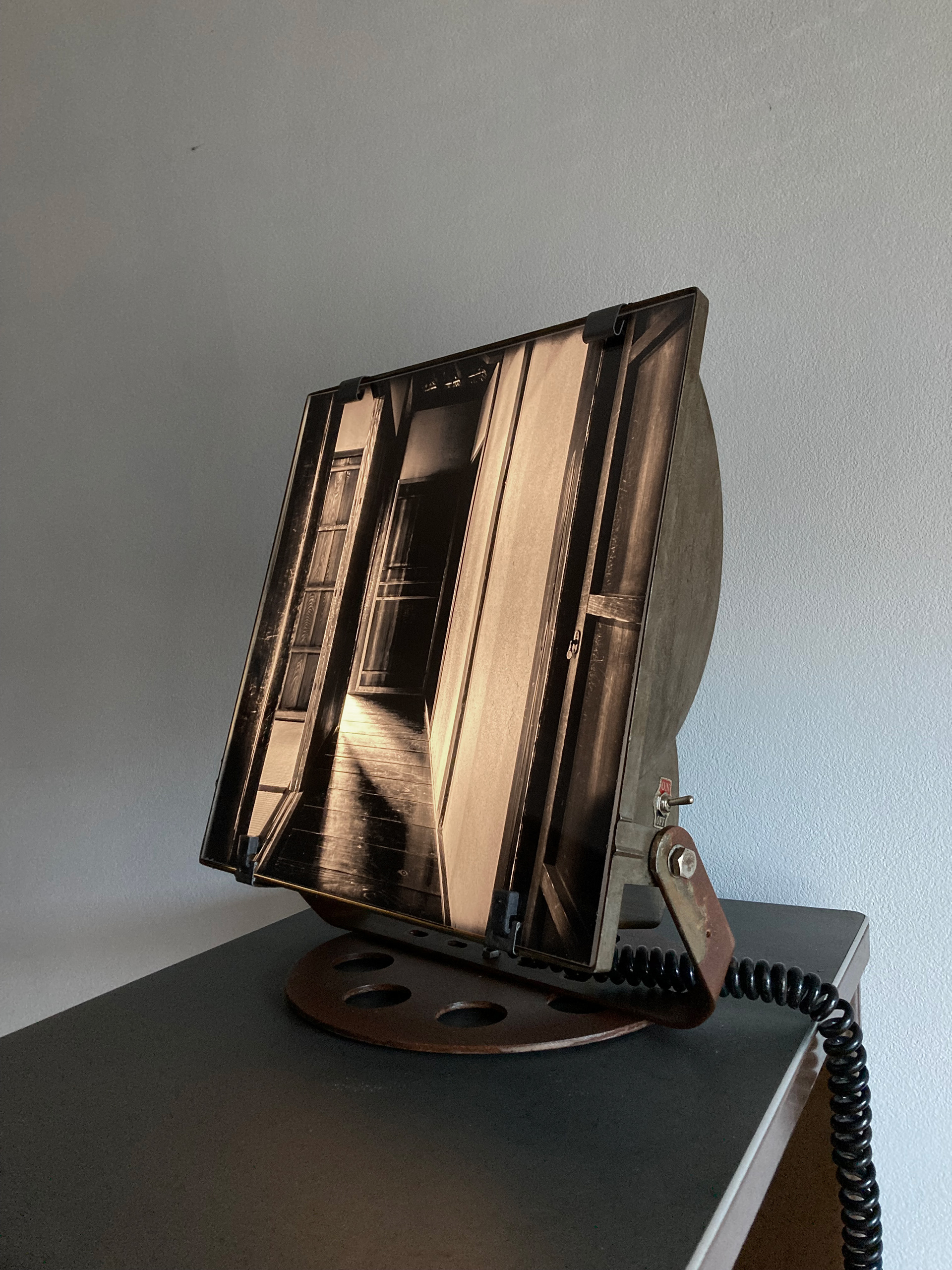
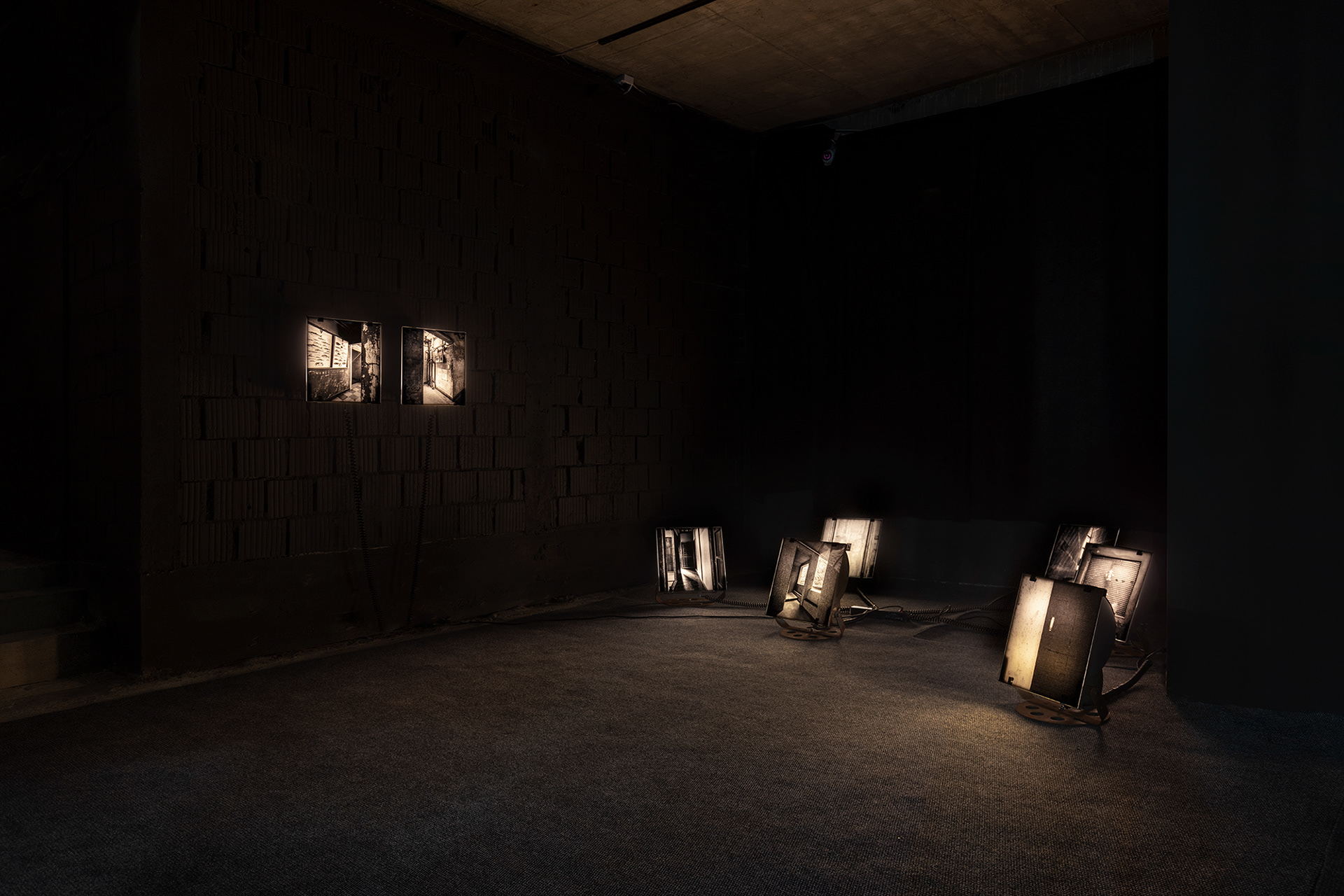
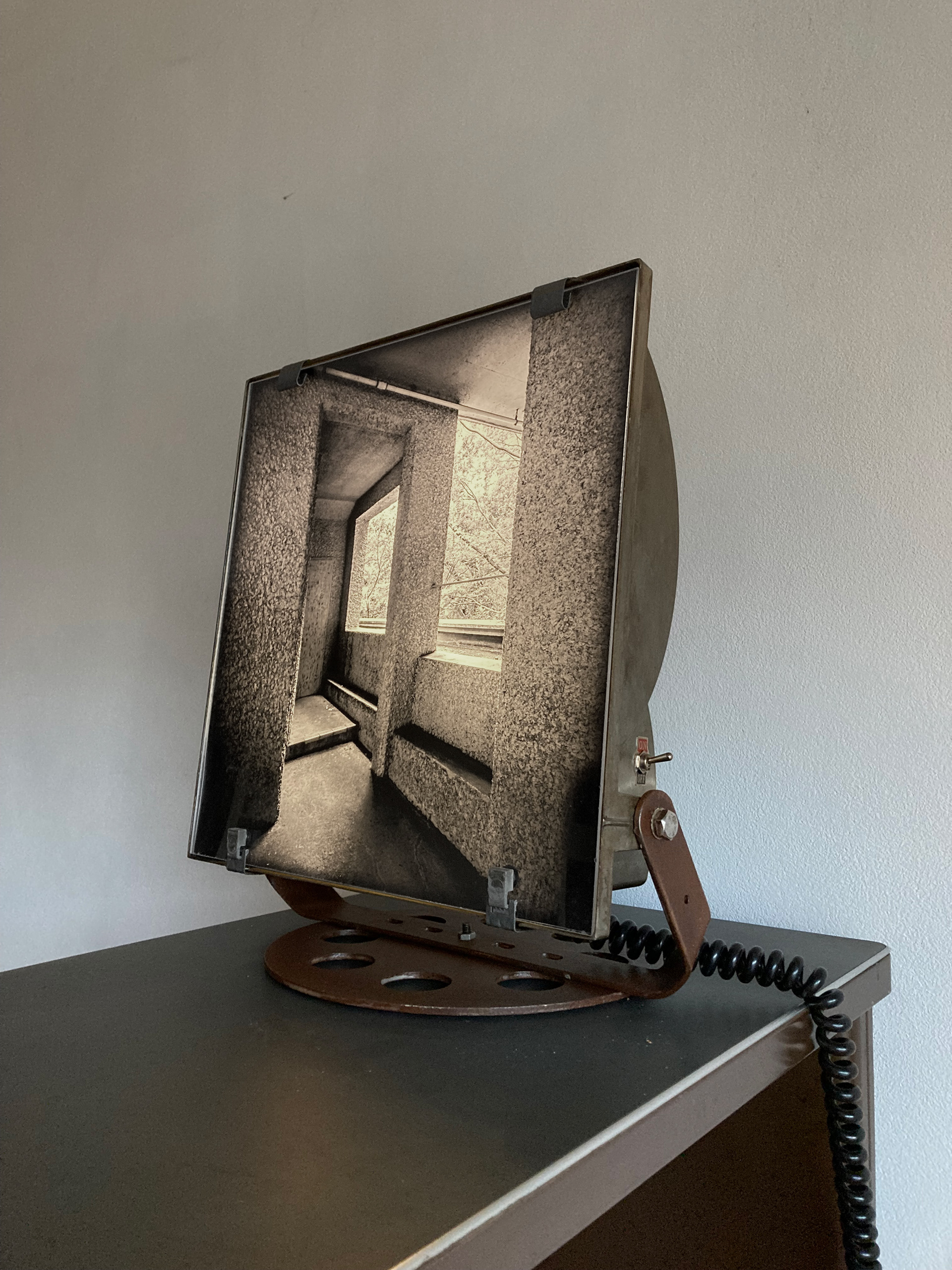
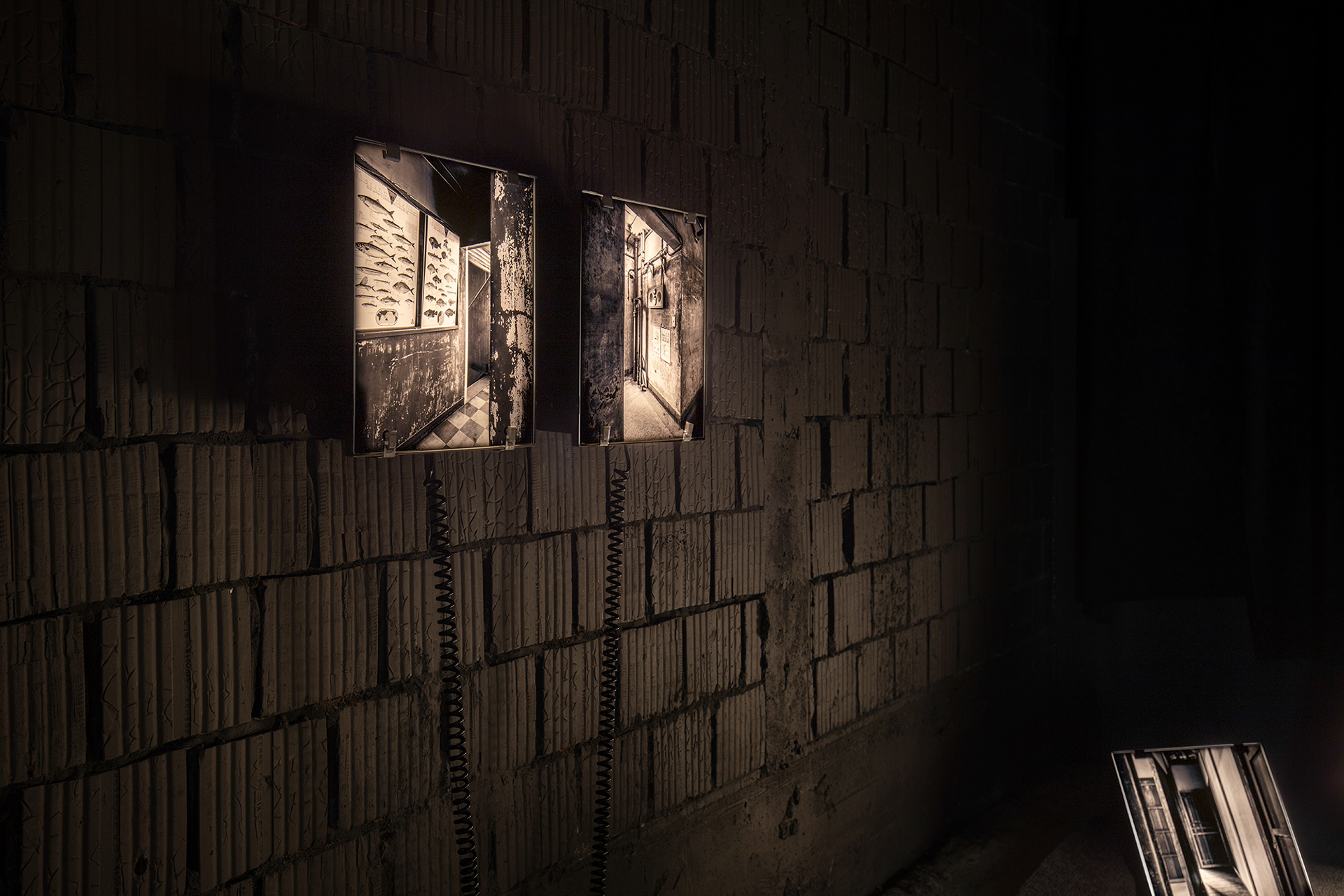
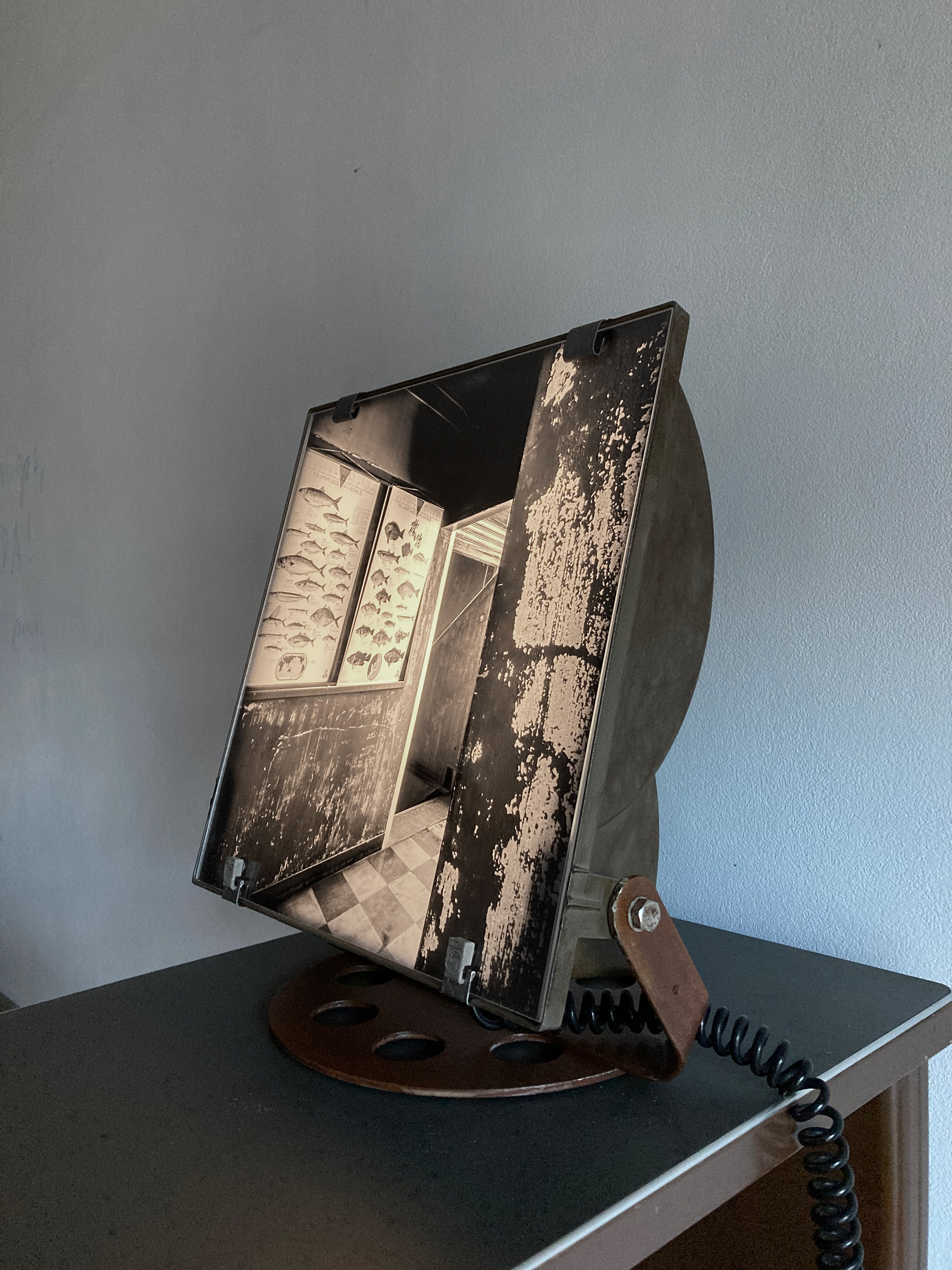
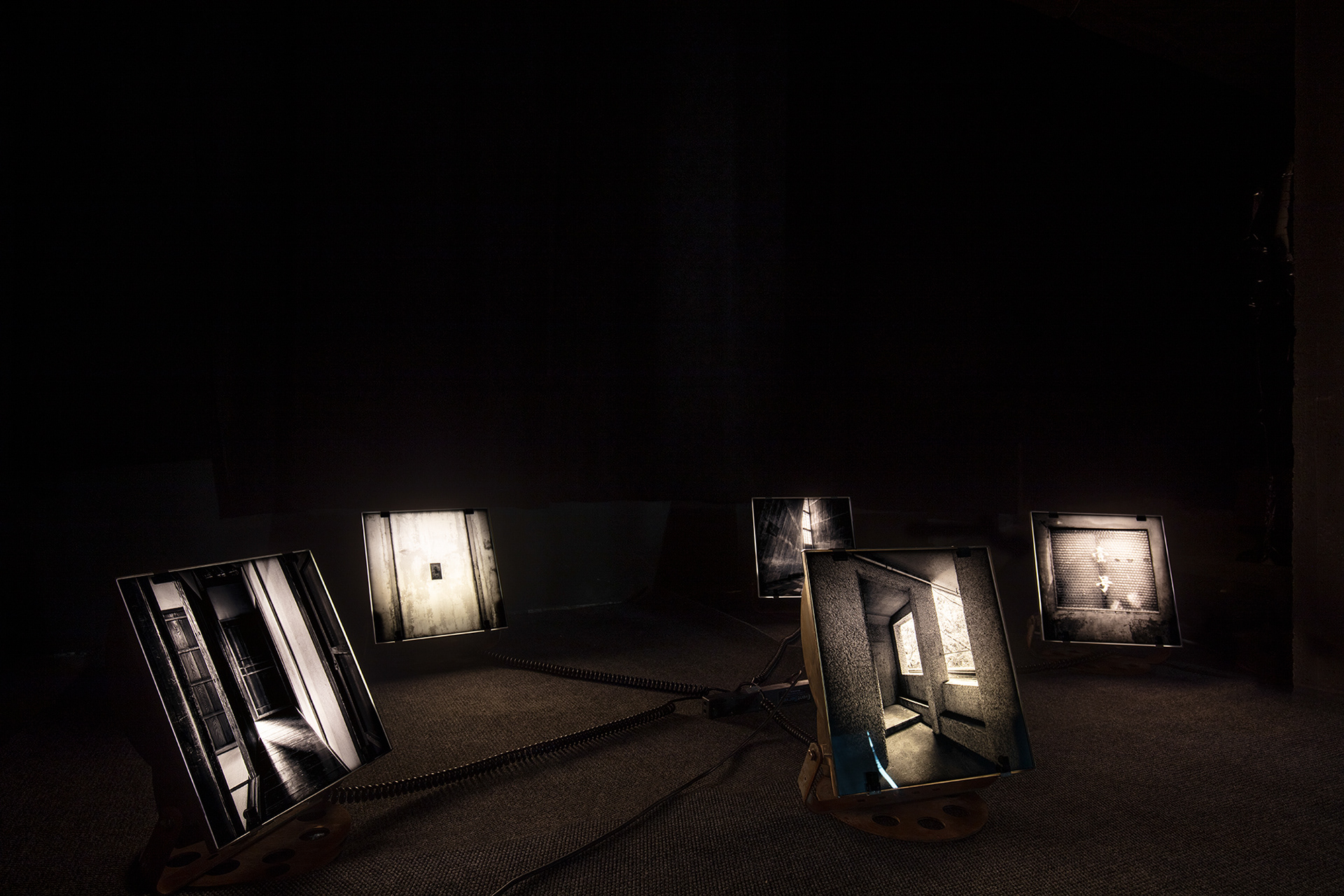
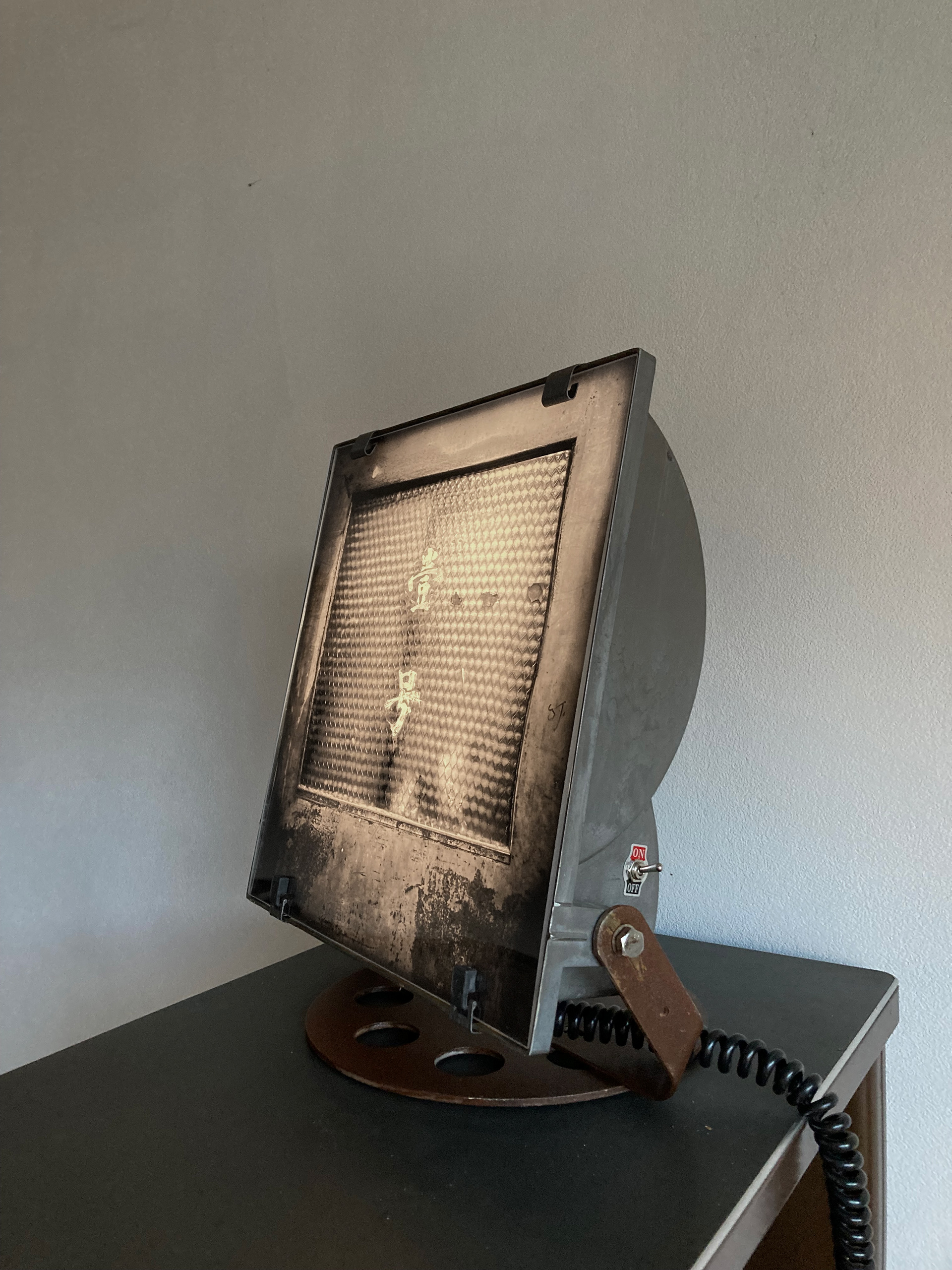
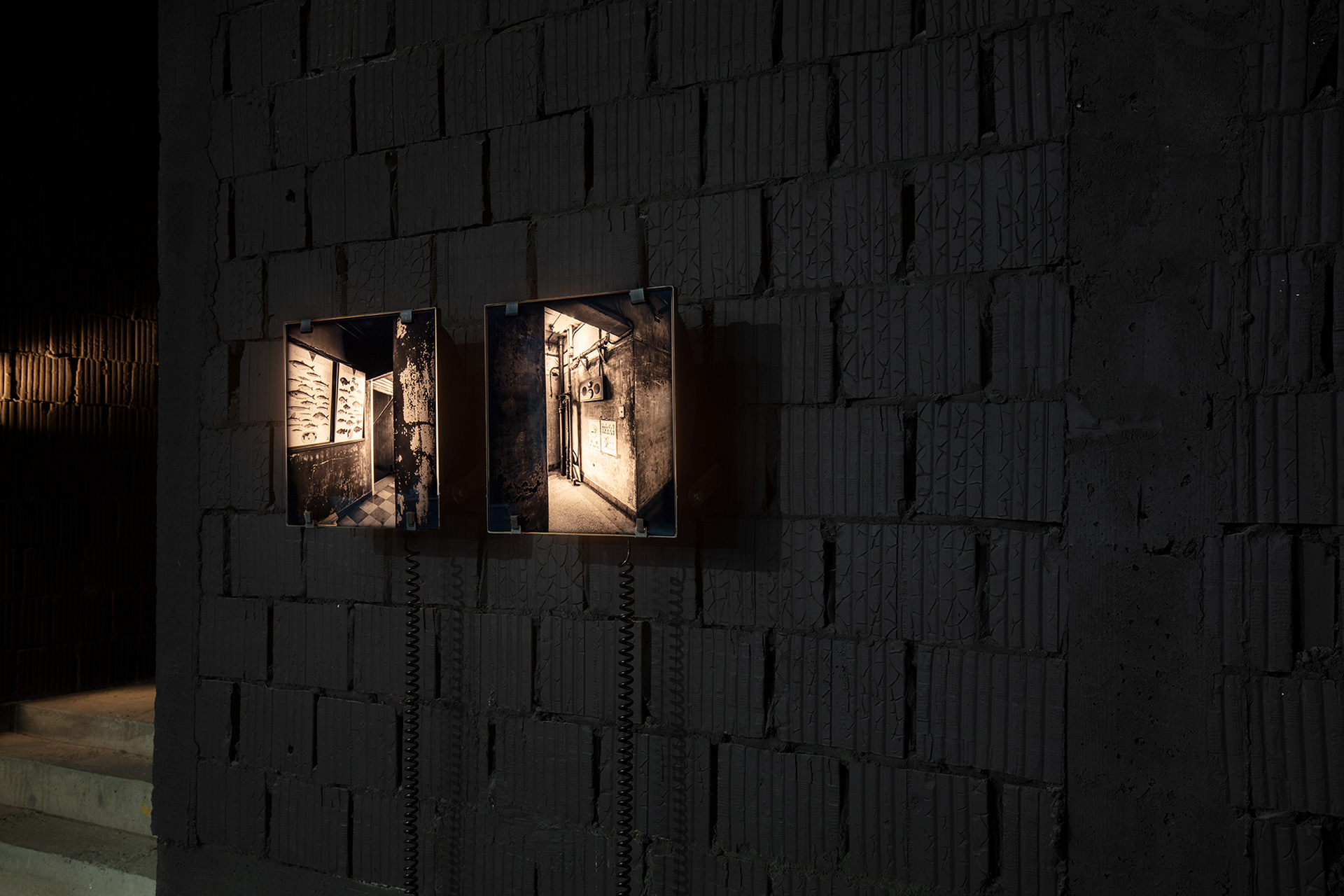
For this series, Inês d'Orey uses vintage floodlights, which she acquired from a secondhand shop and transformed into light boxes. The works feature 20th-century interior spaces from Tokyo, and each piece is named after the underground stations the artist passed through to reach these exceptionally rare examples of preserved architecture. The stark, industrial nature of the light boxes contrasts sharply with the delicate and poetic interiors they illuminate. This juxtaposition reflects the artist's own experience of transitioning from the chaotic, fast-paced exterior of the city to the serene, contemplative atmosphere within these spaces.
Antecâmara
Written by Rui Prata. Lisbon, 2019
Inês d’Orey's works summon the abandoned space, loneliness, death, and sometimes, even a subtle livability. If we are being radical, we can almost say that most of these images embody metaphors to modern society, gradually becoming more self-centered, leaving behind the disenfranchised, invisible and abandoned; the death often found by those fleeing conflict in their home countries.
In Orey's works a story is left hanging for the observer to fill in, from his or her imagination, the space left open by the artist. And yet, besides these more or less made-up narratives Inês d’Orey invites us to, her oevre reveals a careful and consistent career. Throughout the different series one can see a cohesive and persistent line of thought. Along with some other representations, her work focuses on architectural compositions where geometry and light shine through. In some other images, derelict seems to lead us onto a path of decadence and ruin; in others, we find traces of modernism for golden-age film or theater starlets; in yet some others, we find a sort of non-place. The exceptions to these models are displayed differently: light boxes, video, and others. The architecture spaces documented by the artist reveal a labor of research, of meticulous care in presentation, seen in the fine composition and light work. These spaces, wavering between private and public, in which we all have been through some sort of experience, are here calling for our individual memories.
Unlike James Casebre's works, which were made from scale models, Inês d’Orey's images depart from fragments of the real, seldom manipulated. The staging of each place summons a transient moment between life and death. In “Tokiwadai”, for instance, one can imagine a dead old photography studio full of memories and past lives. A simple image, stripped down to its essence, allow us to fabulate almost infinitely. The stool where each client would sit hoping to glorify his or her own identity, and the waiting time to see if the final portrait matched the much expected result. In Habitantes #3 (Dwellers #3), as in other photos, we can see more clearly the line work that leads the gaze towards the light from where ethereal figures subtly emerge.
In this exhibition we are not presenting a unified series, but rather selected images from different series that nevertheless reveal a convergence in her works, and the artist's balanced and solid career.
Written by Rui Prata. Lisbon, 2019
Inês d’Orey's works summon the abandoned space, loneliness, death, and sometimes, even a subtle livability. If we are being radical, we can almost say that most of these images embody metaphors to modern society, gradually becoming more self-centered, leaving behind the disenfranchised, invisible and abandoned; the death often found by those fleeing conflict in their home countries.
In Orey's works a story is left hanging for the observer to fill in, from his or her imagination, the space left open by the artist. And yet, besides these more or less made-up narratives Inês d’Orey invites us to, her oevre reveals a careful and consistent career. Throughout the different series one can see a cohesive and persistent line of thought. Along with some other representations, her work focuses on architectural compositions where geometry and light shine through. In some other images, derelict seems to lead us onto a path of decadence and ruin; in others, we find traces of modernism for golden-age film or theater starlets; in yet some others, we find a sort of non-place. The exceptions to these models are displayed differently: light boxes, video, and others. The architecture spaces documented by the artist reveal a labor of research, of meticulous care in presentation, seen in the fine composition and light work. These spaces, wavering between private and public, in which we all have been through some sort of experience, are here calling for our individual memories.
Unlike James Casebre's works, which were made from scale models, Inês d’Orey's images depart from fragments of the real, seldom manipulated. The staging of each place summons a transient moment between life and death. In “Tokiwadai”, for instance, one can imagine a dead old photography studio full of memories and past lives. A simple image, stripped down to its essence, allow us to fabulate almost infinitely. The stool where each client would sit hoping to glorify his or her own identity, and the waiting time to see if the final portrait matched the much expected result. In Habitantes #3 (Dwellers #3), as in other photos, we can see more clearly the line work that leads the gaze towards the light from where ethereal figures subtly emerge.
In this exhibition we are not presenting a unified series, but rather selected images from different series that nevertheless reveal a convergence in her works, and the artist's balanced and solid career.
Antecâmara
Escrito por Rui Prata. Lisboa, 2019
A obra de Inês d’Orey convoca o espaço abandonado, a solidão, a morte ou, por vezes, uma subtil habitabilidade. De modo radical, quase podemos afirmar que grande parte das imagens das suas séries corporizam metáforas da sociedade atual. Uma sociedade cada vez mais individualizada, onde os menos favorecidos são frequentemente votados ao esquecimento e ao abandono; a morte encontrada, não raras vezes, por aqueles que tentam fugir aos conflitos nos seus países de origem.
O conteúdo da sua obra deixa em suspenso uma estória, um apelo ao espectador para preencher, a partir da sua imaginação, o espaço deixado em aberto pela autora. Contudo, para além de narrativas mais ou menos ficcionais, a que a obra de Inês d’Orey convida, existe um corpo de trabalho que nos revela um cuidadoso e consistente percurso. Ao longo da construção das diferentes séries, observa-se um fio condutor coerente e persistente. Para além de algumas outras representações, a sua obra desenvolve-se maioritariamente em torno de composições arquitectónicas donde resplandece o geometrismo e a luz. Nalgumas imagens, o tempo de abandono parece-nos apontar para um caminho de decadência e ruína; noutras, encontramos traços de modernismo onde o estrelato do cinema ou do teatro brilhou outrora; noutras, ainda, são uma espécie de não lugar. Em geral, as excepções a estes modelos, apresentam-se expostas de formas distintas: caixas de luz, vídeo e outros. Os espaços arquitectónicos documentados pela artista revelam um trabalho de pesquisa, um minucioso cuidado no registo, através de uma composição e iluminação precisas. São espaços que oscilam entre o público e o privado, mas onde praticamente já todos nós experienciámos vivências, convocando, portanto, a memória individual. Ao contrário das da obra de James Casebre, realizadas a partir de maquetes, as imagens de Inês d’Orey partem de fragmentos do real, raras vezes manipuladas. A cenarização de cada lugar evoca um momento transitório entre a vida e a morte. Na fotografia Tokiwadai, por exemplo, podemos idealizar a morte de um velho estúdio fotográfico já não existente, mas cheio de memórias e vidas passadas. É uma imagem simples, confinada ao seu essencial, mas que nos permite efabular quase infinitamente. O banco onde cada cliente se sentava, na expectativa de glorificar a sua identidade, e o tempo de espera para constatar se o retrato final correspondia ao esperado.
Em Habitantes #3, tal como noutras fotografias, é bem evidente o jogo de linhas que conduzem o olhar do observador para a luz donde, subtilmente, se ergue uma personagem etérea.
Nesta exposição, não se apresenta uma série única, mas imagens de diferentes séries que, no entanto, revelam uma convergência nos diferentes trabalhos e permitem constatar o harmonioso e sólido percurso da autora.
O conteúdo da sua obra deixa em suspenso uma estória, um apelo ao espectador para preencher, a partir da sua imaginação, o espaço deixado em aberto pela autora. Contudo, para além de narrativas mais ou menos ficcionais, a que a obra de Inês d’Orey convida, existe um corpo de trabalho que nos revela um cuidadoso e consistente percurso. Ao longo da construção das diferentes séries, observa-se um fio condutor coerente e persistente. Para além de algumas outras representações, a sua obra desenvolve-se maioritariamente em torno de composições arquitectónicas donde resplandece o geometrismo e a luz. Nalgumas imagens, o tempo de abandono parece-nos apontar para um caminho de decadência e ruína; noutras, encontramos traços de modernismo onde o estrelato do cinema ou do teatro brilhou outrora; noutras, ainda, são uma espécie de não lugar. Em geral, as excepções a estes modelos, apresentam-se expostas de formas distintas: caixas de luz, vídeo e outros. Os espaços arquitectónicos documentados pela artista revelam um trabalho de pesquisa, um minucioso cuidado no registo, através de uma composição e iluminação precisas. São espaços que oscilam entre o público e o privado, mas onde praticamente já todos nós experienciámos vivências, convocando, portanto, a memória individual. Ao contrário das da obra de James Casebre, realizadas a partir de maquetes, as imagens de Inês d’Orey partem de fragmentos do real, raras vezes manipuladas. A cenarização de cada lugar evoca um momento transitório entre a vida e a morte. Na fotografia Tokiwadai, por exemplo, podemos idealizar a morte de um velho estúdio fotográfico já não existente, mas cheio de memórias e vidas passadas. É uma imagem simples, confinada ao seu essencial, mas que nos permite efabular quase infinitamente. O banco onde cada cliente se sentava, na expectativa de glorificar a sua identidade, e o tempo de espera para constatar se o retrato final correspondia ao esperado.
Em Habitantes #3, tal como noutras fotografias, é bem evidente o jogo de linhas que conduzem o olhar do observador para a luz donde, subtilmente, se ergue uma personagem etérea.
Nesta exposição, não se apresenta uma série única, mas imagens de diferentes séries que, no entanto, revelam uma convergência nos diferentes trabalhos e permitem constatar o harmonioso e sólido percurso da autora.